How to Find Healthcare in the Algarve as an Expat
Disclosure: This article contains affiliate links. If you buy through them, we may earn a commission at no extra cost to you. Read our full disclosure.
Moving to the Algarve often feels like you have finally cracked the code to a perfect life, but that dream can hit a wall the moment you need a doctor. I remember my first winter in Lagos, dealing with a persistent chest infection and realizing I had no idea which building was a hospital and which was just a municipal office. This guide solves the confusion of navigating the Algarve's specific healthcare landscape so you can focus on the sunshine instead of the stress.
Understanding the Two Worlds of Algarve Healthcare
The healthcare system in southern Portugal is split into two very distinct paths: the public Serviço Nacional de Saúde (SNS) and a robust private sector. Unlike Lisbon or Porto, the Algarve faces a unique challenge known as the "summer surge." From June to September, the population triples, and the healthcare infrastructure—especially the public side—feels the strain. If you are living here year-round, you need to understand how to dance between these two systems.
The Public SNS Infrastructure in the South
The public system is anchored by the Centro Hospitalar Universitário do Algarve (CHUA). This entity manages the main public hospitals in Faro and Portimão, along with a smaller unit in Lagos. For most expats, the public system is your safety net for major trauma, chronic disease management, and long-term care. However, it is no secret that wait times at the Portimão or Faro public emergency rooms can be grueling during the height of tourist season.
Your primary point of contact will not be these big hospitals, but your local Centro de Saúde. Every municipality, from Aljezur to Vila Real de Santo António, has one. This is where you go for non-emergencies, vaccinations, and routine prescriptions. The challenge is that many Algarve health centers are currently over-subscribed, meaning you might be registered but won't have a dedicated family doctor for months or even years. In the meantime, you'll be seen by whichever doctor is on "consultas abertas" (open consultations) that day. For a foundational overview, read Healthcare in Portugal for Expats: The Complete 2026 Medical Guide.
The Private Sector: Convenience and Speed
Because of the pressure on public services, the Algarve has one of the most developed private healthcare networks in Portugal. The HPA Health Group (Hospital Particular do Algarve) is the dominant player here, with massive, modern hospitals in Alvor, Gambelas (Faro), and Vila Real de Santo António, plus smaller clinics in places like Vilamoura and Albufeira. Another major player is Lusíadas, which has a significant presence in Albufeira and Faro.
For most expats, the private system is the go-to for Finding Doctors and Specialists in Portugal: English-Speaking Medical Care. You can usually book an appointment online for the following week, and the facilities feel more like a hotel than a clinic. However, this convenience comes at a price. Without insurance, a standard consultation can cost between 70 and 120 Euros. This is why many retirees or digital nomads look into Public vs Private Healthcare in Portugal: Which One Should Expats Choose? before settling on a long-term plan.
Primary Care and Registration Essentials
Before you can even think about seeing a doctor in the public system, you have to tackle the bureaucracy. You cannot simply walk into a public clinic and expect a subsidized rate without being in the system. I spent my first three weeks in the Algarve just trying to figure out which "Junta" I needed to visit to prove I actually lived in my apartment.
Registering for Your Número de Utente
Your first mission is Registering with the Centro de Saúde: Getting Your SNS Número de Utente. You will need your residency permit, your NIF (Tax Identification Number), and a proof of address. In the Algarve, some health centers will also ask for an "Atestado de Morada" from your local Parish Council (Junta de Freguesia).
Once you have this number, you are officially in the system. This entitles you to significantly reduced rates for appointments and medication. Even if you plan on using private insurance, having your Utente number is vital because it allows public doctors to prescribe medication that you can pick up at the pharmacy for a fraction of the retail price. It is also the only way to access the national vaccination program.
Finding an English-Speaking General Practitioner
While most younger Portuguese doctors speak excellent English, the administrative staff at the local Centro de Saúde might not. If your Portuguese is still at the "Olá" stage, you might find Finding an English-Speaking General Practitioner (Médico de Família) easier within the private sector. In towns like Lagos, Tavira, and Almancil, there are also many independent private GPs who specifically cater to the expat community. These doctors often offer longer appointment slots and a more personalized "village doctor" feel than the larger hospitals.
If you are a digital nomad moving frequently, you might prefer the flexibility of a plan like SafetyWing, which is designed for those who don't want to be tied to one specific local provider but still need coverage for unexpected illnesses while enjoying the Algarve coast.
Handling Medical Emergencies in the Algarve
Nothing is more frightening than a medical emergency in a foreign country. In the Algarve, the "112" system is efficient, but the logistics of where you are taken depend on the severity of your situation and whether you have private coverage.
When to Call 112 vs. SNS 24
For life-threatening emergencies—think chest pain, severe bleeding, or unconsciousness—you must call 112. The dispatchers generally have access to English speakers, but it helps to know your address in Portuguese. For more information on this, see Emergency Medical Care in Portugal: Calling 112 and Going to the Hospital.
For non-life-threatening issues, like a high fever or a suspected sprain, your first call should actually be to the SNS 24 Helpline (808 24 24 24): Triage, Advice, and Sick Notes. This is a brilliant service where a nurse will triage you over the phone. They can give you a referral to the local hospital which "fast-tracks" your entry, saving you hours of waiting in the general queue. They speak English and can even email you a temporary sick note for your employer.
Emergency Rooms (Urgências) and Wait Times
If you end up at the public hospital in Portimão or Faro, you will encounter the Manchester Triage System. You’ll be given a color-coded wristband based on urgency: Red is immediate, Orange is very urgent, Yellow is urgent, and Green or Blue are non-urgent. If you are "Green" in August, bring a book and a snack; you could be there all night.
If you have private insurance like Cigna Global, you can head to the "Atendimento Urgente" at an HPA hospital. The wait times are significantly shorter, usually under an hour, and the triage process is much less stressful.
| Facility Type | Best For | Typical Wait Time | Cost (Estimated) |
|---|---|---|---|
| Public Hospital (CHUA) | Serious trauma, Surgery | 4 – 12 hours (non-urgent) | Low (Taxas Moderadoras) |
| Private Hospital (HPA/Lusíadas) | Minor injuries, Specialists | 30 mins – 2 hours | €70 – €150 (out of pocket) |
| Local Health Center | Prescriptions, Vaccines | Varies by location | Free or very low |
| Private GP Clinic | Routine checkups, English care | Scheduled appointment | €50 – €90 |
Pharmacies and Medication Access
The pharmacy (Farmácia) is often the first line of defense in the Algarve. Portuguese pharmacists are highly trained and can offer advice for minor ailments that would require a doctor's visit in other countries. Look for the large green cross; if it's lit up, they are open.
Prescriptions and Over-the-Counter Rules
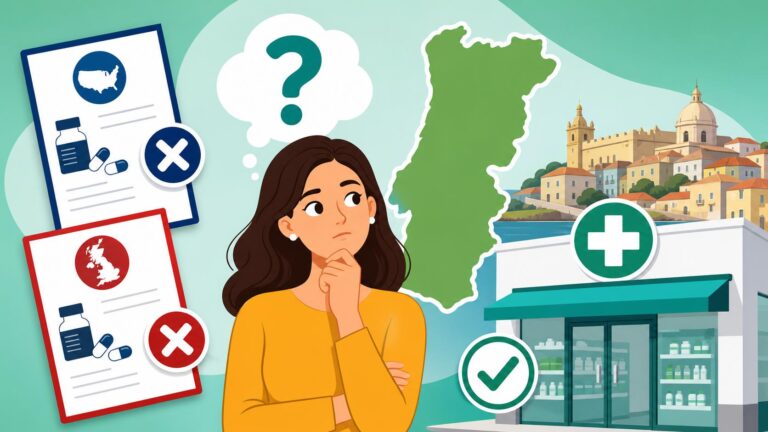
Many medications that are over-the-counter in the US or UK require a prescription in Portugal, particularly strong painkillers and any form of antibiotic. Conversely, some asthma inhalers and birth control pills can be bought directly. If you have a chronic condition, always bring your original boxes and, if possible, a letter from your home doctor to help the local pharmacist find the Portuguese equivalent.
After-Hours Access
If you need medication in the middle of the night, you need to find the "Farmácia de Serviço." Only one or two pharmacies in a district will be open 24/7 on a rotating schedule. You can find the list posted on the door of any pharmacy or by checking online. For a detailed guide on how to navigate this, check What is a Farmácia de Serviço and how to find one open at 2 AM.
Specialized Care and Insurance for Expats
The Algarve is fantastic for general care, but for very niche specializations or complex experimental treatments, residents are sometimes referred to Lisbon. However, for most things—cardiology, orthopedics, or oncology—the private hospitals in the Algarve are top-tier.
Private Insurance Options
Most expats living in the Algarve choose to supplement the public system with private insurance. This allows you to bypass the long waiting lists for elective surgeries or specialist consultations. Using Cigna Global or Allianz for international expat healthcare in Portugal is a popular route for those who want comprehensive, "gold-standard" coverage that includes medical evacuation or treatment in their home country.
Cigna Global is particularly noted for its modular plans, allowing you to add vision or dental care, which is rarely covered by the public SNS. For younger travelers or those on a budget, SafetyWing offers a more streamlined, "emergency-focused" insurance that covers you globally, which is perfect if you’re using the Algarve as a base to explore the rest of Europe.
Managing Costs in the Algarve
If you are using the public system, you will occasionally pay Taxas Moderadoras: Co-payments and Costs in the Public Health System. These are small fees, usually under 20 Euros, for things like emergency room visits or diagnostic tests. However, many groups, including retirees with low pensions or people with chronic illnesses, are exempt from these fees. It is worth asking your local health center if you qualify for an exemption once you are registered.
Navigating Local Variations: East vs. West Algarve
The healthcare experience can vary depending on where you plant your roots.
- The West (Lagos, Sagres, Aljezur): This area is more rugged. While Lagos has a small public hospital and a modern HPA unit, residents in Aljezur often have to drive 45 minutes to Portimão for serious care.
- The Central (Albufeira, Vilamoura, Loulé): This is the heart of private healthcare. You are never more than 15 minutes away from a high-end clinic. Most doctors here are used to dealing with international patients and speak perfect English.
- The East (Tavira, Olhão, VRSA): This area is traditionally more Portuguese. While Faro is nearby with the region's largest facilities, the local clinics in the East might have fewer English-speaking administrative staff. Tavira has seen a rise in private clinics recently to cater to the growing expat community there.
Living in the Algarve is an incredible experience, and while the healthcare system has its quirks and "Portuguese-speed" bureaucracy, the quality of care is generally very high. By setting up your Utente number early and having a solid insurance backup like Cigna Global or SafetyWing, you can rest easy knowing that whether it's a surfing injury in Sagres or a routine checkup in Tavira, you are covered.
Health and Medical Disclaimer
The information provided in this article is for general informational purposes only and does not constitute professional medical advice, diagnosis, or treatment. Always seek the advice of your physician or other qualified health provider with any questions you may have regarding a medical condition. Never disregard professional medical advice or delay in seeking it because of something you have read in this guide. Healthcare laws and availability in Portugal are subject to change, and you should verify all administrative requirements with the official SNS or AIMA portals.