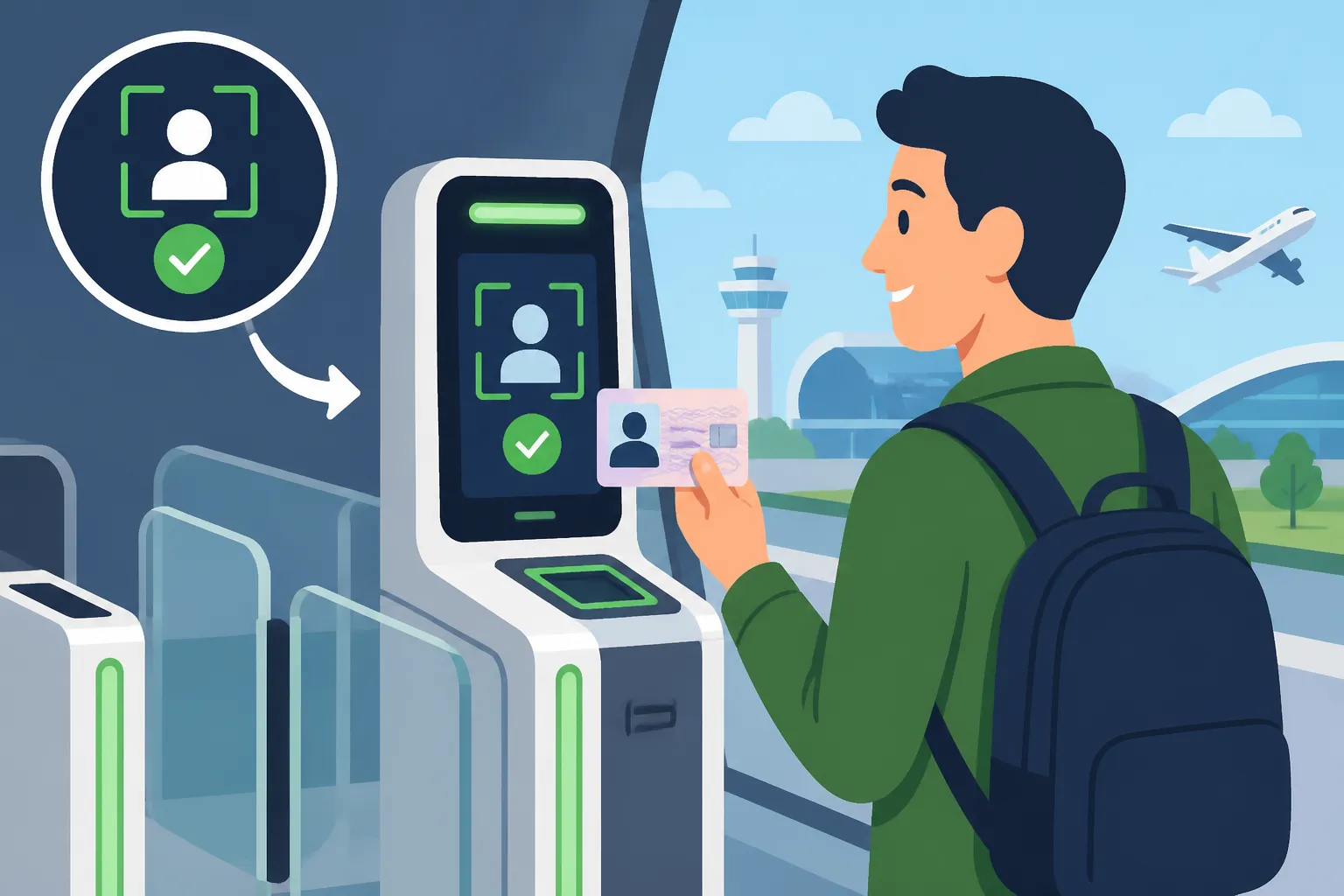
Using the E-gates at Lisbon airport with a temporary residence permit card
Standing in the winding, humid queue at Lisbon’s Humberto Delgado Airport after a long-haul flight is a rite of passage every expat learns to loathe. I’ve spent countless hours shifting from one foot to the other, watching the "All Passports" line crawl forward while the E-gates mockingly flash green for European citizens. This guide solves the confusion around whether your new or temporary Portuguese residence card grants you the same "fast-track" privilege and how to navigate the border without a panic attack.
The Technical Reality of E-Gates
The automated border control gates, commonly known as RAPID in Portugal, are designed to read biometric data stored in the RFID chip of a passport or a national ID card. For those of us living here on a residency permit, the question isn't just about whether we have "permission" to be here, but whether the machine at the airport is physically capable of reading our specific document. Portugal has moved through several iterations of residency cards, especially during the transition from the old SEF to the new agency, which you can read about in AIMA Portugal: Navigating the New Immigration Agency and Residence Permits.
If you hold a physical, biometric residence card—the one that looks like a credit card with a visible gold-colored chip or an embedded one—you are technically equipped for the E-gates. However, the system is calibrated differently depending on your country of origin. For example, if you are a US, UK, or Canadian citizen with a Portuguese residence card, the E-gate usually requires you to scan your passport first, and then the system cross-references your biometric data with the national database to see if you have a valid "Título de Residência."
The confusion often arises when people receive their first "temporary" card, which is usually valid for two years. This is a fully functional biometric document. It is "temporary" only in the sense that it isn't a permanent 5-year or 10-year permit yet. If you have this physical card, you should, in theory, be able to use the E-gates at Lisbon airport. However, those holding the digital-only CPLP permits or the paper-based "Manifestação de Interesse" receipts will find the gates remain stubbornly closed, as there is no physical chip for the RAPID system to interrogate.
The RAPID System vs. Manual Booths
The RAPID system at Lisbon Airport Terminal 1 is one of the busiest in Europe. When you approach the gate, you aren't just showing a ID; you are triggering a multi-point check against the Schengen Information System (SIS) and the Portuguese national database. For expats, this means your card must be in "good standing." If your address is outdated or you haven't yet updated your fiscal representation—which services like Bordr can help you manage remotely—you might find the gate flagging you for a manual check anyway.
Manual booths are still the reality for many because the E-gates are occasionally programmed to only accept EU/EEA passports during peak congestion to keep the "fast" lanes truly fast. If you see a sign that says "EU Passports Only" above the E-gates, even with your residency card, you may be redirected. It’s always best to observe the screens above the gates as you approach; they will often cycle through the icons of accepted documents, including the Portuguese residence card icon.
For those still in the early stages of their move, navigating NIF and NISS: How to Get Your Portuguese Tax and Social Security Numbers is a prerequisite to getting that physical card that eventually opens the E-gates. Without those numbers, your residency process stalls, leaving you stuck in the manual "All Passports" queue for much longer than necessary.
Step by Step Guide to Navigating Lisbon Airport E-Gates
When you land in Lisbon, you will follow the signs toward "Baggage Claim" and "Exit," which will inevitably lead you to the border control hall. If you have your physical residence card, do not immediately follow the mass of tourists into the "All Passports" line. Instead, look for the RAPID lanes. These are usually located to the right or center of the hall. If you are traveling with children under 18, be aware that you cannot use the standard E-gates; you must use the family-assisted gates or the manual booths, even if the children have their own residency cards.
The first step is placing your passport (not your residence card) on the scanner. The machine needs to identify your nationality and the biometric data of your primary travel document first. Once the passport is scanned and the first glass door opens, you step into the "mantrap." This is the small glass box where a camera will scan your face. It is crucial at this stage to remove hats, glasses, and face masks. Dozens of people have got stuck here simply because they were wearing a wide-brimmed sun hat they forgot to take off after the flight.
After the facial recognition is complete, the system may prompt you to scan your residence card if it detects you are a non-EU national with a potential permit. The integration between the passport and the residency database has improved, but it is not flawless. Keep your card in your hand, ready to be placed on the glass scanner if the screen asks for "Título de Residência." Once the second door opens, you are legally in Portugal. No stamp is usually required for residents, though some officers in the manual booth might still give you one out of habit.
Understanding the Red Light of Doom
If the light turns red while you are inside the gate, don't panic. This doesn't mean you are being deported. It usually means the facial recognition failed to match your passport photo, or there is a "technical hitch" in verifying your residency status. An officer will usually point you toward a small desk immediately behind the E-gates. This is a "manual override" station. They will take your passport and card, tap a few keys, and let you through. It is still significantly faster than the main queue.
If you are worried about your status or haven't received your physical card yet, you should check AIMA Residence Permit Processing Times and How to Check Your Status before you travel. If your permit is still "under analysis," the E-gate will almost certainly reject you because your biometric data hasn't been "activated" in the border system yet. In this case, you’ll need to head straight for the manual queue with your paper proof of application.
Many digital nomads who have recently arrived on the D8 Visa Income Requirements 2026: Proving €3,680 Monthly Active Income path find that their first few entries are the most stressful. Until that first physical card is in your wallet, you are a guest of the manual queue. Once you have it, the airport experience changes entirely.
Traveling with Temporary Documents vs. Physical Cards
There is a major distinction between a "temporary residence card" (the 2-year physical card) and "temporary documentation" (the paper receipts or digital PDFs). If you are currently waiting for your card and only have the paper receipt from your AIMA appointment, the E-gates are off-limits for you. The RAPID system requires a physical chip to function. Furthermore, the paper receipt is only technically valid for travel within Portugal and for returning to Portugal from outside the Schengen area on a direct flight.
If you attempt to fly through Frankfurt or Paris on your way back to Lisbon with only a paper residence receipt, you may encounter significant issues with the border police there. For a deep dive on this specific anxiety, check our guide on Can I fly through Frankfurt if my Portuguese residence permit is currently expired?. The E-gates at those airports will definitely not work for you, and manual officers in other EU countries are notoriously skeptical of Portuguese paper documents.
For those who have a physical card that has technically expired, but is covered by the Portuguese government’s extension decrees (which have been frequent in recent years), the E-gate will likely reject you. The machine reads the date printed on the chip. It doesn't know about the latest "Decreto-Lei" that extends validity until the end of the year. You will need to use the manual booth and, in some cases, carry a printed copy of the Diário da República (the official government gazette) that proves your card is still legally recognized.
The CPLP Digital Permit Exception
A common question in the Lisbon airport queue comes from nationals of Portuguese-speaking countries who hold the CPLP residence permit. While this is a legal residency document, most versions issued so far are digital PDFs with a QR code. These do not work in the E-gates. If you hold a CPLP permit, you must join the manual queue. The officers are very familiar with these now, but the automated system simply isn't built to scan a piece of paper or a phone screen.
Always ensure your travel documents are translated if they aren't in English or Portuguese, as the manual officers might ask for proof of your previous status or marriage certificates if you are on a family union visa. Using a service like RushTranslate is highly recommended to ensure your documents meet the "Tradução Certificada" standards required by Portuguese authorities. You can learn more about this in Translating and Certifying Documents for Portuguese Immigration.
Essential Preparation for Smooth Re-entry into Portugal
Before you even board your flight to Lisbon, there are a few things you can do to ensure the E-gate—or the manual officer—doesn't give you a hard time. First, ensure your physical residence card is not damaged. If the chip is scratched or the plastic is peeling, the RAPID scanner will fail. I always keep my card in a protective RFID-blocking sleeve, not just for security, but to keep the physical surface pristine for airport scanners.
Second, have your "Proof of Address" accessible on your phone. While the E-gate won't ask for it, if you are pulled aside for a manual check, showing that you are a settled resident with a utility bill or a Junta de Freguesia certificate can speed things up. It proves you aren't just a tourist trying to overstay. You should also ensure your health insurance is active. Even though the public system covers residents, many expats maintain private policies like Cigna Global to ensure they have coverage during travel and to satisfy renewal requirements, which you can read about in Private Health Insurance in Portugal: Costs, Coverage, and Best Providers.
Finally, check the "Portal do Utente" or the AIMA portal to see if there are any notifications on your file. If there is a pending request for more information on your residency, it might trigger a flag at the border. Being proactive about How to track your AIMA residence card delivery via CTT registered mail ensures you aren't traveling on an old status when a new card is already waiting for you at the post office.
| Document Type | E-Gate Eligibility | Manual Booth Requirement | Notes |
|---|---|---|---|
| Biometric Passport (EU/UK/US/etc.) | Yes | Optional | Primary document for the first scan. |
| Physical Residence Card (Valid) | Yes | If gate fails | Keep ready to scan after the passport. |
| Physical Residence Card (Expired/Extended) | No | Yes | Bring a copy of the extension decree. |
| CPLP Digital Permit | No | Yes | Only valid for manual processing. |
| AIMA Appointment Receipt | No | Yes | Only for direct flights to Portugal. |
| Family Group (w/ Children) | No | Yes | Families must use assisted lanes. |
Handling Backlogs and Border Anxiety
The reality of living in Portugal is that the administration is often playing catch-up. The transition from SEF to AIMA created a massive backlog of cards and renewals. This has led to a lot of "grey area" travel. If you are one of the thousands waiting for a card, you might be wondering, What does AIMA's "Proof of Approval" declaration mean for international travel?
Essentially, this declaration is your "Golden Ticket" for the manual booth, but it won't help you at the E-gate. When the airport is crowded and the "All Passports" line looks like it will take three hours, it is incredibly tempting to try the E-gate with your old card. My advice? Don't. If the gate traps you and the light turns red, you are at the mercy of whichever officer is on duty to come and let you out. If the airport is understaffed, you could be standing in that glass box for quite a while.
If you are a frequent traveler, it is worth investing the time to ensure your residency card is always the "current" version. If you changed your address or your name, don't wait for the card to expire to update it. A mismatch between your passport data and your residency card data is the number one reason for E-gate rejection. Keeping your data synced via Bordr or your lawyer ensures that the "handshake" between the airport computer and the AIMA database is seamless.
Traveling in the Schengen Area with Your Card
Once you are through the Lisbon E-gates, you are in the Schengen Zone. However, remember that your Portuguese residence card is your "visa" for the rest of Europe. If you are flying from Lisbon to Madrid or Rome, there are usually no border checks, but if there are, the E-gates in those countries will almost never work with a Portuguese residence card. They are calibrated for their own residents and EU citizens only.
Always carry your passport and your residency card together when traveling within Europe. For more tips on this, see Traveling in the Schengen Area with a Portuguese Residence Permit. The convenience of the Lisbon E-gates is a local perk of being a resident here, but it doesn't always translate to the rest of the continent.
As you settle into your life here, you’ll find that the "airport stress" diminishes. You learn which times of day the E-gates are most likely to be open and which terminal has the shortest wait. It’s all part of the "slow living" philosophy—even if that slow living occasionally starts with a very slow line at border control.
Disclaimer
This guide is for informational purposes only and is based on personal experience and current 2026 regulations. Immigration laws and airport procedures in Portugal are subject to frequent change. Always consult with the official AIMA website or a qualified legal professional before making travel plans if your residency status is complex or pending.