Driving an automatic vs manual car in Portugal: Rental and purchase tips
Disclosure: This article contains affiliate links. If you buy through them, we may earn a commission at no extra cost to you. Read our full disclosure.
Most foreigners landing in Portugal don't realize that the picturesque cobblestone hills are a death trap for your clutch if you aren't a manual pro. I still remember the smell of my burning transmission the first time I tried to park in Alfama during a rainstorm. This guide breaks down when to insist on an automatic and how to navigate the rental and purchase markets without overpaying.
The Cultural and Structural Bias Toward Manual Gears
In Portugal, the manual gearbox is not just a preference; it is a cultural and economic standard that has persisted for decades. When you walk through any residential neighborhood, from the dense streets of Lisbon to the quiet villages of the Alentejo, the vast majority of cars parked on the curb will have a stick shift. This is primarily driven by the historical cost of vehicles. For a long time, automatic transmissions were viewed as a luxury feature reserved for high-end Mercedes or BMW models. Consequently, the average Portuguese driver grew up mastering the "ponto de embraiagem" (clutch point) on inclines that would make a San Francisco resident nervous.
For the newly arrived expat, this creates an immediate hurdle. If you have spent your entire life driving in North America or parts of Asia where automatics are the default, the sudden requirement to coordinate three pedals while navigating a narrow one-way street in Porto can be overwhelming. It is important to validate this frustration: the streets here are significantly narrower than what you are likely used to, and the local driving style is "assertive," to put it mildly. Attempting to relearn manual driving in the middle of a Friday afternoon rush hour near the Praça de Espanha is a recipe for a panic attack.
Furthermore, fuel efficiency plays a massive role in this manual dominance. Historically, manual cars were more fuel-efficient, and with Portuguese petrol prices being some of the highest in Europe relative to the average salary, every drop counts. While modern automatic gearboxes have largely closed the efficiency gap—and in many cases, surpassed it—the perception remains. If you are looking at Public Transport and Driving in Portugal: Trains, Tolls, and Licenses as an alternative, you might avoid the stress altogether, but for those who need a car, understanding this manual bias is the first step in setting your budget.
The Hill Start Challenge and Local Topography
Portugal’s topography is the primary reason why the manual vs. automatic debate is so heated among expats. In cities like Coimbra or Lisbon, you aren't just driving on flat tarmac; you are navigating "calçada" (cobblestone) that becomes incredibly slick when it rains. Performing a hill start on a 20-degree incline on wet stones with a manual car is a high-stakes game. If you slip, you roll back into the person behind you who is likely inches from your bumper. This is where an automatic transmission with "hill-start assist" becomes a life-saver rather than a luxury.
If you are currently searching for long-term accommodation through platforms like Uniplaces, pay close attention to the street gradients and parking situations in your chosen neighborhood. Living in a hilly area without a dedicated garage means you will be performing these high-stress manual maneuvers every single day. For many, the peace of mind offered by an automatic is worth the extra monthly cost in a car loan or rental agreement, simply to avoid the "Lisbon Stall" at a crowded intersection.
Availability and the Market Shift
The good news for those who refuse to drive manual is that the market is changing. The rise of hybrid and electric vehicles (EVs) is naturally pushing the Portuguese market toward automatics, as these cars do not use traditional manual gearboxes. If you are interested in Electric vehicles in Portugal: Charging stations and government subsidies, you will find that your "automatic" requirement is met by default. However, in the used car market (the "carros usados" sector), manual remains king, and finding a reliable, affordable automatic can feel like searching for a needle in a haystack.
Renting a Car: What to Expect at the Counter
When you land at Lisbon or Faro airport and head to the car rental kiosks, the manual vs. automatic divide will be presented to you in very clear financial terms. Renting an automatic in Portugal is almost always more expensive—sometimes double the price of a manual equivalent. Rental companies categorize manual cars as "Economy" or "Compact," while automatics are often bumped up into "Intermediate" or "Premium" categories, even if the car itself is a small hatchback.
This price discrepancy exists because rental fleets have fewer automatics, and they know that tourists from the US, Canada, and China will pay a premium for them. If you are planning a move and need a car for the first few weeks, I highly recommend booking your rental months in advance. If you show up at the counter hoping to "upgrade" to an automatic on the spot, you will likely be told they are all sold out, or you will be charged an astronomical daily rate that could have paid for a month of Leasing a car (Renting) vs Buying a used car in Portugal for a 2-year stay.
Booking Strategies for Automatic Vehicles
To ensure you actually get an automatic when you rent, you must be meticulous during the booking process. Always look for the transmission icon on the booking engine. In Portugal, if a car is not explicitly labeled as "Automatic," it is a manual. Do not assume that a "SUV" or a "Luxury" car will be automatic; many expats have been surprised by a manual Audi or BMW at the pickup lot.
While waiting for your residency documents to clear, you may need a reliable data connection to navigate the complex highway exits around Lisbon. Using an eSIM from Airalo is a great way to ensure you have Google Maps or Waze running the moment you leave the rental lot, which is crucial if you are already stressed about handling a new car. Navigating the "Segunda Circular" while trying to remember how to shift into fourth gear is not the time to be lost.
The Insurance and Excess Trap
When renting an automatic, the "excess" (the amount you are liable for in case of an accident) is often higher because the repair costs for automatic gearboxes are significantly higher in Portugal. Rental agents will push hard for "Super CDW" (Collision Damage Waiver). While these upsells are often seen as annoying, in Portugal—especially if you are driving an automatic and aren't used to narrow parking garages—it can be a wise investment. The "parques de estacionamento" (parking lots) in older city centers were designed for 1970s Fiats, not modern SUVs. Scraped bumpers and curbed wheels are incredibly common.
| Feature | Manual Rental | Automatic Rental |
|---|---|---|
| Average Daily Cost | €15 – €35 | €45 – €80 |
| Availability | Extremely High | Limited / Seasonal |
| Fuel Efficiency | High | Comparable (Modern) |
| Ease of Use | Difficult on Hills | High Comfort |
| Standard Excess | €800 – €1,200 | €1,500 – €2,500 |
Buying a Car: The Long-term Financial and Practical Impact
If you have decided to settle long-term and are ready to stop renting, buying a car in Portugal is a whole different beast. The first thing you will notice is that cars are expensive here. Due to the "Imposto Sobre Veículos" (ISV), the registration tax on new cars is heavy. When you add the "automatic premium" on top of that, you are looking at a significant investment. For instance, a used 2018 Renault Clio with a manual gearbox might cost you €11,000, while the same car with an automatic transmission could easily fetch €14,000 or more.
Expats often struggle with the "Matrícula" (license plate) system and the associated taxes. When buying, make sure you understand Buying a car in Portugal: IUC Tax, Inspections (IPO), and High Vehicle Costs to avoid any surprises at the end of the year. The IUC (Annual Road Tax) is based on engine size and CO2 emissions, not the transmission, but automatic cars with older, less efficient gearboxes might fall into higher tax brackets.
Maintenance and the Mechanic Shortage
A major consideration for expats buying an automatic car is long-term maintenance. In rural areas of Portugal, find a "mecânico" who is truly comfortable working on complex dual-clutch or CVT (Continuously Variable Transmission) gearboxes can be tough. Most local garages are experts at fixing manual Peugeots and Volkswagens because that is what they see all day. If your automatic transmission fails in a small village in the Alentejo, you might find yourself having to tow the car to a major city like Lisbon or Faro to find a specialist.
This is a hidden cost of ownership that many don't consider. Before you buy, ask around for local recommendations or check expat forums to see if there is a reliable service center nearby that handles your specific brand's automatic systems. If you are used to the DIY lifestyle, you can order basic maintenance tools and fluids from Amazon Spain, but for gearbox issues, you will definitely want a professional.
Resale Value and the Second-hand Market
Interestingly, the resale value for automatic cars in Portugal is becoming quite strong. Because the demand from the growing expat and digital nomad community is rising faster than the supply, automatic cars tend to hold their value very well. If you buy an automatic today and decide to leave Portugal in three years, you will likely find a line of eager foreigners ready to take it off your hands.
Before you commit to a purchase, ensure your legal paperwork is in order. You will need to look into Driving in Portugal: Exchanging Your Foreign License to a Portuguese One to ensure you are legally allowed to operate the vehicle long-term. Driving on a foreign license past the legal grace period can void your insurance, which is a financial disaster waiting to happen.
Practical Tips for Driving on Portuguese Roads
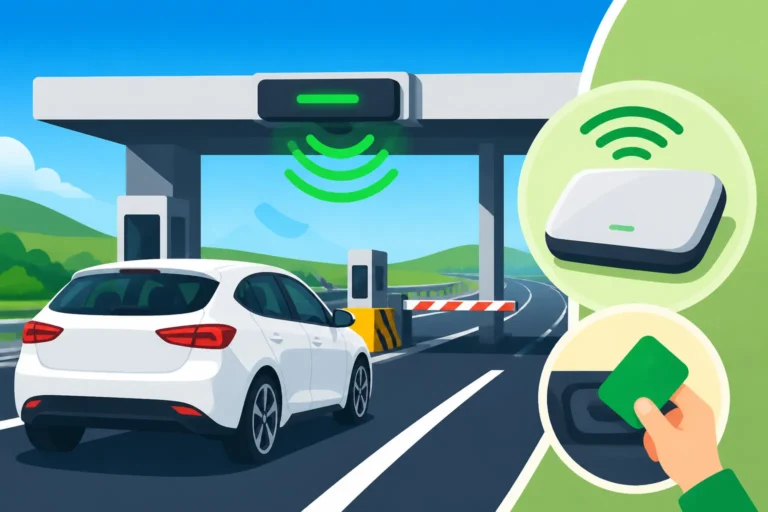
Regardless of which transmission you choose, driving in Portugal requires a shift in mindset. The motorways (Autoestradas) are excellent and well-maintained, but they come with a cost. You will need to become familiar with Navigating the Portuguese Toll System: Via Verde and Electronic Tolls. If you choose a manual car, the frequent toll booths can be a bit of a chore as you constantly downshift and stop. An automatic makes the motorway experience much smoother.
However, the "SCUTs" (electronic-only tolls) are where most people get tripped up. If you are driving a rental or a newly purchased car without a Via Verde transponder, you must know How to pay an unpaid SCUT electronic toll online before getting fined. The fines for non-payment are steep and can escalate quickly, often being caught by the tax authorities (Finanças) rather than just the highway company.
Handling the Local Driving Etiquette
In Portugal, the "blinkers" (indicators) are often treated as a suggestion rather than a rule. Tailgating is also common on the A1 and A2 motorways. If you are in a manual car and someone is tailgating you on a steep hill, the pressure not to roll back during a stop-start situation is intense. This is another area where the automatic driver has a distinct psychological advantage. You can focus on the road and the aggressive drivers around you without worrying about your footwork.
If the stress of driving yourself sounds like too much, you can always rely on ride-hailing. Check out our analysis on Using Bolt vs Uber in Portugal: Which ride-hailing app is cheaper to see if you can manage your daily life without a car at all. Many expats living in central Lisbon or Porto find that they only need a car for weekend trips to the Silver Coast or the Algarve, in which case a short-term rental is often more cost-effective than ownership.
Essential Gear for Your Portuguese Car
Once you have your car, whether it’s a manual rental or a permanent automatic purchase, there are a few items you legally must carry. This includes a reflective vest (which must be kept inside the cabin, not the trunk) and a warning triangle. You can easily find these safety kits on Amazon Spain if your car doesn't come equipped with them. Additionally, having a good phone mount is essential because the narrow, winding streets of Portuguese villages are a maze that even the best internal GPS systems struggle with.
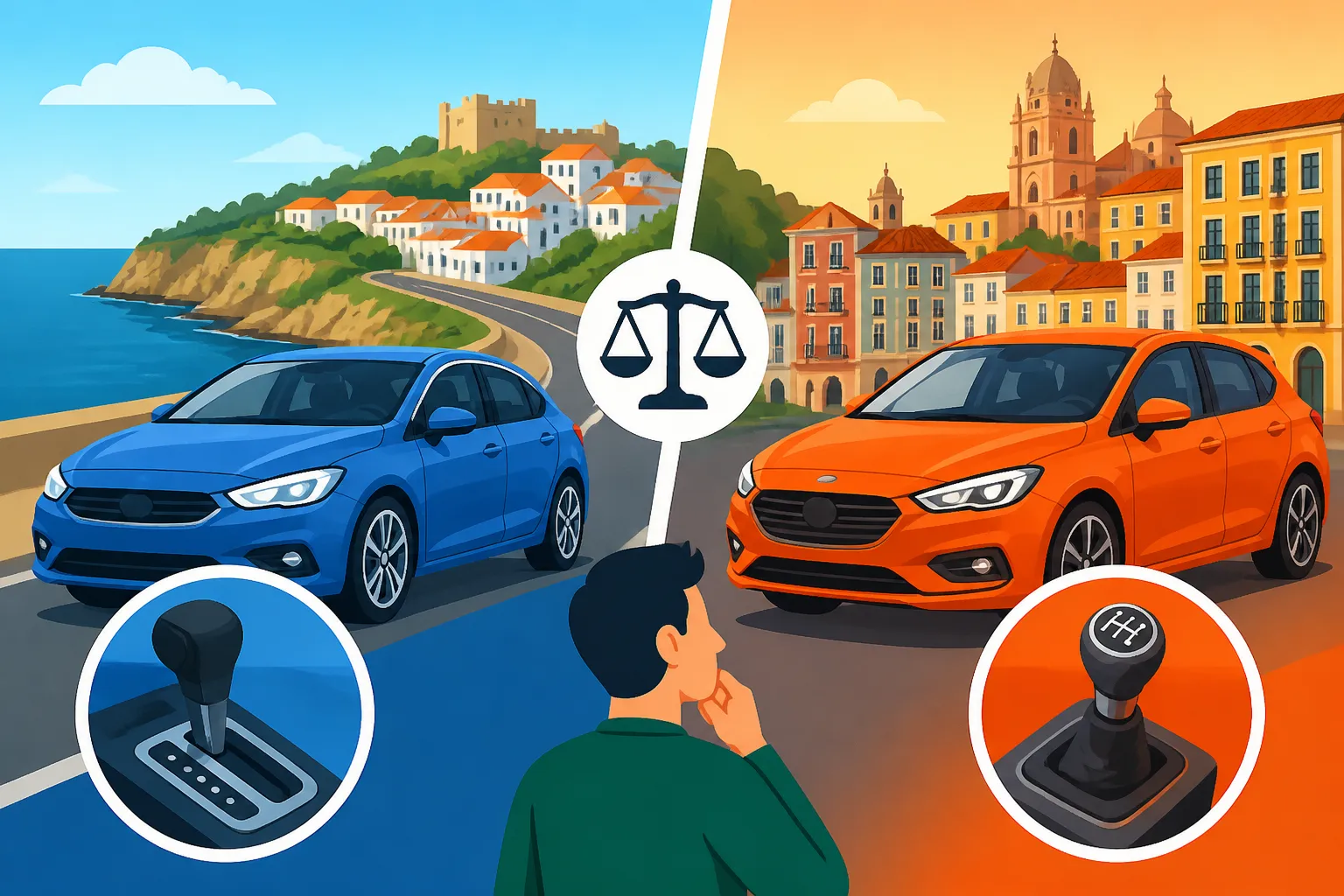
Ultimately, the choice between manual and automatic in Portugal comes down to your budget and your "stress threshold." If you are on a tight budget and want the true "local" experience, a manual car will save you thousands of Euros over several years. But if you value your sanity and want to enjoy the scenic drives through the Douro Valley without the constant fear of stalling on a hairpin turn, the automatic premium is the best money you will ever spend.
Disclaimer
This guide is provided for informational purposes only. Driving laws, rental prices, and vehicle taxes in Portugal are subject to frequent change. While we strive to keep this information up to date for 2026, always verify specific legal requirements with the IMT (Instituto da Mobilidade e dos Transportes) or a qualified legal professional before purchasing a vehicle or exchanging a driver's license.