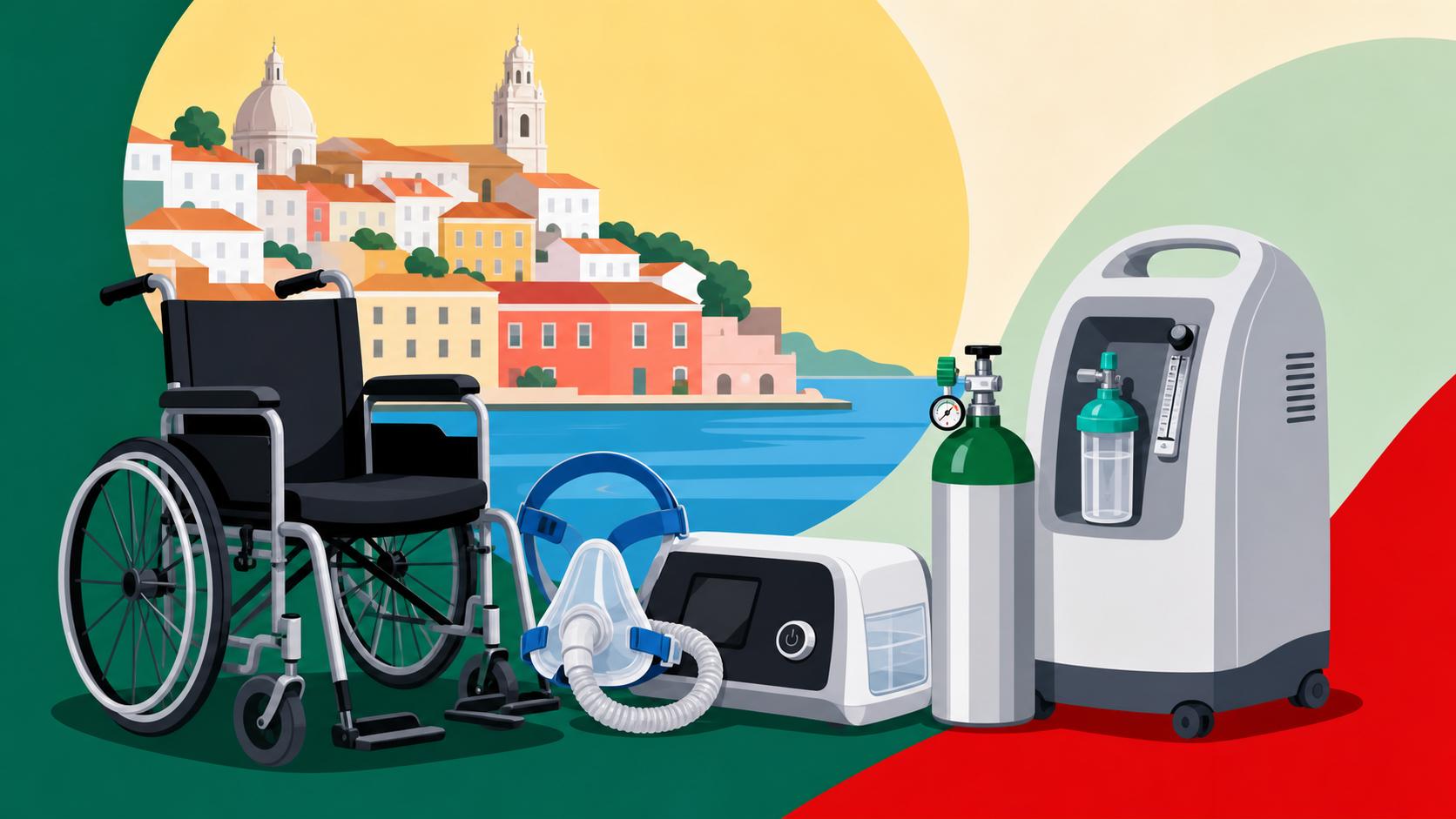
Buying Medical Equipment: Wheelchairs, CPAP Machines, and Oxygen in Portugal
Finding out your mobility scooter has a dead battery just as you are trying to navigate the steep, cobbled hills of Alfama is a specific type of stress only an expat knows. Newcomers often lose days searching pharmacies for a replacement walker, only to realize they should have been looking in specialized stores. This guide clears that confusion, ensuring you get the wheelchairs, CPAP machines, or oxygen you need without the administrative headache.
Navigating the Portuguese Market for Durable Medical Equipment
The first thing you will notice when moving here is that the healthcare landscape is bifurcated. There is the public system, known as the SNS, and a very robust private sector. When it comes to buying medical equipment, where you go depends largely on who is paying and how quickly you need the item. For those just starting their journey, I highly recommend reading Healthcare in Portugal for Expats: The Complete 2026 Medical Guide to understand the broader context of how medical services are structured here.
Where to Start: Loja de Ortopedia vs Local Pharmacies
In many countries, you might expect a large pharmacy to carry wheelchairs or crutches. In Portugal, pharmacies (Farmácias) are primarily for medication. If you need "Durable Medical Equipment" (DME), you need to find a "Loja de Ortopedia." These are specialized shops that range from small family-run boutiques to large showrooms like Ortopedia Universal or Mais que Cuidar. These stores are where the real expertise lies; the staff are usually trained to fit braces, adjust wheelchairs, and explain the nuances of different CPAP masks.
Walking into a local ortopedia can be intimidating if your Portuguese is still a work in progress. However, in major hubs like Lisbon, Porto, and the Algarve, you will frequently find staff who speak excellent English. If you are struggling with the language, check our guide on Finding Doctors and Specialists in Portugal: English-Speaking Medical Care for tips on navigating these professional interactions. These shops are not just for buying; they are the primary point of contact for repairs and maintenance, which is vital because the salt air in coastal Portugal can be surprisingly corrosive to electronic medical gear.
The Language Barrier: Essential Terms for Medical Gear
When you are searching online or talking to a technician, using the right terminology is half the battle. A wheelchair is a "cadeira de rodas." An electric one is a "cadeira de rodas elétrica." If you need a walker, ask for an "andadeiro." For sleep apnea issues, you are looking for equipment related to "Apneia do Sono." Understanding these terms will help you avoid the blank stares that sometimes greet expats in more traditional Portuguese neighborhoods.
I remember once trying to explain "CPAP filters" to a clerk who only spoke Portuguese; it took ten minutes of miming before I realized I should have just shown him the Portuguese term on my phone. Beyond the hardware, you should also be aware of the "receita" (prescription). Even in the private sector, certain high-end equipment or insurance-reimbursed items will require a formal sign-off from a doctor. If you aren't sure how to get one, you might need to start by Registering with the Centro de Saúde: Getting Your SNS Número de Utente to access the public prescription system, or see a private specialist.
Buying or Renting Wheelchairs and Mobility Aids
Portugal is a beautiful country, but it is notoriously difficult for those with mobility challenges. The traditional "calçada portuguesa" (white and black limestone mosaics) is slippery when wet and uneven at the best of times. Consequently, the type of wheelchair or mobility aid you choose needs to be rugged. You aren't just buying a chair; you are buying a vehicle for some of the most challenging urban terrain in Europe.
Renting Mobility Aids for Short-term Recovery
If you are only in Portugal for a few months or are recovering from a temporary injury, renting is almost always the better path. Companies like SeniorWay or various local "ortopedias" offer weekly and monthly rates for manual wheelchairs, hospital beds, and even mobility scooters. This is particularly helpful if you are staying in a rental apartment that isn't fully accessible; you can rent slim-line chairs designed to fit through the narrow doorways typical of older buildings in Porto or Lisbon.
Renting also saves you from the "expat tax" of buying a brand-new item only to sell it for a fraction of the price when you leave. Most rental agreements include a deposit (caução) and a delivery fee. I have found that these companies are incredibly responsive; if a wheel squeaks or a battery fails, they usually swap the equipment out within 24 hours. For those managing more complex home care situations, our article on Senior Care in Portugal: In-home Nursing, Care Homes, and Accessibility provides deeper insights into the support systems available for the elderly and those with chronic mobility issues.
Purchasing Custom Wheelchairs and Scooters in Portugal
For long-term residents, purchasing a custom-fitted wheelchair is a significant investment. Brands like Quickie, Invacare, and Sunrise Medical are widely available through authorized dealers. When buying, always ask about the "Garantia" (warranty). Portuguese law is quite protective of consumers, typically offering a three-year warranty on new goods, but you must ensure the dealer has a local service center. If you buy a specialized chair from abroad and it breaks in a rural village in the Alentejo, finding someone to fix it will be a nightmare.
Before pulling the trigger on a multi-thousand-euro electric chair, check if your private insurance, such as Cigna Global, covers a portion of the cost. Many international plans have "vision and durable equipment" riders that can significantly offset the price. If you are comparing your options, read up on Public vs Private Healthcare in Portugal: Which One Should Expats Choose? to see which system offers better support for your specific equipment needs. Also, keep in mind that "heavy" equipment like scooters might require a larger vehicle or specific ramps for your home, which are also sold at these specialized shops.
CPAP Machines and Sleep Apnea Supplies
Sleep apnea is a common concern among the expat community, and navigating the replenishment of supplies can be tricky. If you brought your machine from the US or Canada, remember that Portugal operates on 230V. Most modern CPAP machines are dual-voltage, but you will need a simple plug adapter. However, the real challenge is finding the specific masks and filters that match your model.
Dealing with Prescription Requirements (Receitas)
In Portugal, you cannot simply walk into a shop and buy a CPAP machine without a medical reason. You generally need a "estudo do sono" (sleep study) and a prescription from a pulmonologist (pneumologista). If you have a foreign prescription, it may be accepted by private clinics, but for the public system to subsidize the machine, you will need a Portuguese doctor to transcribe it into the electronic system.
If you are using the public system (SNS), the government often provides the machine through a rental contract with a third-party provider like Air Liquide or Linde. They deliver the machine to your house and provide filters periodically. However, the wait times for a sleep study in the public sector can be months long. Many expats choose to go private to speed up the process. For more on managing costs in the public system, see Taxas Moderadoras: Co-payments and Costs in the Public Health System. If you have an international policy like Cigna Global, the cost of a private sleep study and the subsequent machine purchase might be fully or partially covered.
Maintaining Your Device: Filters, Masks, and Distilled Water
Once you have your machine, maintenance is your next hurdle. "Água destilada" (distilled water) is essential to prevent mineral buildup in your humidifier. You can find this in large 5-liter jugs at supermarkets like Continente or Pingo Doce, usually in the cleaning or car maintenance aisle. Do not use "água desmineralizada" if it is scented; look for the plain, medical-grade version if possible, though the standard supermarket distilled water is what most locals use.
Masks and tubing can be purchased at a "Loja de Ortopedia" or ordered online from specialist Portuguese websites. I’ve noticed that prices in physical stores can be 20% higher than online, so it pays to shop around. For smaller health-related items, like specialized vitamins or cleaning wipes that are hard to find in local shops, many expats use iHerb to ship products from international warehouses. Just be sure to read our guide on Bringing Prescription Drugs to Portugal: Customs and Import Rules to understand how health-related shipments are handled by Portuguese customs (Alfândega).
| Equipment Type | Typical Purchase Price | Monthly Rental Cost | Prescription Required? |
|---|---|---|---|
| Manual Wheelchair | €150 – €600 | €30 – €60 | No (unless subsidized) |
| Electric Wheelchair | €1,500 – €5,000+ | €150 – €300 | Usually for insurance |
| CPAP Machine | €600 – €1,200 | €40 – €70 | Yes |
| Oxygen Concentrator | €800 – €2,000 | €80 – €150 | Yes (Mandatory) |
| Knee Walker | €200 – €350 | €40 – €60 | No |
| Hospital Bed | €800 – €2,000 | €70 – €120 | No |
Oxygen Therapy and Concentrators in Portugal
Requiring supplemental oxygen is a high-stakes medical need that requires careful planning in Portugal. Whether you use a stationary concentrator at home or portable tanks, the "Oxigénio Domiciliário" (home oxygen) market is strictly regulated. You cannot simply "buy" oxygen tanks over the counter; they are considered a medical gas and require a specific type of medical oversight.
Emergency vs Chronic Oxygen Needs
If you find yourself in a situation where you suddenly need oxygen, your first step should be the hospital or the national emergency line. Familiarize yourself with Emergency Medical Care in Portugal: Calling 112 and Going to the Hospital before an emergency occurs. For chronic needs, a specialist must issue a "requisição" (request) detailing the flow rate and the number of hours per day you require therapy.
Once you have this paperwork, you will deal with companies like Linde Saúde or VitalAire. If you are covered by the SNS, the cost is largely subsidized, and the company will deliver the concentrator and backup tanks to your home. If you are a private patient, you will pay a monthly rental fee. Having a reliable insurance provider like Cigna Global is a godsend here, as they can often coordinate with these providers to ensure direct billing, saving you from paying thousands of euros upfront and waiting for reimbursement.
Traveling Within Portugal with Oxygen
Traveling with oxygen requires advanced notice, especially if you are using public transport. Comboios de Portugal (the national train service) and airlines like TAP have specific protocols for "POCs" (Portable Oxygen Concentrators). You must ensure your device is FAA-approved and that you have enough battery life for 150% of your flight duration.
Inside Portugal, if you are driving, the heat can be a factor. Never leave oxygen tanks in a hot car during a summer day in the Alentejo, where temperatures can easily hit 40°C (104°F). If you are moving between cities, you can coordinate with your oxygen provider to have supplies waiting for you at your destination. For daily health supplements that might support your respiratory health, iHerb offers a wide range of options that can be delivered to your Portuguese address, often more affordably than local specialty shops.
Funding and Insurance Coverage for Medical Equipment
The biggest question I get is: "Who pays for this?" The answer is a mix of the state, your insurance, and your own pocket. Portugal's medical system is generous, but it is also bureaucratic. If you are patient, you can save a lot of money; if you are in a rush, you will likely be paying out-of-pocket.
SNS Subsidies and the 'Número de Utente'
If you are a legal resident and registered at your local Centro de Saúde, you may be eligible for "Proteses e Complementos Terapêuticos" (prosthetics and therapeutic aids) subsidies. This includes everything from glasses to wheelchairs. The catch is that the equipment must be prescribed by an SNS doctor, and there is often a "list of approved suppliers."
The process involves submitting a request to the ARS (Administração Regional de Saúde). It can take months to get approval. For many expats, the wait is too long, which is why they turn to the private sector. However, for high-cost items like custom electric wheelchairs, it is worth the effort to go through the public system. Our guide on Navigating Medical Billing and Insurance Reimbursements in Portugal goes into detail on how to handle these claims.
Private Insurance Reimbursements: Cigna Global and Local Providers
Most local private insurances (like Médis or Multicare) have a specific "capital" or limit for medical equipment. Usually, they pay 80% or 90% of the cost, up to a certain yearly limit. International plans like Cigna Global often have much higher limits for DME, which is essential if you require high-tech gear or top-of-the-line CPAP machines.
To get reimbursed, you must have:
- A medical prescription (even from a private doctor).
- A detailed invoice (fatura) containing your NIF (tax number) and the specific medical codes for the equipment.
- A "relatório médico" (medical report) explaining why the equipment is necessary.
Many expats lose out on hundreds of euros because they forgot to ask the shop to put their NIF on the receipt. In Portugal, if the NIF isn't on the invoice at the time of purchase, it essentially doesn't exist for the tax or insurance authorities.
Practical Tips for Foreign Residents
Beyond the logistics, living in Portugal with medical equipment requires some lifestyle adjustments. The houses are often colder and more humid than what you might be used to in the US or UK. This humidity can affect the electronics in oxygen concentrators and CPAP machines.
Avoiding "Expat Taxes" on Medical Supplies
Sometimes, shops see a foreigner and the price suddenly becomes "flexible" in the wrong direction. Always check the prices on the store's website before going in person. Better yet, use the "Livro de Reclamações" (complaints book) if you feel you are being treated unfairly, though this is rare in professional medical shops.
Another way to save is by looking for "recondicionado" (refurbished) equipment. Some larger ortopedias sell chairs or beds that were used for rentals but have been fully serviced. These can be 40-50% cheaper than new ones. For those small items like knee braces, compression socks, or specialized health monitors, shoppers often find that iHerb has a better selection than the local shops, and their shipping to Portugal has become much more reliable in recent years.
Online Shopping and Importing Supplements with iHerb
While you can't buy oxygen or CPAP machines on a whim online, you can buy many of the accessories. I frequently order CPAP cleaning wipes and replacement headgear from iHerb because the local markup in Lisbon is quite high. They also carry a vast array of mobility-related accessories, like cup holders for wheelchairs or specialized cushions.
When ordering from abroad, just keep the "IVA" (VAT) in mind. Most medical equipment in Portugal enjoys a reduced IVA rate of 6%, but if you import it yourself from outside the EU, you might get hit with the standard 23% rate plus customs fees. It is usually better to buy the "big" items locally and the "small" accessories through trusted sites like iHerb or Amazon Spain. For a refresher on what you can and can't easily bring over the border, refer to Pharmacies and Medication in Portugal: Prescriptions and OTC Drugs.
Disclaimer
The information provided in this guide is for informational purposes only and does not constitute medical or legal advice. Healthcare regulations and insurance policies in Portugal can change frequently. Always consult with a qualified medical professional or an insurance specialist regarding your specific health needs and coverage options.