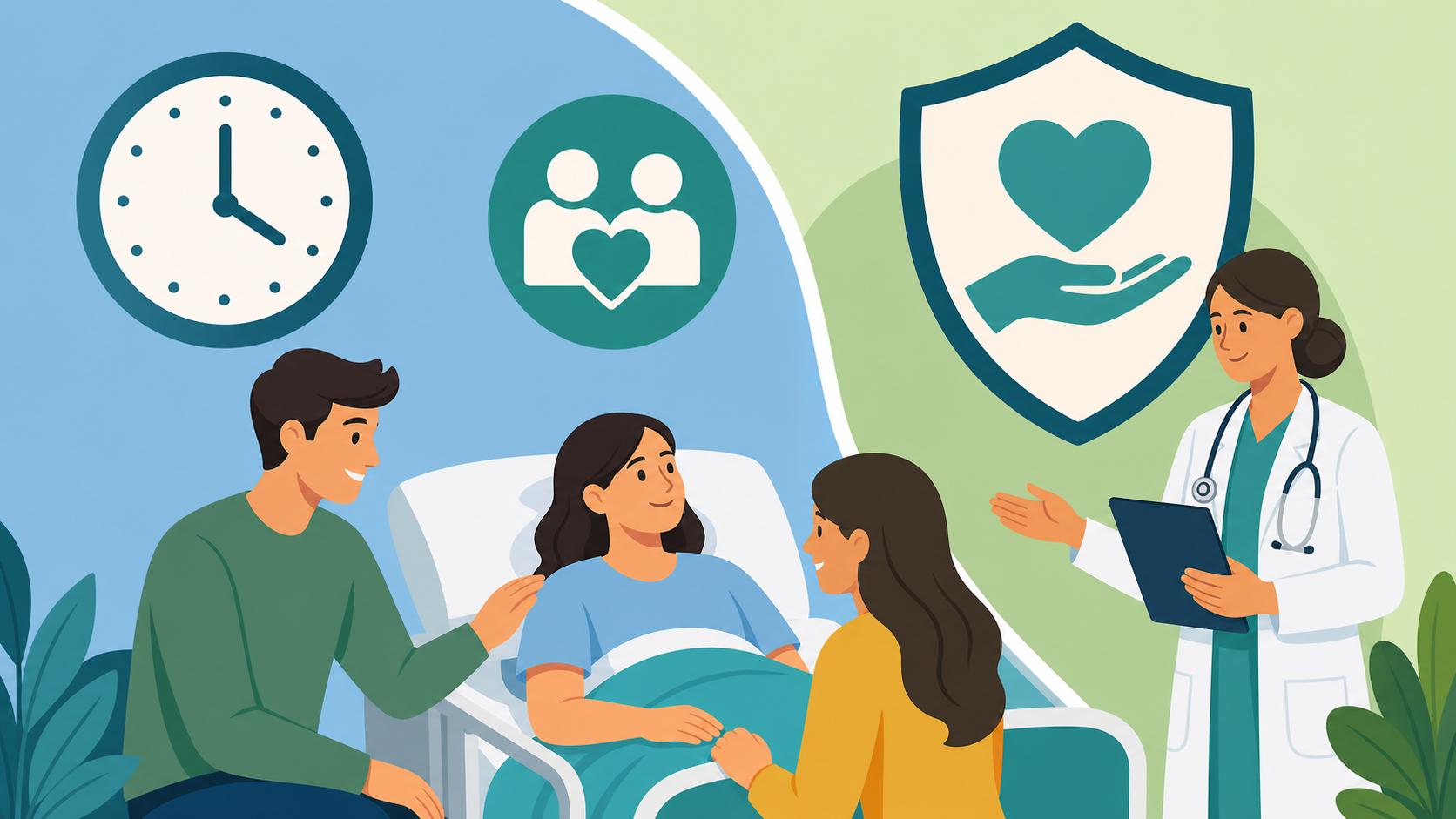
Portuguese Hospital Etiquette: Visiting Hours and Patient Rights
Walking into a Portuguese hospital for the first time can feel like stepping onto a different planet where the rules of gravity have suddenly shifted. I remember sitting in a crowded waiting room in Lisbon, clutching my residency papers and wondering why everyone seemed to know exactly which window to queue at while I felt completely invisible. This guide breaks down the cultural codes, patient rights, and visiting norms you need to navigate the Portuguese healthcare system with confidence.
The Cultural Landscape of Portuguese Hospitals
Understanding the vibe of a Portuguese hospital is the first step toward a stress-free experience. Whether you are in a state-of-the-art private facility or a bustling public ward, the atmosphere is often a mix of high-level medical professionalism and traditional Mediterranean family-centricity. Portuguese families are deeply involved in the care of their loved ones, which can make wards feel livelier—and louder—than what you might be used to in Northern Europe or North America.
Public SNS vs Private Hospital Dynamics
The experience between the public Serviço Nacional de Saúde (SNS) and private groups like Hospital da Luz and CUF: Navigating Portugal's Biggest Private Hospitals is night and day when it comes to etiquette and amenities. In public hospitals, resources are often stretched, and the environment is functional. You will find that staff are incredibly competent but often brusque because of the sheer volume of patients they handle. Etiquette here means being patient, having your documents ready, and not expecting the "customer service" frills common in private care.
In the private sector, the etiquette shifts toward a more hospitality-focused model. You’ll be greeted by receptionists, offered water, and the facilities will feel more like a hotel. However, don't let the shiny lobby fool you; the medical protocols remain strict. For expats, having Private Health Insurance in Portugal: Costs, Coverage, and Best Providers is often the key to bypassing the administrative friction of the public system, especially when you want more flexible visiting hours and private rooms.
The administrative side of public hospitals requires a certain "hustle." You need to be proactive about asking for updates. If you are just starting your journey, ensure you've completed Registering with the Centro de Saúde: Getting Your SNS Número de Utente before you ever need the hospital, as showing up without a number in the public system complicates the intake etiquette significantly.
The Manchester Triage System Protocol
When you enter the Urgências (Emergency Room), you won't be seen in order of arrival. Portugal uses the Manchester Triage System, where you are assigned a color-coded wristband after an initial assessment by a nurse. Etiquette dictates that you respect this hierarchy without complaint. A person with a red or orange bracelet is in critical condition and will always go before someone with a green or blue bracelet, even if the latter has been waiting for six hours.
Understanding this system is crucial for your sanity. If you are assigned a blue or green bracelet, prepare for a long wait. Bringing a book, a power bank, and a snack is standard practice. Many expats feel the urge to "check in" with the triage desk every thirty minutes, but this is generally frowned upon unless your symptoms have worsened significantly. For a deeper dive into these wait times, see our guide on Emergency Medical Care in Portugal: Calling 112 and Going to the Hospital.
The triage nurse is the gatekeeper. Etiquette here involves being clear, concise, and honest about your pain levels. Do not exaggerate to get a "better" color, as the nurses are highly trained to spot inconsistencies. However, do not minimize your symptoms either. If you have international coverage through a provider like Cigna Global, you might choose to head straight to a private ER where the triage wait is often shorter and the etiquette more tailored to international expectations.
Interacting with Medical Hierarchy
Portugal maintains a traditional respect for titles. While the world is becoming more casual, in a hospital setting, addressing a doctor as "Senhor Doutor" or "Senhora Doutora" is still very common and appreciated. Nurses are addressed as "Enfermeiro" or "Enfermeira." Using these titles shows that you understand local customs and respect their professional standing.
The hierarchy is quite vertical. You will often find that the nurses do the bulk of the patient interaction, while the "médico" makes the final decisions during "a ronda" (the rounds). Etiquette involves saving your most technical questions for the doctor's visit, which usually happens in the morning. If you try to pin down a nurse for a formal diagnosis, they will politely (or sometimes firmly) tell you to wait for the doctor.
For expats, language can be a barrier to following this hierarchy. If your Portuguese is still basic, it is perfectly acceptable to ask, "Fala Inglês?" but do so with a smile. Most younger doctors speak excellent English, but the support staff may not. Preparing a small kit of recovery supplies from iHerb, such as specialized electrolytes or high-quality lip balms, can help you feel more in control of your environment when communication feels limited.
Navigating Visiting Hours and Guest Protocols
Visiting a friend or family member in a Portuguese hospital requires a bit of tactical planning. Unlike some countries where visiting is "open," Portuguese hospitals—especially public ones—often have very specific windows where the doors are unlocked for guests. If you show up five minutes late, you might find the ward doors firmly shut, and the security guards are notoriously strict about the clock.
Standard Visiting Hours in Public Hospitals
In the SNS (Public System), visiting hours are typically restricted to the afternoon, often between 2:00 PM and 7:00 PM or 8:00 PM. However, this is often split into "periods." For example, you might have a 30-minute window for one visitor and then a longer window later in the day. Each hospital has its own "Regulamento Interno," and it is usually posted near the entrance of the ward.
Etiquette dictates that only one or two people are at the bedside at a time. In public wards, where rooms are often shared between three or four patients, having a crowd around one bed is considered highly disrespectful to the other patients' privacy and recovery. If you have a large family, you should rotate in shifts in the hallway or the hospital cafeteria.
If you are visiting a patient in the ICU (Unidade de Cuidados Intensivos), the rules are even tighter. Usually, only immediate family is allowed, and visits are often limited to two 15-minute slots per day. You will likely be required to wear a gown, mask, and shoe covers. Following these hygiene protocols to the letter is the most important part of "visitor etiquette" in high-care environments.
Private Hospital Flexibility and Comfort
Private hospitals like those in the CUF or Luz networks offer significantly more flexibility. In many cases, if the patient is in a private room, one person is allowed to stay 24/7. This "acompanhante" (companion) role is a staple of Portuguese healthcare culture. If you are staying overnight as a companion, the hospital usually provides a reclining chair or a small sofa-bed.
The etiquette for being an overnight companion involves staying out of the way of the nursing staff during their night checks. Don't be the person who turns on all the lights at 3:00 AM to find a charging cable. Private hospitals also have "extended" visiting hours, sometimes from 10:00 AM to 9:00 PM, allowing for a much more relaxed flow of guests.
Even in private care, it's worth checking if your insurance, perhaps through Cigna Global, covers the meals and "stayover" fees for the companion. While the etiquette allows you to be there, the billing department still needs to know who is paying for the extra coffee and bed linens. Many expats find that the comfort of a private room makes the recovery process much smoother for the whole family.
Bringing Gifts and Outside Food
In Portugal, it is traditional to bring something to a patient, but you must be careful about what you choose. Flowers are generally welcome in standard wards but are strictly forbidden in ICUs and maternity wards due to infection and allergy risks. If you do bring flowers, ensure they aren't "heavy" smelling, as shared rooms mean your lilies might give the patient in the next bed a headache.
Food is a complicated subject. Portuguese hospital food in the public system is notoriously bland (often boiled fish and potatoes). While the etiquette allows you to bring a "treat," you must always check with the nurse first to ensure the patient isn't on a restricted diet or waiting for surgery (NPO/Jejum). Bringing a heavy "bacalhau" dish to someone recovering from abdominal surgery is a major faux pas.
Instead of heavy meals, many savvy expats bring high-quality snacks or supplements. I often order specialized protein bars or herbal teas from iHerb to bring to friends, as the hospital-provided options are usually limited to basic crackers and tea. Just remember to keep your "gift stash" tidy; a cluttered bedside table makes it harder for nurses to do their jobs, which violates the unspoken rule of being a "good" visitor.
| Feature | Public Hospital (SNS) | Private Hospital (e.g., CUF/Luz) |
|---|---|---|
| Visiting Hours | Strict (usually 2 PM – 7 PM) | Flexible (often 10 AM – 9 PM) |
| Overnight Guests | Usually not allowed (except for children/elderly) | Often allowed in private rooms |
| Room Occupancy | Often 2-4 beds per room | Usually private or semi-private |
| Staff Interaction | Formal, high-volume, brusque | Service-oriented, more time for questions |
| Language | Primarily Portuguese (English varies) | High English proficiency |
| Out-of-Pocket Cost | Low (Taxas Moderadoras) | High (unless covered by insurance) |
Understanding Patient Rights in Portugal
The Portuguese "Carta dos Direitos e Deveres do Utente" (Charter of Rights and Duties of the Patient) is a powerful document that outlines exactly what you can expect and what is expected of you. Knowing these rights is the best way to advocate for yourself or a loved one if things aren't going as planned.
The Right to Accompaniment
One of the most significant rights in Portugal is the "Direito de Acompanhamento." This law states that children, pregnant women, the elderly, and people with disabilities have a legal right to have a companion with them 24 hours a day, even in the public system. If a hospital tries to tell you that you cannot stay with your young child, you have the legal standing to insist.
For everyone else, the right to a companion is usually limited to visiting hours, but the "duty" of the hospital is to facilitate this as much as possible. If you are a legal resident and have gone through the process of Finding an English-Speaking General Practitioner (Médico de Família), they can often help coordinate your care rights before you are even admitted.
Etiquette-wise, while you have the right to be there, you also have the duty to "not interfere with the technical-scientific actions of the medical team." This means you can be in the room, but if the doctor asks you to step out while they perform a procedure or a sensitive exam, the local etiquette is to comply immediately and without argument.
Informed Consent and Privacy
You have the right to be informed about your condition in a way that you understand. In Portugal, this means the doctor should explain the risks, benefits, and alternatives to any treatment. If you don't speak Portuguese, the hospital has an obligation to help you understand, though in the public system, this often falls on you to find a translator or use a translation app.
Privacy is also a high priority. Even in a shared room, doctors should pull the curtains before an exam. You have the right to refuse students being present during your treatment, which is common in "Hospitais Universitários" like Santa Maria in Lisbon or São João in Porto. Simply saying, "Prefiro não ter estudantes presentes, por favor," is enough.
For those managing chronic conditions and using Private Health Insurance in Portugal: Costs, Coverage, and Best Providers, you often have more leverage to demand a private environment for these discussions. If you feel your privacy has been violated, the correct etiquette is to ask to speak to the "Gabinete do Utente" (Patient Bureau) rather than making a scene in the hallway.
The Right to Complain: The Livro Amarelo
If your rights are ignored, every hospital in Portugal is legally required to have a "Livro de Reclamações" (Complaint Book), often called the "Livro Amarelo" (Yellow Book) in medical settings. It is your most powerful tool. If a staff member is abusive or a facility is dangerously unsanitary, asking for the book is a formal act that the administration cannot ignore.
However, etiquette suggests this should be your last resort. Portuguese culture values "solving things with a talk" (resolver as coisas com uma conversa). Before reaching for the yellow book, try to speak with the head nurse (Enfermeiro Chefe) or the department head. Often, a calm explanation of the issue will get it fixed faster than a formal complaint.
If you do need to use it, you can now also access it online. For more details on the process, check out our guide on Understanding the 'Livro Amarelo' (Yellow Book) for Medical Complaints. Remember, the book is for serious service failures, not for complaining that the soup was cold or the wait was long—those are unfortunately standard parts of the public hospital experience that a complaint won't change.
Communication and Language Etiquette
Language is often the biggest hurdle for expats in Portuguese hospitals. While the medical terminology is often similar to English, the day-to-day instructions can be confusing. The etiquette of communication in Portugal is based on politeness and patience.
Bridging the Language Gap
When you don't understand an instruction, do not just nod and say "Sim." This is a common mistake that can lead to medical errors. Instead, use the phrase "Pode repetir mais devagar, por favor?" (Can you repeat more slowly, please?). Most staff will appreciate your effort to communicate in their language and will often switch to English if they are able.
If you are undergoing a major procedure, the etiquette allows—and encourages—you to bring a friend who speaks better Portuguese. This person acts as your "interlocutor." In the public system, having a Portuguese speaker with you can significantly speed up administrative hurdles. If you are Using Cigna Global or Allianz for international expat healthcare in Portugal, they sometimes offer concierge services or can recommend clinics with high English proficiency.
Digital tools are your best friend. Having a translation app ready on your phone is standard practice now. You can even use the camera function to translate the "Consentimento Informado" (Informed Consent) forms before you sign them. Just make sure your phone is charged; I always keep a backup battery and a high-quality charging cable from iHerb in my "hospital bag" for this very reason.
Non-Verbal Cues and Hospital "Vibe"
Portuguese culture is "high-context," meaning a lot of communication happens through tone and body language. If you are aggressive or demanding (the "I want to speak to the manager" approach), you will likely be met with a "wall" of bureaucratic slowness. The best etiquette is to be "simpático"—be friendly, smile, and express gratitude for the staff's hard work.
Eye contact is important. When talking to a doctor, look them in the eye. It shows you are engaged and respect their authority. Also, be aware of your volume. Portuguese hospitals can be noisy, but contributing to the noise by having loud phone conversations on speaker is considered very poor etiquette. Keep your phone on silent and take calls in the designated waiting areas.
Lastly, respect the "silêncio." Many wards have a "hora do descanso" (rest hour) in the early afternoon where lights are dimmed and visitors are encouraged to be extra quiet. Following these small cues shows the staff that you are an "insider" who understands the culture, which often leads to better rapport and, ultimately, better care.
Practical Logistics: Billing and Discharge Etiquette
The final part of your hospital journey is leaving. Whether it’s a quick ER visit or a week-long stay, there are administrative "rites of passage" you need to follow.
Dealing with Taxas Moderadoras and Billing
In the public system, you will likely have to pay "Taxas Moderadoras" (user fees). These are small co-payments for consultations and exams. Even if you have a residency card, if you haven't properly updated your status, you might be charged the "non-resident" rate. Etiquette involves handling these payments at the "Tesouraria" (Treasury) or a dedicated kiosk before you leave. For a full breakdown of these costs, see Taxas Moderadoras: Co-payments and Costs in the Public Health System.
In private hospitals, the billing process is more complex. You will often be asked for a credit card "imprint" or a deposit upon entry. The etiquette here is to ensure your insurance has sent a "Pre-Authorisation" (Termo de Responsabilidade). If you are Using the European Health Insurance Card (EHIC) in Portugal, make sure the staff at the intake desk see the physical card immediately, as they cannot apply it retroactively once the bill is generated.
Always ask for a "Fatura" (Invoice) with your NIF (Tax Number). This is not just a suggestion; it is a cultural norm in Portugal. These medical expenses can be deducted from your annual IRS tax return, provided you've followed the steps in e-Fatura guide: Why cashiers ask for your NIF at the supermarket regarding health deductions.
The Discharge Process (A Alta)
When a doctor gives you "a alta" (discharge), it doesn't mean you can just walk out the door. You need to wait for your "Nota de Alta"—a summary of your treatment and medications. Etiquette requires you to stay in your room or the waiting area until this paperwork is physically in your hand. This document is vital for your Finding an English-Speaking General Practitioner (Médico de Família) to update your medical records.
If you need a "Baixa Médica" (Sick Note) for your employer, you must ask for it before you leave. In Portugal, these are often sent digitally to the social security system, but having a paper copy is a safe bet. The etiquette is to politely remind the doctor: "Preciso de uma baixa para o trabalho, por favor."
Before leaving, it is common to say a warm "Obrigado/a" to the nursing staff. In some private clinics, people even leave a small box of chocolates at the nursing station if the care was exceptional. In public hospitals, a sincere verbal thank you is more than enough and deeply appreciated by the overworked staff.
Preparing Your Hospital "Survival Kit"
Because Portuguese hospitals can be a bit "traditional," you shouldn't expect the same amenities you might find in a US or UK hospital. Preparing a bag in advance is part of the veteran expat's "etiquette of self-reliance."
Personal Care and Comfort Items
Public hospitals usually only provide the basics: a bed, a thin pillow, and meals. You are expected to bring your own pajamas, towel, and toiletries. If you show up for an overnight stay without a "necessaire" (toiletry bag), you will be very uncomfortable.
Packing is recommended:
- A robe and slippers (the floors are cold!).
- A high-quality sleep mask and earplugs (essential for shared rooms).
- Your own soap and shampoo. I often stock up on travel-sized organic products from iHerb because hospital soap can be quite harsh on the skin.
- A small stash of bottled water, as tap water in some older hospitals can taste heavily of chlorine.
Documentation Checklist
Etiquette and administrative flow are inseparable in Portugal. Have a folder ready with:
- Your Passport or ID card.
- Your NIF document.
- Your SNS "Número de Utente" (User Number).
- Your Private Insurance Card (e.g., Cigna Global).
- A list of your current medications (with dosages).
Having this folder ready and handing it to the intake clerk with a smile is the ultimate etiquette "pro tip." It signals that you are organized and respect their time, which sets a positive tone for your entire stay. For a complete list of what you need for the first month, check out the Health checklist for your first 30 days living in Portugal as an expat.
Disclaimer
The information provided in this guide is for general informational purposes only and does not constitute professional medical or legal advice. Hospital policies, visiting hours, and patient rights can change frequently in Portugal. Always consult directly with the specific medical facility or a qualified healthcare professional regarding your individual situation. The author and publisher are not responsible for any actions taken based on the contents of this article.