How to Register as an EU Citizen in Portugal (CRUE)
When you first arrive in Portugal as an EU citizen, there's a lovely feeling of freedom. No complicated visa applications, no long waits for residency appointments, right? Well, not quite. While you certainly have the right to live and work here, there's a crucial administrative step you absolutely cannot skip if you plan to stay longer than three months: registering for your Certificado de Registo de Cidadão da União Europeia, or CRUE. This guide will walk you through exactly what it is, why you need it, and how to get it done with minimal fuss.
Understanding the CRUE: Your First Step to Formal Residency
Many EU citizens arrive in Portugal with the understanding that they can simply move and settle without much paperwork, thanks to the principle of free movement. And for the first three months, that's generally true. You can explore, find a place to live, and enjoy the initial honeymoon phase. However, Portugal, like all EU member states, requires a formal registration if you intend to reside for longer than this initial period. This is where the CRUE comes into play – it's your official acknowledgement from the Portuguese authorities of your right to reside here as an EU citizen.
What Exactly is the Certificado de Registo de Cidadão da União Europeia (CRUE)?
The CRUE is essentially a registration certificate that confirms your right to live in Portugal for more than three months. It's not a residence permit in the same vein as those issued by AIMA (Portugal's new immigration agency) to non-EU citizens, but rather a formal declaration of your presence and intent to reside. It's mandated by Directive 2004/38/EC, which outlines the rights of EU citizens to move and reside freely within member states. By registering, you're informing the Portuguese state that you're exercising this right and that you meet one of the required conditions for extended stay, such as being employed, self-employed, a student, or having sufficient financial resources and comprehensive health insurance. Think of it as putting your name on the local register – a crucial bureaucratic step that unlocks access to many aspects of daily life.
Who Needs to Apply for the CRUE?
Simply put, any citizen of an EU, EEA (European Economic Area – Iceland, Liechtenstein, Norway), or Swiss Confederation country who plans to stay in Portugal for more than three consecutive months needs to apply for the CRUE. This also extends to family members who are not EU/EEA/Swiss citizens but are accompanying or joining an EU/EEA/Swiss citizen. For these non-EU family members, the process might involve a slightly different route through AIMA to obtain a residence card, but their right to reside stems directly from their relationship with the registered EU citizen. If you are an EU citizen planning a longer stay, be it for work, study, retirement, or simply enjoying the Portuguese lifestyle, getting your CRUE is non-negotiable.
The Importance of the CRUE for Daily Life in Portugal
Without a CRUE, you might find yourself hitting roadblocks surprisingly quickly. It’s more than just a piece of paper; it’s a foundational document that often serves as proof of your legal residency when dealing with various institutions. For instance, while you can get your NIF (Número de Identificação Fiscal – tax identification number) without a CRUE initially, many banks prefer or even require proof of legal residency beyond just a NIF and a foreign passport when opening an account, especially for long-term residents.
Accessing the public health system is another area where the CRUE becomes vital. To fully Registering with the Centro de Saúde: Getting Your SNS Número de Utente, you'll need your CRUE, alongside your NIF and proof of address. Without it, you might be limited to using your European Health Insurance Card (EHIC) for emergencies, which isn't a long-term solution. Your CRUE also helps solidify your position for tax purposes, making it easier to declare yourself a tax resident if you spend more than 183 days in the country. It signals to the authorities that you are a legitimate resident, not just a long-term tourist, which can impact everything from signing long-term rental contracts to even getting certain types of local discounts.
The Step-by-Step CRUE Application Process
Navigating Portuguese bureaucracy can feel a bit like a maze, but getting your CRUE is generally one of the smoother processes for EU citizens. The key is preparation and understanding where to go and what to bring.
Gathering Your Essential Documents
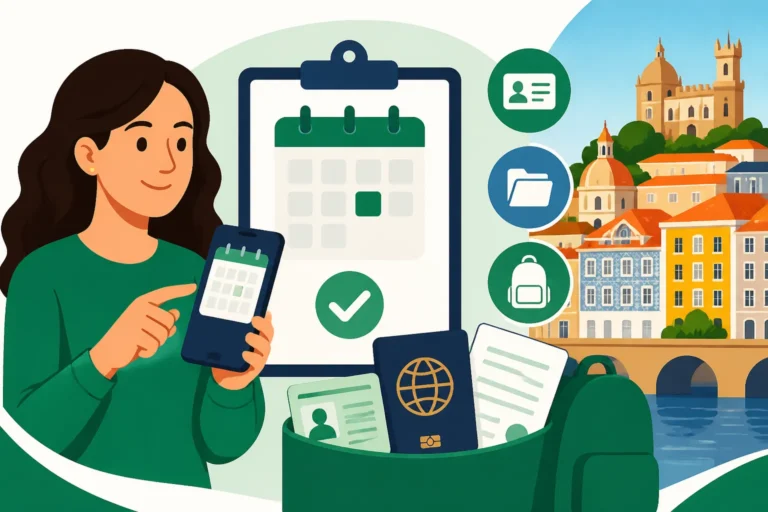
This is arguably the most critical part of the entire process. Without the correct documents, your application will be delayed or rejected. It's always best to bring original documents and at least one photocopy of each. Some Câmaras (municipal councils) might also request two copies.
Here's a breakdown of what you'll typically need:
- Valid Passport or ID Card: Your official national identification document. Ensure it's current and hasn't expired.
- Proof of Address: This is crucial. A rental contract (contrato de arrendamento) registered with Finanças is ideal. If you're staying with friends or family, you might need a formal declaration (declaração) from them, along with proof of their address (e.g., utility bill in their name) and a copy of their ID. Utility bills in your name, once you have them, can also work. For early arrivals, a promissory contract for a long-term rental or a declaration from your landlord might suffice, but check with your specific Câmara. This is similar to the Proof of Accommodation for D7 and D8 Visas: 12-Month Lease Requirements that non-EU citizens need, highlighting the universal need for a stable address.
- Proof of Sufficient Financial Means: This demonstrates you won't become a burden on the Portuguese social assistance system.
- If employed: Your employment contract (contrato de trabalho) or a declaration from your employer stating your position, salary, and duration of employment. Recent payslips can also be helpful.
- If self-employed (Trabalhador Independente): Proof of registration with Finanças (Declaração de Início de Atividade) and potentially recent invoices or a declaration from your accountant.
- If a student: Proof of enrollment at a recognized educational institution and a declaration of financial means, often with bank statements showing sufficient funds, or proof of a scholarship.
- If retired or financially independent: Bank statements from a Portuguese or international bank, pension statements, or other proof of regular income. While there isn't a strict minimum specified like for D7 visas, demonstrating a stable income above the national minimum wage is generally advisable.
- Proof of Health Coverage:
- For the first few months: Your European Health Insurance Card (EHIC) is often accepted as initial proof.
- For longer stays or as primary coverage: A private health insurance policy or proof of registration with the Portuguese social security system (if employed) or the National Health Service (SNS). If you're relying on private insurance, ensure it provides comprehensive coverage in Portugal. Companies like Cigna Global offer excellent international health insurance plans designed for expats, which can serve as robust proof of coverage. The requirements for this are often less stringent than for long-term non-EU visas, but having solid coverage is always wise, as detailed in guides like Travel Insurance vs Private Health Insurance for Your Initial Visa Application.
- NIF (Número de Identificação Fiscal): You should ideally have this already. If you don't, you'll need to obtain it before applying for the CRUE. Services like Bordr can assist you in getting your NIF remotely before you even arrive in Portugal, which can significantly streamline your initial administrative tasks. Having your NIF is a prerequisite for most official dealings in Portugal, as explored in NIF and NISS: How to Get Your Portuguese Tax and Social Security Numbers.
| Document Category | Specific Document Examples | Notes |
|---|---|---|
| Personal ID | Valid Passport or EU/EEA/Swiss ID card | Original + photocopy |
| Proof of Address | Rental contract, utility bill, "Atestado de Morada" from Junta de Freguesia | Must show your current Portuguese address |
| Financial Means | Employment contract, payslips, bank statements, pension statements, proof of enrollment (for students) | Must demonstrate self-sufficiency for your stay |
| Health Coverage | EHIC, private health insurance policy, SNS registration proof | Ensure comprehensive coverage |
| Tax ID | NIF document (Comprovativo de NIF) | Essential for all official transactions |
Where to Submit Your Application: The Câmara Municipal
Unlike visa applications or non-EU residence permits, which go through AIMA, the CRUE is handled at the local level by your Câmara Municipal (Municipal Council). Each Câmara operates slightly differently, so it's always a good idea to check their official website or call ahead for their specific procedures and opening hours.
Here’s what to expect:
- Locate Your Câmara Municipal: Find the administrative building for the municipality where you reside. For instance, if you live in Lisbon, you'd go to the Câmara Municipal de Lisboa.
- Check for Appointment Systems: Some Câmaras, especially in larger cities like Lisbon or Porto, might require you to book an appointment online or by phone. Others may operate on a walk-in basis with a queuing system. It’s crucial to verify this beforehand to avoid a wasted trip.
- The Department: Look for the "Balcão Único" (One-Stop Shop) or the department responsible for "Atendimento ao Cidadão" (Citizen Services) or "Registo de Cidadãos da União Europeia."
- Language Barrier: While staff at larger Câmaras might speak some English, it’s not guaranteed. Having a basic understanding of Portuguese or bringing a Portuguese-speaking friend can be incredibly helpful. If you have any documents that aren't in Portuguese, you might need to get them officially translated. Services like RushTranslate can provide certified translations quickly, which can be invaluable for official documents.
The Application Interview and Fee
When you attend your appointment or wait for your turn, the process itself is usually straightforward:
- Document Check: A civil servant will review all your documents. This is where those photocopies come in handy, as they'll likely keep them.
- Brief Interview: You might be asked a few basic questions about your purpose for staying in Portugal, your address, and your financial situation. This is generally more of a formality to confirm your details rather than an interrogation.
- Fee Payment: There is a small administrative fee for the CRUE. This fee is relatively modest, typically ranging from €5 to €15, but it can vary slightly by municipality and is subject to change. You'll usually pay this directly at the Câmara, often by card or sometimes in cash.
- Issuance: In many cases, if all your documents are in order, your CRUE certificate will be issued to you on the spot! It's a printed A4 paper, not a card, so keep it safe.
Life After CRUE: What Comes Next?
Receiving your CRUE feels like a small victory. It's the first tangible proof of your legal residency in Portugal, and it opens doors to deeper integration into your new home. Don't just file it away and forget it – understand what it means for your life here and the steps that might follow.
Your Rights and Obligations as a Registered EU Resident
With your CRUE in hand, you are officially registered as a resident. This comes with several rights:
- Full access to the National Health Service (SNS): You can now properly Registering with the Centro de Saúde: Getting Your SNS Número de Utente and benefit from subsidized healthcare, just like Portuguese citizens.
- Social Security Number (NISS): If you’re working, your CRUE is a key document for obtaining your NISS, which is essential for contributions and accessing benefits. This process is covered in more detail in our guide on NIF and NISS: How to Get Your Portuguese Tax and Social Security Numbers.
- Working and Studying: Your right to work or study is solidified, making it easier to open professional bank accounts, sign employment contracts, or enroll in further education.
- Tax Residency: After 183 days of physical presence in a calendar year, you are generally considered a tax resident in Portugal. Your CRUE helps establish this, impacting your income tax obligations (IRS). Understanding Becoming a Tax Resident in Portugal: The 183-Day Rule Explained is crucial here.
However, you also have obligations, primarily adhering to Portuguese laws and fulfilling your tax duties. It’s a reciprocal agreement: the right to reside comes with the responsibility to contribute to and abide by the rules of your host country.
Moving Towards Permanent Residency
The CRUE is specifically for your initial registration as a temporary resident (for up to five years). After five years of continuous legal residence in Portugal, you become eligible to apply for permanent residency. This is a significant milestone and requires a separate application, again through the Câmara Municipal (for EU citizens) or, in the case of non-EU family members, potentially AIMA.
The document you receive after five years is called the "Certificado de Residência Permanente" (Certificate of Permanent Residence). This certificate confirms your unrestricted right to reside in Portugal indefinitely. The criteria for permanent residency for EU citizens are generally about demonstrating continuous residence and, once again, proof of sufficient funds and health coverage, and not having any serious criminal record. This process is distinct from the permanent residency path for non-EU citizens, but the principle of long-term legal integration is the same. For more on this, you can refer to our guide on Permanent Residency in Portugal: Requirements, Language Tests, and Timelines.
It's also important to note that if you have non-EU family members who joined you under Family Reunification Visa in Portugal: Bringing Your Spouse and Children, their path to permanent residency will typically align with yours, but their applications will be handled by AIMA.
Common Pitfalls and How to Avoid Them
Even for a relatively simple process like the CRUE, things can sometimes go awry. Here are a few common pitfalls expats face and how to steer clear of them:
- Incomplete Documentation: This is the number one reason for delays. Double-check the Câmara's specific requirements, gather all originals and copies, and ensure all documents are current. Don’t assume one Câmara’s rules are the same as another.
- Language Barrier: Portuguese bureaucracy operates in Portuguese. If your language skills aren't strong, bring a friend, family member, or a professional translator. Misunderstandings can lead to errors or frustration.
- Proof of Accommodation Issues: Sometimes, informal arrangements, like staying indefinitely with a friend without a formal declaration, can cause issues. Ensure your proof of address is robust and formally recognized.
- Not Knowing Your Local Câmara's Quirks: Some Câmaras are highly efficient, others less so. Some may require appointments months in advance, others might be walk-in friendly. A quick online search or a call can save you a lot of time. Many expat groups on social media can also provide up-to-date, localized advice from people who have recently gone through the process.
- Assuming EHIC is Enough Long-Term: While the EHIC is great for emergencies, it's not a substitute for comprehensive healthcare coverage for long-term residency. Make sure you understand the nuances of Portugal's National Health Service (SNS): How the Public System Works and transition to proper registration or private insurance.
Important Considerations for EU Citizens in Portugal
Getting your CRUE is a foundational step, but it's part of a larger picture of integrating into life in Portugal. There are other crucial aspects that you, as an EU citizen, should be aware of to ensure a smooth transition.
Healthcare Access with Your CRUE
Once you have your CRUE, you can fully engage with the Portuguese healthcare system. Your CRUE, along with your NIF and proof of address, allows you to register at your local Centro de Saúde (health center). Upon registration, you'll receive your Número de Utente (user number), which is your key to accessing public doctors, specialists, and discounted medications. For a deep dive into the system, consult our guide, Healthcare in Portugal for Expats: The Complete 2026 Medical Guide. Remember that while public healthcare is generally very good and subsidized, there are taxas moderadoras (co-payments) for many services, as explained in Taxas Moderadoras: Co-payments and Costs in the Public Health System. Many expats opt for private health insurance to supplement the public system, reducing wait times and increasing choice.
Understanding Tax Implications
As mentioned earlier, once you reside in Portugal for more than 183 days in a calendar year (or have your primary residence here), you become a tax resident. This means you’ll be subject to Portuguese income tax (IRS) on your worldwide income, unless a double taxation agreement with your home country states otherwise. Your NIF, obtained often with the help of services like Bordr, is critical for all tax matters, including filing your annual tax return. Portugal also has a specialized tax regime called NHR 2.0 (or IFICI) for certain high-value professions or scientific research roles, which offers significant tax benefits for the first ten years. While EU citizens previously qualified for the older NHR without issues, the new NHR 2.0 has specific criteria. Understanding your tax obligations and potential benefits is paramount, and guides like Portuguese Taxes for Expats: IRS, Tax Residency, and Filing Deadlines can provide invaluable insights.
Dealing with Bureaucracy and Delays
Let's be realistic: Portuguese bureaucracy, while generally improving, can still test your patience. Don't expect things to always move at lightning speed. Delays, unexpected requests for additional documents, or long queues can happen. The key is to approach it with a calm attitude, bring all the documentation you think you might need (and then some), and be prepared for potential follow-ups.
Always keep copies of everything you submit and any receipts you receive. If you encounter significant issues or feel you're being unfairly treated, the Livro de Reclamações (Complaints Book), available both physically at public service offices and online, is a formal channel for raising concerns. While the CRUE process is relatively simple, your ongoing interactions with other administrative bodies may require a bit more resilience. Knowing that you're not alone in these frustrations can be a small comfort, as many expats share similar experiences in the administrative journey of settling in Portugal.
Disclaimer
The information provided in this guide is for general informational purposes only and does not constitute legal, financial, or immigration advice. While we strive to keep the information accurate and up-to-date, laws and procedures in Portugal can change rapidly. It is highly recommended to consult with a qualified legal or immigration professional for advice tailored to your specific situation before making any decisions related to your residency or immigration status in Portugal.