How to Bring Your Spouse to Portugal
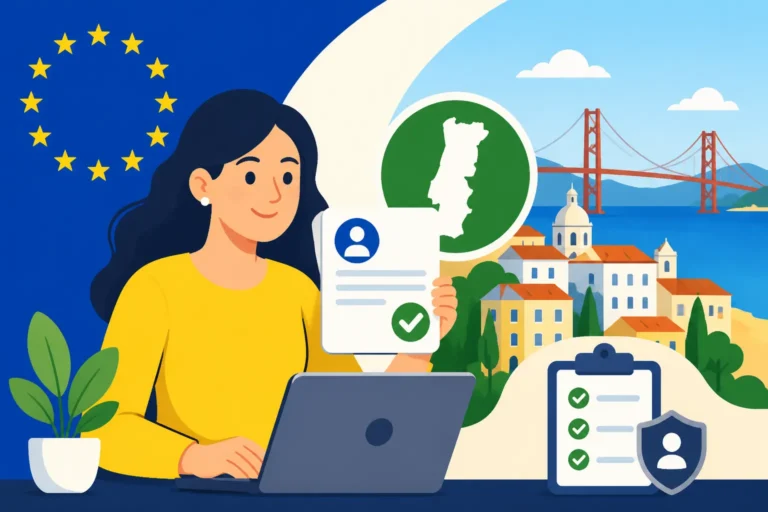
Moving to a new country like Portugal is an incredible adventure, but let's be honest, it can also feel incredibly daunting, especially when you're trying to navigate everything while also wishing your significant other was right there beside you. The thought of bringing your spouse over, grappling with paperwork, appointments, and potentially baffling bureaucracy, is enough to make anyone feel overwhelmed. This guide is here to cut through the confusion, offering a clear, step-by-step pathway to reunite with your loved one in Portugal, making the process as smooth as possible for fellow expats.
Understanding the Family Reunification Visa
First things first, let's talk about the family reunification process, which is the official route to bring your spouse to Portugal once you, the primary resident, have already secured your own residence permit. It’s not just about a spouse; this visa pathway extends to other close family members too, but for today, we're focusing on getting your partner here. The Portuguese government, through AIMA (the new Agency for Integration, Migration and Asylum), recognizes the importance of family unity, and while the process can feel like a labyrinth, there is a clear path.
Who Qualifies as a "Spouse" for Family Reunification?
When Portugal talks about "spouse" for family reunification, they're generally referring to legally married partners, whether from a civil marriage or a registered civil union (common-law partnership). It's crucial that your relationship is legally recognized in your home country. If you're not legally married but have a long-term, stable de facto union, Portugal has provisions for that too, often referred to as União de Facto. This usually requires proving a shared life for a certain period, typically two years, and can be a bit more nuanced in terms of documentation. For many, simply being married simplifies things considerably, as the marriage certificate serves as definitive proof of relationship. You’ll need to ensure your marriage certificate is apostilled or legally certified for use in Portugal.
The Legal Framework: Article 98 and Beyond
The legal basis for family reunification stems from Article 98 of the Lei de Estrangeiros (Foreigners Law). This article outlines the rights of foreign residents in Portugal to family reunification. Essentially, if you hold a valid residence permit – be it a D7 Passive Income Visa, a D8 Digital Nomad Visa, or any other long-term residency – you are entitled to apply for family reunification for your spouse. This means your spouse isn't applying for their own independent visa but rather as a dependent of your existing legal status. This is a critical distinction, as it shapes the types of documents required and the application strategy. It also means that their right to reside and work in Portugal is tied to yours.
Essential Documentation for Your Spouse's Visa Application
Alright, let's get into the nitty-gritty: paperwork. This is where most of us expats feel the burn, right? Portugal loves its documents, and the family reunification visa is no exception. Missing even one tiny detail can cause frustrating delays, so pay close attention.
Documents from the Primary Resident (You)
Since your spouse's application is dependent on your status, you'll need to provide proof of your solid residency in Portugal. Think of it as demonstrating that you’ve built a stable foundation here.
- Your Valid Residence Permit: This is non-negotiable. You'll need a copy of your current Portuguese residence card (Cartão de Residência) or the official document proving your temporary residence if you're still awaiting your physical card. This shows you're legally established.
- Proof of Accommodation: A current lease agreement (contrato de arrendamento) or deed of property (escritura) in your name. This demonstrates that you have a stable place for your spouse to live once they arrive. Ensure the address matches your registered address in Portugal. Sometimes, a "Atestado de Morada" from your local Junta de Freguesia can also be useful, confirming your registered address.
- Proof of Financial Means: Just like when you applied for your own visa, you need to show you can support your spouse financially without relying on public assistance. For family reunification, you typically need to demonstrate 50% of the Portuguese minimum wage for your spouse, in addition to your own minimum wage requirement. As of 2026, the minimum wage is €920 per month. So, if you're supporting yourself and a spouse, you'd generally need to show income or savings equivalent to €920 + (€920 / 2) = €1,380 per month. This can be bank statements, pension statements, or employment contracts. Remember, Portugal likes to see stability.
- Proof of Healthcare Coverage: Your spouse will need health insurance. If you're already registered with Portugal's National Health Service (SNS) and have your Número de Utente, you can include proof of your registration. However, it's often smoother to obtain private health insurance for your spouse for the initial application. Companies like Cigna Global offer excellent expat-focused plans that are widely accepted for visa purposes. You'll need to demonstrate coverage that's valid in Portugal, with adequate minimum coverage, often around €30,000 for medical emergencies and repatriation.
- NIF (Número de Identificação Fiscal): Your Portuguese tax identification number. This is crucial for nearly everything in Portugal, and you’ll already have one.
Documents from Your Spouse
Now, for the documents your spouse needs to gather. This is where the translation and apostille process often comes into play.
- Valid Passport: Of course! Ensure it has at least six months of validity beyond their intended stay.
- Visa Application Form: Duly completed and signed.
- Two Passport-Sized Photos: Recent, color, with a white background.
- Marriage Certificate: The cornerstone of the application. This absolutely must be original or a certified copy, apostilled (if from a country party to the Hague Convention) and translated into Portuguese. For translations, services like RushTranslate can be invaluable for accurate, certified translations that consular officials accept.
- Criminal Record Certificate: A criminal background check from their country of origin and any country they've lived in for more than one year in the past five years. This also needs to be apostilled and translated. Again, RushTranslate is a reliable option for these certified translations.
- Authorization for Criminal Record Check: A document authorizing AIMA to conduct a criminal record inquiry in Portugal. This is usually a standardized form provided by the consulate or VFS Global.
- Proof of Health Insurance: As mentioned earlier, even if you’re on the SNS, it’s highly recommended to get a private health insurance policy for your spouse initially. This satisfies the visa requirement. A quote or proof of purchase from a reputable provider like Cigna Global will work wonders here.
- Proof of Accommodation: While you'll submit your lease, your spouse might need to provide a formal invitation letter from you, stating they will reside with you at that address.
- NIF (Número de Identificação Fiscal): Yes, your spouse will need their own NIF. You can obtain this for them even before they arrive, often through online services like Bordr, especially if they are still abroad. Having this ready saves a crucial step later.
A Quick Note on Translations and Apostilles
This step trips up many people, so let’s be extra clear. Any document not originally issued in Portuguese must be translated by a certified translator. More often than not, these translated documents, along with the originals, must also be "apostilled." An apostille is an international certification that makes documents valid for use in other countries that are part of the Hague Apostille Convention. If your country is not part of this convention, then a more complex legalization process through the Portuguese consulate in your country might be necessary. Always double-check the specific requirements of the Portuguese consulate where your spouse will apply.
Here’s a summary of common documents:
| Document Type | From Primary Resident (You) | From Spouse (Applicant) | Notes |
|---|---|---|---|
| Identification | Valid Portuguese Residence Permit | Valid Passport | Passport must have 6+ months validity. |
| Proof of Relationship | N/A | Original/Certified Marriage Certificate | Must be apostilled and translated into Portuguese by a certified translator (e.g., RushTranslate). |
| Financial Means | Bank statements, pension, employment contract proving income | N/A | Must show 150% of Portuguese minimum wage (€920 for you + €460 for spouse, totaling €1,380/month). |
| Accommodation | Rental contract or property deed | Invitation letter from primary resident | Must show stable housing in Portugal. |
| Background Check | N/A | Criminal Record Certificate (home country & countries lived in) | Must be apostilled and translated into Portuguese. Authorization for AIMA to check local records. |
| Health Coverage | Proof of SNS registration (optional but helpful) | Private health insurance policy (e.g., Cigna Global) | Mandatory for visa application, covering medical emergencies and repatriation. |
| Tax ID (NIF) | Your NIF | Spouse's NIF | Can be obtained remotely via services like Bordr before application. |
| Visa Application Specifics | N/A | Completed Visa Application Form, 2 Passport photos | Follow VFS Global or consulate specific forms. |
The Application Process: Step-by-Step
This is where the rubber meets the road. While the general steps are consistent, remember that each Portuguese consulate or embassy abroad might have slight variations in their specific procedures or preferred third-party application centers like VFS Global. Always, always check their website for the most current information.
Step 1: Gather All Documents (and then some!)
You know the drill. Refer back to the list above and tick everything off. Get your documents apostilled and translated early. Don't wait until the last minute, because these processes can take weeks, if not months. I've heard too many stories of people scrambling for an apostille while their appointment date looms. When using services like RushTranslate, be sure to communicate the urgency and requirements clearly. And don't forget your spouse's NIF! If they don't have one yet, a service like Bordr can help them acquire it while they're still in their home country. This will be a significant advantage.
Step 2: Book the Visa Appointment at the Consulate/VFS Global
Your spouse will need to apply for the family reunification visa at the Portuguese consulate or embassy responsible for their place of residence. In many countries, Portugal outsources visa application submissions to VFS Global. So, your spouse will likely need to schedule an appointment through the VFS Global portal. These appointments can be notoriously hard to get, so start checking for availability as soon as you have your documents in progress.
When booking, ensure you select the correct visa type: "Family Reunification" (Visto de Reagrupamento Familiar). They will submit all the physical documents at this appointment, and biometric data (fingerprints and photo) will be collected. This is also where they will pay the visa processing fees.
Step 3: Wait for the Consulate Decision
After submitting the application, it's a waiting game. The consulate will review the documents and often forward the application to AIMA in Portugal for further assessment and approval. This can take anywhere from a few weeks to several months. AIMA Residence Permit Processing Times vary wildly, and patience is a virtue you'll definitely cultivate during this period.
You can often check the status of the visa application through the VFS Global portal or directly with the consulate if they offer such a service. While waiting, ensure all your ducks are in a row in Portugal, especially your accommodation and financial stability.
Step 4: The 120-Day Entry Visa
If approved, the consulate will issue a temporary visa (often a D visa, or specific family reunification visa) in your spouse's passport, typically valid for 120 days. This is their ticket to enter Portugal. It's not a residence permit itself, but rather an authorization to enter Portugal and apply for the actual residence permit.
Once they have this visa, they should enter Portugal within the specified validity period.
Step 5: Schedule and Attend the AIMA Appointment in Portugal
This is arguably the most critical step once your spouse arrives. With their 120-day entry visa, they must now schedule an appointment with AIMA in Portugal to convert this temporary entry visa into a full residence permit. In the past, this was done with SEF, but now AIMA handles all new residence permit applications.
Booking this appointment can be tricky. Sometimes, the consulate provides guidance, or you might need to monitor the AIMA portal or call their helpline (which can be a test of patience!). Once an appointment is secured, your spouse will attend with all their original documents (and copies!). They'll undergo a brief interview, provide biometrics again, and pay the residence permit card fee. During this appointment, the AIMA officer will verify all the documents submitted at the consulate and confirm eligibility for the residence permit.
You, as the primary resident, might be required to accompany your spouse to this appointment to confirm your relationship and provide any additional information. This is a common practice to ensure all details are consistent.
Step 6: Receive the Residence Card
After the AIMA appointment, there's another waiting period for the physical residence card to be issued. This card will typically be valid for two years initially, mirroring your own residence permit's validity or aligning with the standard family reunification permit duration. Once the card arrives via registered mail (CTT), your spouse is officially a legal resident of Portugal!
Life in Portugal as a Family
Once your spouse has their residence card, a whole new world opens up. They can now fully integrate into Portuguese life, just like you.
Working and Studying in Portugal
One of the significant benefits of the family reunification residence permit is that it grants your spouse the right to work in Portugal immediately, without needing a separate work visa. They can look for employment, start their own business as a freelancer (trabalhador independente), or enroll in educational programs. This is a huge relief for many couples, as it allows both partners to contribute to the household income and pursue their career goals.
Accessing Public Services
With their residence card and NIF, your spouse can register with the public health system (SNS) at their local Centro de Saúde to get their Número de Utente. This gives them access to public healthcare services, often for a small co-payment (taxa moderadora). They can also apply for a NISS (Número de Identificação da Segurança Social) to contribute to social security if they start working, which is essential for future benefits. Don't forget, when dealing with these public services, patience and a friendly attitude go a long way, and a few Portuguese phrases can work wonders!
Driving and Travel
If your spouse has an international driving permit or a license from a country with a reciprocity agreement, they can drive in Portugal. They will eventually need to exchange their foreign license for a Portuguese one, following the IMT's guidelines. Their Portuguese residence card also allows them to travel freely within the Schengen Area without requiring additional visas, just like you.
Overcoming Challenges and Common Pitfalls
Let's face it, moving to Portugal is rarely without its bumps. Here are some common frustrations and how to navigate them:
Language Barrier
Unless you and your spouse are fluent in Portuguese, the language barrier can be a significant hurdle, especially during official appointments. While many younger officials speak English, it's not guaranteed.
- Solution: Consider hiring an interpreter for critical appointments like the AIMA interview. Learn basic Portuguese phrases for daily interactions. Even just "Bom dia" and "Obrigada/o" can make a difference. Many expat groups offer resources for learning Portuguese.
Appointment Delays and Backlogs
Portugal's immigration system, historically, has experienced significant backlogs. The transition from SEF to AIMA has introduced new procedures, and while the goal is efficiency, initial phases can be slow.
- Solution: Start the process early. Assume things will take longer than expected. Keep digital and physical copies of everything. If you face severe delays with AIMA, sometimes consulting an immigration lawyer can help clarify next steps or, in extreme cases, push for a resolution. Remember, companies like Bordr and RushTranslate can expedite NIF and translation processes, which helps prevent delays on their end, but AIMA's internal processing times are largely outside your control.
Document Apostille and Translation Fiascos
The requirements for apostilles and certified translations are strict. An incorrectly apostilled or non-certified translation can lead to rejection and more delays.
- Solution: Use reputable, certified translation services like RushTranslate that understand the requirements for Portuguese immigration. For apostilles, ensure you follow your home country's specific procedures to the letter. Don't take shortcuts.
Financial Proof Discrepancies
Sometimes, consulates or AIMA might have questions or concerns about the source or stability of your financial means.
- Solution: Be transparent and provide clear, well-organized bank statements or income proofs. If your income fluctuates, provide an average over several months, or demonstrate significant savings. If you're relying on remote work, ensure your contracts or invoices are clear.
Proving "União de Facto"
If you're not legally married, proving your de facto union can be more complex.
- Solution: Gather extensive evidence of your shared life: joint bank accounts, shared utility bills, mail addressed to both of you at the same address, sworn affidavits from friends/family, and proof of cohabitation from your home country. This step truly requires detailed preparation. For this specific challenge, exploring services of an immigration lawyer in Portugal might be particularly beneficial.
Conclusion
Bringing your spouse to Portugal is a journey, and like many expat journeys, it's filled with bureaucracy, learning curves, and moments of triumph. While it demands patience and meticulous attention to detail, the reward of building a life together in this beautiful country is immeasurable. By understanding the requirements, preparing your documents diligently (with the help of services like Bordr for NIFs and RushTranslate for translations), securing proper health insurance (perhaps with Cigna Global), and staying persistent, you can navigate the family reunification process successfully. Soon enough, you'll both be enjoying the sunshine and charm of Portugal, together.
Disclaimer
The information provided in this guide is for general informational purposes only and does not constitute legal, financial, or immigration advice. While we strive to keep the information up-to-date and accurate, laws and procedures in Portugal can change rapidly. Always consult with a qualified immigration lawyer or official AIMA sources for the most current and specific guidance related to your individual situation.