Can I work remotely in Portugal for 2 months without a visa as a tourist?
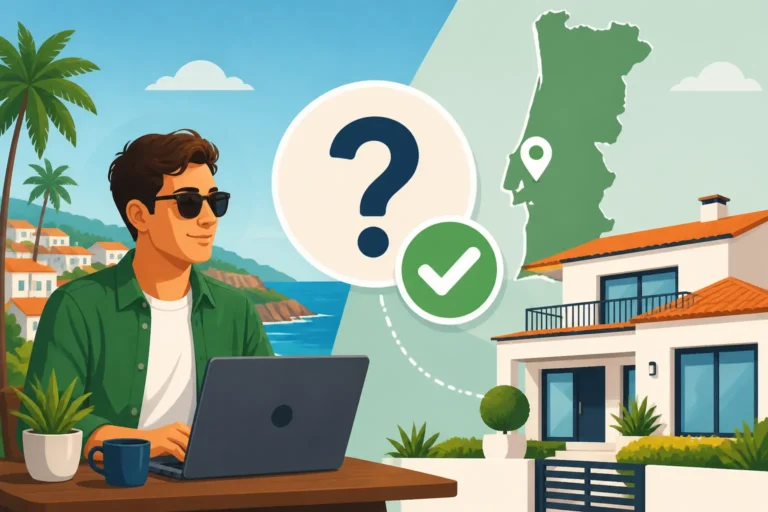
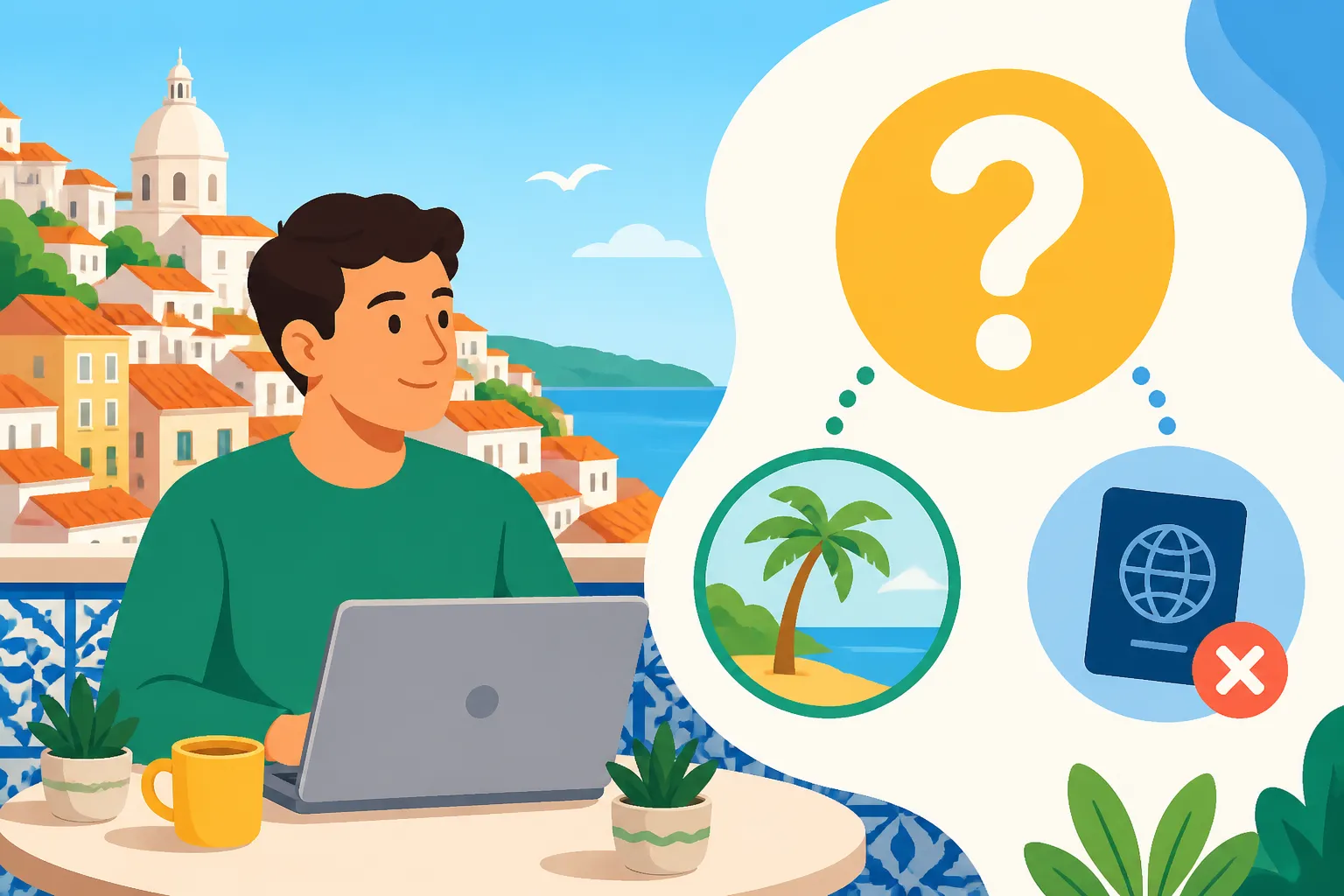
You are likely staring at a gorgeous picture of a sun-drenched terrace in the Alfama, wondering if you can just pack your laptop and work from there for a few weeks without alerting the authorities. When I first moved here, I spent nights scouring forums trying to figure out if my "working holiday" was actually a legal violation. This guide breaks down the complex reality of remote work on a tourist status in Portugal to keep you safe and informed.
The Legal Grey Area of Remote Work on a Tourist Visa
If you are a non-EU citizen, you typically enter Portugal under the Schengen Area's 90-day visa-free rule or a standard short-stay Schengen visa. Officially, these entry permits are designed for tourism, family visits, or business meetings—not for "remote work." However, the legal world hasn't quite caught up to the reality of the digital nomad lifestyle. The central question of whether you can work for a foreign employer while sitting in a Lisbon café is one of the most debated topics in the expat community.
The strict interpretation of Portuguese law suggests that any form of professional activity performed on Portuguese soil requires a proper work authorization. However, the practical reality is that Portuguese authorities are generally concerned with people "taking jobs" from the local labor market. If you are working for a company in New York or London and getting paid into a foreign bank account, you aren't exactly competing with a local worker in Porto. This has created a massive grey area where thousands of "laptop nomads" operate every year.
Understanding the Schengen 90-Day Rule
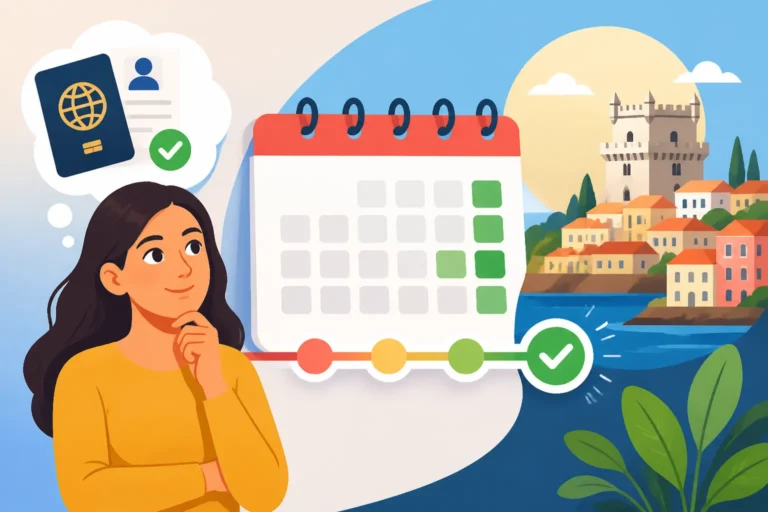
Before you worry about your job, you must master the calendar. Most tourists can stay in the Schengen Area for up to 90 days within any 180-day period. If you plan to stay for exactly two months (roughly 60 days), you are well within the limit, provided you haven't spent time in Spain, France, or Italy recently. It is wise to advise newcomers to use a Schengen 90/180 day rule calculator for digital nomads staying in Portugal to ensure they don't accidentally overstay.
Overstaying is a much bigger risk than "working." While the border police (AIMA) are unlikely to knock on your Airbnb door to see if you are on a Zoom call, they will absolutely notice if your exit stamp is 91 days after your entry. Since the transition from the old SEF to the new agency, as detailed in AIMA vs SEF: What Changed for Foreigners in Portugal After the Transition, enforcement at the borders has remained a priority even as backlogs for residency permits grow.
Does the Law Distinguish Between Work and Checking Emails
If you answer a few emails while on vacation, are you "working"? Probably not in the eyes of a border agent. If you are coding for eight hours a day, five days a week, for two months, you are definitely working. The distinction is one of intent and duration. Because Portugal now has a specific visa for this—the D8—the "grey area" is shrinking.
In the past, there was no legal path for remote workers, so the authorities looked the other way. Now that a legal path exists, there is a technical argument that you should be using it. However, applying for a visa for a mere 60-day stay is often seen as overkill by both the traveler and the consulate. If your stay is truly short-term and you aren't establishing a permanent home, most people treat it as a standard tourist visit.
Risks and Real-World Enforcement
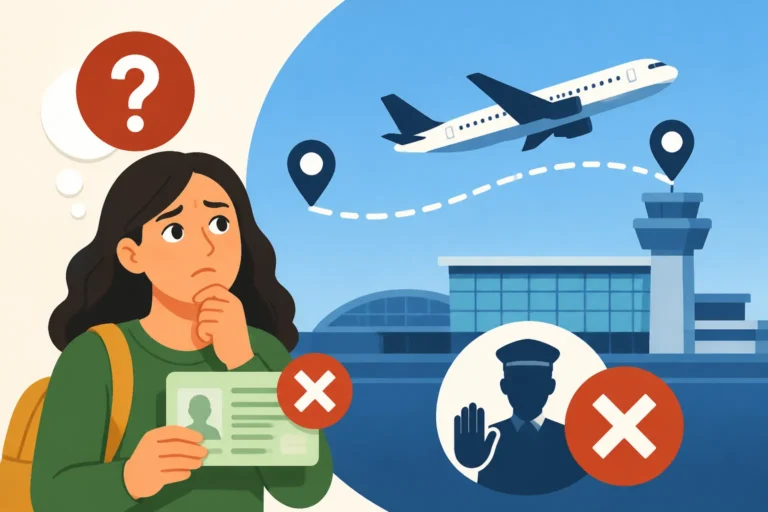
The actual risk of being deported for working on a laptop for two months is statistically very low, but it is not zero. The most common point of friction happens at the border. When you land at Lisbon airport, the immigration officer might ask, "What is the purpose of your visit?" If you enthusiastically shout, "I'm here to work remotely for my tech startup!" you might find yourself in a secondary screening room.
The safe and honest answer for a 2-month stay is usually "tourism and exploration." You are here to see the sights, enjoy the culture, and live locally. The fact that you might also check your laptop is incidental to the trip's primary purpose. Travelers who are overly honest at the border can end up having to prove they have a return ticket and sufficient funds because the officer became suspicious of their intent to leave.
What Happens at the Border
Border agents are trained to look for people who intend to overstay or settle illegally. They want to see that you have a place to stay and a way to leave. If you are staying in a short-term rental, ensure you have the booking confirmation ready. If you are asked about your profession, tell them what you do, but emphasize that you are on a break or a "working holiday" that fits within the tourist allowance.
If you decide that two months isn't enough and you want to stay long-term, you should look into the Portugal D8 Digital Nomad Visa: How to Work Remotely and Live Legally. This is the proper way to stay beyond the 90-day limit. Trying to "pivot" from a tourist stay to a work stay while inside the country is significantly harder now than it used to be.
Tax Residency and the 183-Day Threshold
One thing that surprises many 2-month visitors is the talk of taxes. In Portugal, you generally only become a tax resident if you spend more than 183 days in the country during a 12-month period. For a 2-month stay, you are safely below this threshold. This means you won't have to worry about filing an IRS return in Portugal or paying local social security.
However, if you find yourself falling in love with the country and staying longer, the tax implications change. You might even start asking for your NIF at the supermarket. For those who do transition to a longer stay, knowing How to get your NIF printed on your supermarket receipt for IRS tax benefits becomes a useful habit for future deductions. For your short 2-month stint, though, you can keep your finances strictly tied to your home country.
| Aspect | Tourist Status (2 Months) | Digital Nomad Visa (D8) |
|---|---|---|
| Stay Duration | Max 90 Days | 1 Year (Renewable) |
| Tax Liability | None (usually) | Full residency after 183 days |
| Right to Work | Grey Area / Restricted | Fully Authorized |
| NIF Required | No | Yes |
| Health Coverage | Travel Insurance | Private / Public (SNS) |
| Housing | Hotels / Airbnb | Long-term Lease |
Better Alternatives: The D8 Digital Nomad Visa
If you realize during your two months that Portugal is where you want to be, the D8 Digital Nomad Visa is your best friend. It was specifically created to solve the "grey area" problem. It allows high-earners to live in Portugal while working for employers or clients outside the country. The income requirement is currently four times the Portuguese minimum wage, which is a significant jump from the old D7 requirements.
Applying for this visa usually requires you to return to your home country and visit a consulate. You will need a mountain of paperwork, often requiring professional translation. It is wise to use a service like RushTranslate for your birth certificates or bank statements, as such services are familiar with the specific "certified translation" standards the Portuguese consulates demand. You can learn more about this in our guide on Translating and Certifying Documents for Portuguese Immigration.
When to Switch from Tourist to D8
Most people use their 2-month "tourist" window as a scouting mission. They use the time to visit different neighborhoods, check out Digital Nomad communities: Madeira's Nomad Village vs Lisbon hubs, and decide if they can actually handle the bureaucracy. If you decide to go for it, you’ll need a NIF (Tax Identification Number). While you don't need one for a 2-month stay, you can't get a visa or a long-term apartment without it.
You can actually save yourself a trip to the tax office by using services like Bordr to get your NIF remotely. Many of my friends used Bordr before they even landed so they could sign for things like a Best unlimited data eSIMs for digital nomads arriving in Portugal or even a gym membership. Having that number ready makes you feel a lot more like a resident and a lot less like a transient tourist.
Digital Nomad Communities and Co-working Hubs
Even if you are here "unofficially" as a tourist for two months, you'll want to find your tribe. Portugal has some of the best co-working spaces in Europe. In Lisbon, neighborhoods like Arroios and Santos are buzzing with remote workers. In Porto, the Cedofeita area is the place to be. These hubs provide the high-speed fiber internet that many old Portuguese stone apartments lack.
Working from a co-working space is also a great way to avoid the "lonely nomad" syndrome. You'll meet people who have gone through the AIMA appointments and survived. They can give you the "real talk" on Cost of living in Lisbon 2026: Rent, groceries, and eating out breakdown that you won't find in a glossy travel brochure. It's in these spaces that you'll hear about the best lawyers or the easiest banks to open an account with.
Practical Tips for a 2-Month Working Holiday
Living in Portugal for two months is very different from a one-week vacation. You have to deal with the "mundane" parts of life, like grocery shopping, laundry, and reliable internet. Most short-term rentals in Lisbon will claim to have "high-speed internet," but in an old building with meter-thick walls, the Wi-Fi signal might not reach the bedroom. I always bring a travel router or look for listings that specifically mention fiber (fibra).
You should also be aware of the "12-month lease" culture. It is very difficult to find a traditional apartment for just two months. You will likely be stuck with platforms like Airbnb or Flatio, which are significantly more expensive. If you are trying to do things properly, read up on Portuguese Lease Contracts (Contrato de Arrendamento): What to Look For so you know what a real legal document looks like versus a simple booking confirmation.
Internet, Housing, and Logistics
If you are working remotely, your biggest enemy is a power outage or a dead router. If you are staying in a more rural area, like a village in the Alentejo, the internet might be spotty. Always have a backup plan, like a local SIM card with a massive data plan. Companies like MEO, NOS, and Vodafone offer prepago (prepaid) cards that you can top up at any Multibanco ATM.
For housing, try to stay in a "T1" (one-bedroom) rather than a "T0" (studio) if you are working. Having a separate room for your "office" will save your sanity, especially in the winter months when the lack of central heating makes Portuguese houses surprisingly cold. You'll find yourself huddled near a space heater, dreaming of the summer sun you saw in the photos.
Health Insurance and Safety
Even as a tourist, you should never arrive without health coverage. Your home insurance likely won't cover a trip to a private hospital in Lisbon like CUF or Hospital da Luz. While tourists can access the public system in an emergency, the wait times are legendary. For a 2-month stay, a comprehensive expat-friendly plan is a wise investment.
I personally used Cigna Global when I first arrived because their policies are designed for people who are between "home" and "away." They are widely accepted in the private Portuguese medical system. You can find more details on how these plans compare to local options in our article on Using Cigna Global or Allianz for international expat healthcare in Portugal. Having that card in your wallet provides immense peace of mind when you are navigating a foreign healthcare system for the first time.
Final Summary for the 60-Day Nomad
So, can you work remotely for two months without a visa? Technically, no. Practically, yes, thousands do it every month. The key is to respect the 90-day Schengen limit, have a clear "tourist" intent for your stay, and keep your professional life quiet and foreign-based. Do not attempt to sign local work contracts, and do not try to stay past your 90-day window without starting a formal visa process.
If you find that 60 days in Portugal feels like home, then it’s time to stop being a tourist and start the journey toward residency. Start by getting your NIF through a service like Bordr, gather your documents for RushTranslate, and secure your health through Cigna Global. Portugal is an incredibly welcoming place for those who play by the rules, even the ones that are currently written in pencil.
Disclaimer
This guide is for informational purposes only and does not constitute legal or tax advice. Immigration laws in Portugal are subject to frequent change, especially following the transition to AIMA. Always consult with a qualified Portuguese immigration lawyer or the nearest Portuguese consulate before making travel or residency plans involving remote work. Information regarding the "grey area" of remote work reflects common expat experience but does not guarantee legal immunity.