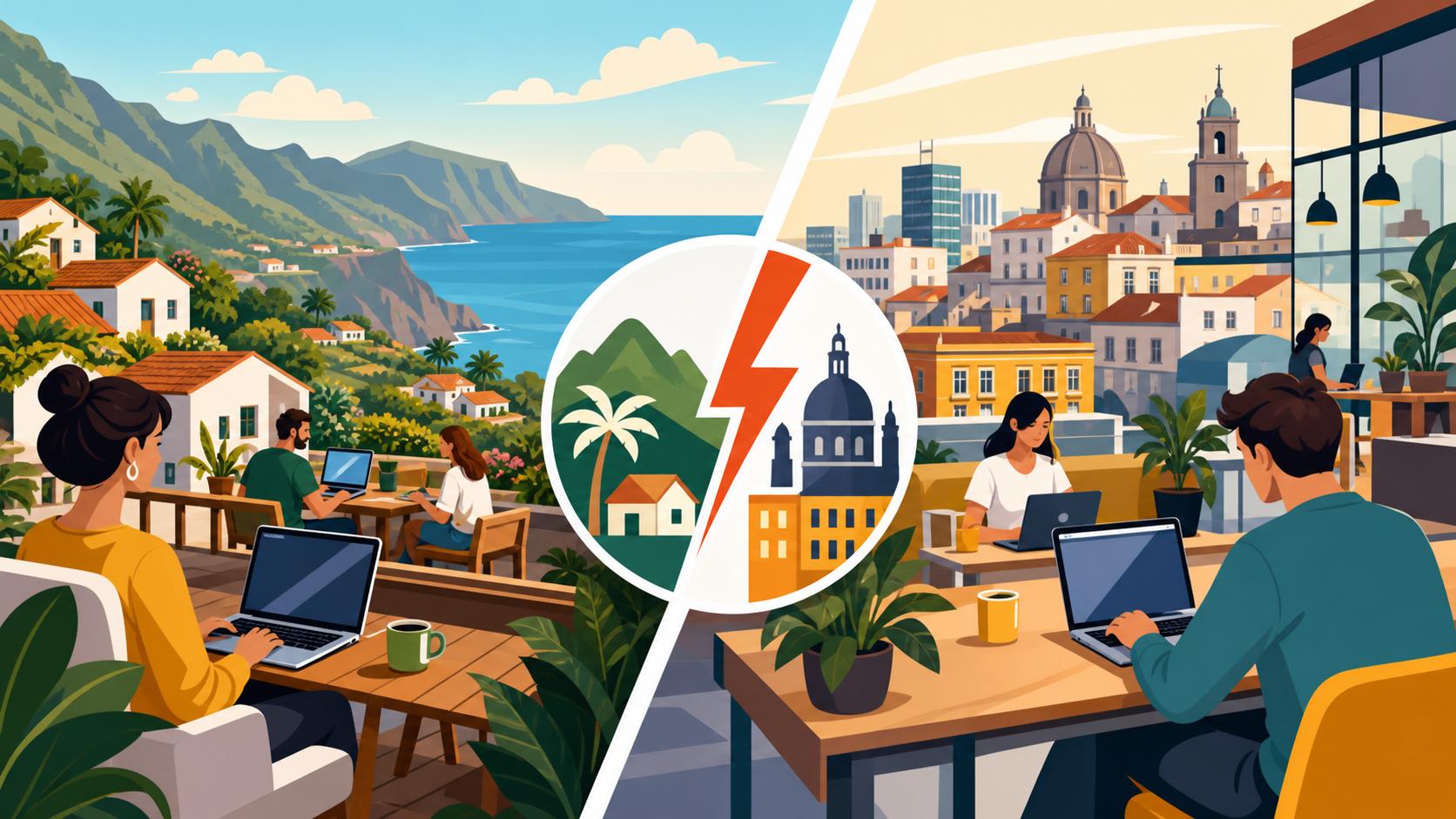
Digital Nomad communities: Madeira’s Nomad Village vs Lisbon hubs
Choosing between the fast-paced energy of a European capital and the tranquil rhythm of a subtropical island is a dilemma that keeps many remote workers awake at night. When I first landed in Portugal, I spent weeks paralyzed by the "where to live" question, fearing I would miss out on the perfect community. This guide settles the debate by comparing Madeira's Nomad Village and Lisbon hubs to help you find your ideal base.
The Vibe Check: Lisbon’s Metropolitan Buzz vs. Madeira’s Island Serenity
Lisbon is an electric, sprawling masterpiece of hilly streets, yellow trams, and a relentless social calendar that can leave even the most extroverted nomad feeling a bit breathless. The city doesn't just have a nomad scene; it is a global tech node where every third person in a specialty coffee shop seems to be building a SaaS startup or managing a remote design team. If you thrive on the "hustle" culture but want it served with a side of pastéis de nata and sunshine, Lisbon is your playground. The energy here is focused on growth, networking, and the next big thing, making it easy to find collaborators but sometimes harder to find deep, quiet focus.
Madeira, specifically the Digital Nomad Village in Ponta do Sol, offers a diametrically opposed experience. Imagine waking up to the sound of the Atlantic crashing against volcanic cliffs rather than the rumble of the green metro line. The community here is intentionally curated and surprisingly intimate. While Lisbon offers anonymity, Madeira offers a "village" feel where you will likely run into the same twenty people at the local fruit market or during a sunset hike. It is a place designed for those who have reached a stage in their journey where "wellness" and "deep work" take precedence over late-night clubbing in Cais do Sodré.
The cultural immersion also differs significantly. In Lisbon, you can easily fall into an expat bubble where you never hear a word of Portuguese, which is why it is wise to use PortuguesePod101 to at least learn how to order your galão without looking like a total tourist. In Madeira, the integration feels more organic because the local population in the smaller villages is deeply involved in the nomad initiative. You aren't just a visitor; you become part of the local ecosystem, even if it is just for a few months. This proximity to local life makes the island feel more like a home and less like a temporary transit point.
Infrastructure and Practicality: Co-working, Internet, and Housing
When it comes to the nuts and bolts of remote work, Lisbon is a powerhouse with a massive variety of spaces. You have everything from high-end, corporate-style offices to "laptop-friendly" cafes in Arroios and Graça. Many nomads choosing this route are Working for a US company remotely while living in Portugal on a D8 Visa, which requires a stable environment for those late-night Zoom calls. Lisbon delivers this in spades with widespread fiber-optic coverage and a huge selection of Best co-working spaces in Lisbon and Porto with reliable fiber internet that cater to every aesthetic and budget.
However, the housing market in Lisbon is, frankly, a nightmare that I wouldn't wish on my worst enemy. Finding a short-term rental that doesn't cost more than a Manhattan loft requires either incredible luck or a very deep wallet. Many nomads find themselves stuck in "nomad hotels" or expensive Airbnbs because the traditional rental market is so competitive. This is where the Cost of Living in Portugal 2026: Detailed Budgets for Singles and Families becomes a critical read, as you need to be realistic about how much of your paycheck will disappear into the pockets of a Lisbon landlord.
Madeira handles infrastructure with a more centralized approach. The Digital Nomads Madeira project provides a free co-working space in the John dos Passos Cultural Centre in Ponta do Sol, which acts as the heart of the community. While the island is rural, the internet speeds are surprisingly high-tier because the government invested heavily in infrastructure to attract the tech crowd. Housing in Madeira is generally more affordable than in central Lisbon, though prices in nomad hotspots like Funchal and Ponta do Sol have certainly risen. The beauty of Madeira is that you get more "house" for your Euro—often with a sea view that would cost thousands in a coastal mainland town.
| Feature | Lisbon Hubs | Madeira Nomad Village |
|---|---|---|
| Primary Vibe | Fast-paced, Tech-heavy, Urban | Community-focused, Nature-centric |
| Internet Stability | Excellent (Fiber widespread) | Very Good (Government backed) |
| Social Life | Networking, Nightlife, Events | Hiking, Group Dinners, Outdoor Activities |
| Cost of Housing | High to Very High | Moderate to High |
| Walkability | High (but very hilly) | Low (Car/Scooter often needed) |
| Best For | Startups and Networking | Focus, Wellness, and Long-term Stays |
Community Dynamics and Social Life
The social scene in Lisbon is a revolving door of high-impact events. On any given Tuesday, you could attend a crypto meetup, a female founders brunch, or a massive tech conference. It is a place for the ambitious. If you are looking for Remote Work and Digital Nomads: Co-working Spaces and Tech Hubs, Lisbon is the undisputed king of the mainland. However, this high turnover can lead to "nomad fatigue." You meet incredible people, but they often leave after two weeks, making it difficult to form those lasting bonds that sustain you during a long stint abroad. I found that I had to work much harder in Lisbon to build a "tribe" that stayed together for more than a month.
Madeira’s community is stickier. Because it takes a bit more effort to get to an island, people tend to stay longer—usually three months or more. The Digital Nomad Village has a dedicated Slack channel where everything from weekend canyoning trips to Tuesday night trivia is organized. There is a palpable sense of "we're all in this together" that you don't always get in the big city. If you find the loneliness of solo travel starting to bite, the island's structure is a natural cure. You’ll find people here who are equally interested in Learning European Portuguese: Top Apps, Tutors, and Free Government Classes as they are in discussing the latest AI trends during a "levada" walk.
Integrating with the locals is another area where the two regions diverge. In Lisbon, the locals are often weary of the "nomad effect" on their rents and neighborhood culture. While the Portuguese are naturally hospitable, there is a distinct line between the expat world and the local world. In Madeira, the "Nomad Village" was an initiative supported by the local municipality to revitalize the economy during the off-season. Consequently, the locals often see nomads as a positive force. You’ll find yourself invited to a village "festa" or being taught how to make a proper Poncha by the guy who runs the corner snack bar. For me, that level of local connection is what makes the island experience feel more authentic.
Professional Growth and Legal Realities
If your goal is to scale a business or find local employment, Lisbon is the place to be. The city is home to a growing number of unicorns and international corporations. For those looking at Finding English-Speaking Jobs in Portugal: Tech, Tourism, and Customer Service, the opportunities in the capital far outweigh those on the islands. It is a place where a casual coffee at a co-working space can actually lead to a job offer or a seed investment. Many expats eventually decide to settle here more permanently, often moving into Establishing a Limitada (Lda): Company Registration and Capital Limits to run their global operations from a Portuguese tax base.
Madeira is less about "finding" a job and more about "doing" the job you already have. It is a retreat for the established professional. However, don't let the relaxed atmosphere fool you; the island offers significant tax incentives for certain types of businesses, particularly those operating within the International Business Centre of Madeira. If you are a founder, it is worth looking into how the island’s unique economic status might benefit your long-term plans. Regardless of where you land, you will still need to handle the basics like Opening a Bank Account in Portugal: Best Banks for Foreigners and Expats to manage your local expenses and rent payments.
Finally, the Portugal D8 Digital Nomad Visa: How to Work Remotely and Live Legally is the bridge that makes both of these lifestyles possible for non-EU citizens. Whether you prefer the cobblestones of Lisbon or the banana plantations of Madeira, the visa requirements remain the same. The real question is how you want to spend your 183 days of required residency. Do you want them filled with the gallery openings and diverse culinary scene of a world-class city, or do you want them spent in a place where the air smells like salt and the community knows your name by the end of the first week? Having lived through the chaos of a Lisbon move and the quiet transition to island life, I can tell you there is no wrong answer—only the answer that fits your current mental state.
For those who are truly undecided, a common strategy is to start with a month in Lisbon to get the "paperwork" and "networking" out of the system before heading to Madeira for a three-month deep-dive into community and nature. This "hybrid" approach allows you to experience the best of Lisbon vs Porto for Tech Workers: Salaries, Startups, and Lifestyle dynamics before retreating to the Atlantic. Just remember that no matter which hub you choose, learning the language through tools like PortuguesePod101 will always be the fastest way to turn a temporary stay into a meaningful life experience.
Disclaimer
This guide is provided for informational purposes only and reflects the personal experiences and research of the author as of 2026. Immigration laws, tax regulations, and local market conditions in Portugal are subject to frequent changes. Readers should consult with qualified legal, financial, and immigration professionals before making significant life decisions or financial commitments related to moving to or working in Portugal.