Bringing a dog to Portugal: TAP Air Portugal pet policy and cabin weight limits
Moving across the world is hard enough, but trying to figure out how to safely transport your furry best friend without them ending up in a cargo hold nightmare is enough to cause a total meltdown. I remember the sleepless nights I spent weighing my dog's travel carrier and obsessing over millimeter-thin airline regulations before my move to Lisbon. This guide solves the mystery of flying your dog to Portugal, specifically focusing on TAP Air Portugal’s rigid policies, cabin weight limits, and the paperwork you absolutely cannot mess up.
Navigating the Strict TAP Air Portugal Cabin Weight Limits
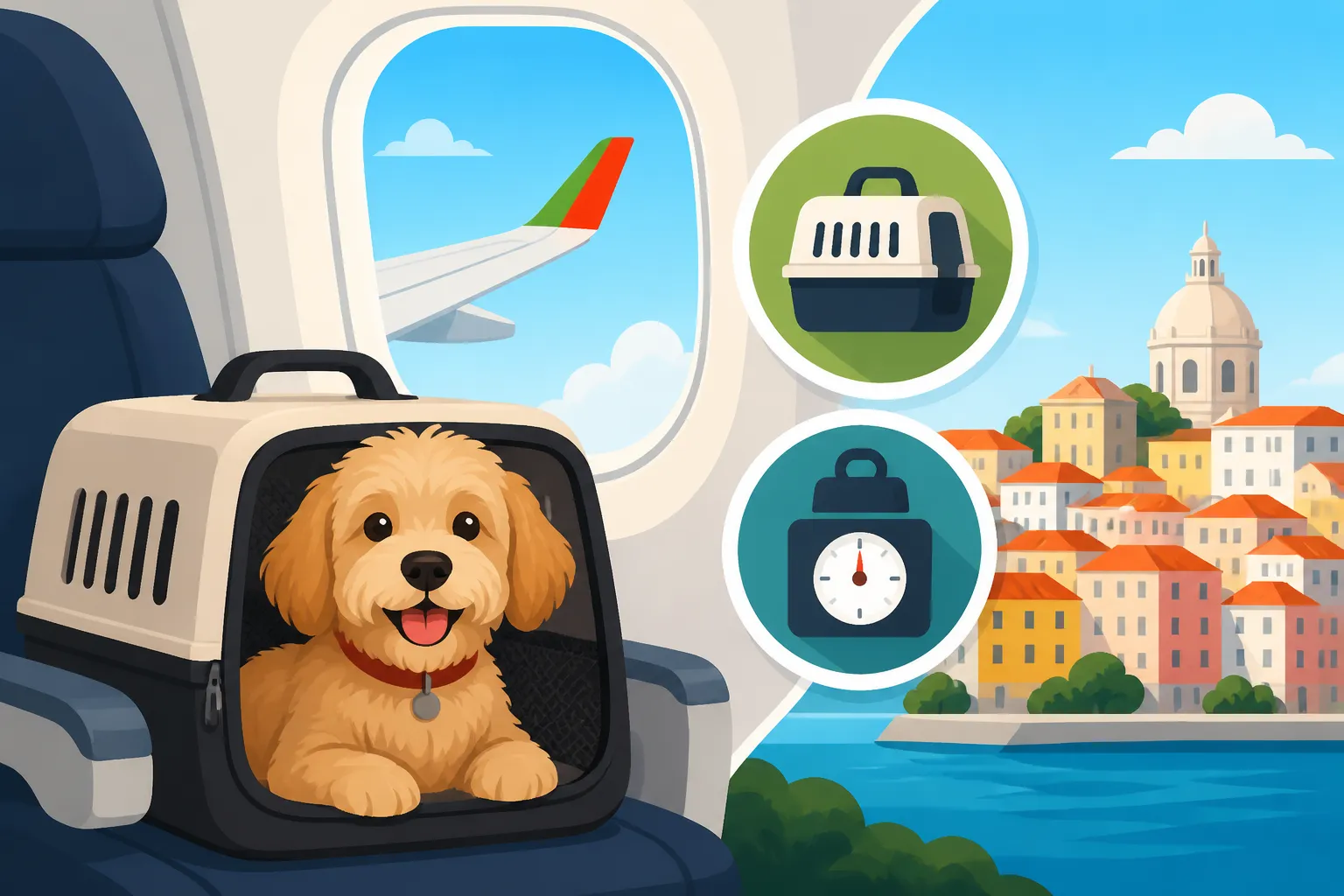
The most significant hurdle you will face when flying with a dog on TAP Air Portugal is the uncompromising 8-kilogram weight limit for pets traveling in the cabin (PETC). This 8kg (approximately 17.6 lbs) is not just the weight of the dog; it includes the weight of the carrier, the dog, and any blankets or toys inside. If your dog weighs 7kg, you have very little room for a sturdy carrier. This creates a massive amount of stress for expat pet owners, as many small breeds like French Bulldogs or larger Pugs often sit right on that bubble.
When I was preparing for my flight, I spent weeks searching for the lightest possible soft-sided carrier that still met the dimensional requirements. TAP specifies that the carrier must not exceed 40 x 33 x 17 centimeters for hard carriers, or slightly more flexible dimensions for soft-sided ones, provided they fit under the seat in front of you. It is vital to remember that the dog must be able to stand up and turn around comfortably inside. If the check-in agent at the airport feels the dog is too cramped, they have the authority to deny boarding or insist the dog moves to the hold (AVIH).
To avoid this, it is wise to do a "trial run" at home. Put your dog in the carrier, take a photo, and weigh it on a digital scale. If you are hovering at 7.9kg, you need to be prepared for the possibility that the airport scale is calibrated differently. During your first Cost of Living in Portugal 2026: Detailed Budgets for Singles and Families planning phase, factor in the cost of a high-quality, lightweight carrier. It is one of the most important investments you will make. Also, keep in mind that TAP only allows a limited number of pets in the cabin per flight—usually only three to five depending on the aircraft. You must call TAP directly after booking your seat to "reserve" your pet’s spot; you cannot simply show up at the gate and hope for the best.
The Paperwork Trail: Health Certificates and EU Requirements
Once you have the physical logistics of the flight handled, you enter the labyrinth of European Union veterinary bureaucracy. Portugal is strict about its entry requirements to remain a rabies-free environment. For most expats coming from North America or the UK, this means obtaining an International Health Certificate (often referred to as the Annex IV). This document must be signed by a licensed veterinarian and then endorsed by the official government body—such as the USDA in the United States or APHA in the UK.
The timing here is brutal. The certificate is typically only valid for 10 days from the date of the government endorsement until the date of your arrival in Portugal. If your flight is delayed or you have a long layover, you could find yourself with an expired document. This is where a service like RushTranslate becomes invaluable. While the official EU certificates are usually multilingual, if you have supplementary medical records or specialized vaccination histories that are only in English, having a certified translation can prevent a headache at the Lisbon airport vet station. Some owners have been stuck in secondary inspection because a local vet's note about a chronic condition wasn't understood by the Portuguese authorities.
Furthermore, your dog must have an ISO-compliant microchip (15 digits) that was implanted before or on the same day as their most recent rabies vaccination. If the rabies shot came first, the EU considers it invalid. This is a common trap that many unsuspecting expats fall into. If your dog’s records are messy, you might need to re-vaccinate after the chip is in place and wait the mandatory 21-day period before flying. As you are settling your administrative life, perhaps using Bordr to secure your NIF and NISS: How to Get Your Portuguese Tax and Social Security Numbers, make sure your dog’s "identity" is just as legally sound as your own.
Arrival at the Airport: The Portuguese Vet Inspection
When you land in Lisbon (Humberto Delgado) or Porto (Francisco Sá Carneiro), the process doesn't end at baggage claim. You cannot simply walk out the "Nothing to Declare" green channel with a dog. You are legally required to present your pet at the Ponto de Entrada do Viajante (Traveler's Entry Point) for inspection by a government veterinarian.
It is highly recommended—and often required—that you notify the airport vet at least 48 hours before your arrival. You do this by emailing the specific airport's veterinary department with your flight number and a scan of your paperwork. If you arrive on a weekend or late at night without prior notice, you might be waiting for hours for a vet to come on duty. There is an entry fee for this inspection, usually around €30 to €50 per animal, which must be paid upon arrival. They will check the microchip with a scanner to ensure it matches your paperwork and verify the rabies vaccination date.
| Requirement | Cabin (PETC) | Hold (AVIH) |
|---|---|---|
| Max Weight | 8kg (incl. carrier) | Up to 45kg-75kg (varies by plane) |
| Carrier Type | Soft-sided preferred | IATA-approved hard shell |
| Booking | Call TAP after ticket purchase | Call TAP at least 48 hours prior |
| Vet Check | Required at arrival | Required at arrival |
| Cost | Approx €70 – €150 (route dependent) | Approx €100 – €300+ (weight dependent) |
The stress of this arrival can be overwhelming, especially if you are also navigating your own AIMA Portugal: Navigating the New Immigration Agency and Residency Permits requirements. My advice? Have a folder with three physical copies of every document. Digital copies are great, but Portuguese bureaucracy still thrives on paper. If the vet finds any discrepancy, they could quarantine your pet at your expense. Using Bordr to handle your initial fiscal representation can free up your mental energy to focus on these high-stakes pet logistics.
Life After Landing: Registering Your Dog in Portugal
Once you are through the airport and have reached your new home, the legal responsibilities continue. In Portugal, all dogs must be registered with the local parish council, known as the Junta de Freguesia. This is a step many expats overlook, but it is mandatory under Portuguese law. You usually have 30 to 90 days after arrival to complete this. You will need your dog’s health booklet (the one you used to enter the country), your own proof of address, and your NIF.
To get your Registering Your Address with Junta de Freguesia (Atestado de Morada), you’ll likely already be visiting the Junta, so it makes sense to handle the dog’s registration at the same time. The local council will issue a license that needs to be renewed annually. Additionally, you should find a local veterinarian immediately to convert your foreign health certificate into a "Boletim Sanitário" or a formal EU Pet Passport if you plan on traveling within Europe later.
This is also the time to consider the health of your family as a whole. While you are looking into Private Health Insurance in Portugal: Costs, Coverage, and Best Providers, don't forget that many Portuguese private plans do not cover pets, but some expat-focused providers like Cigna Global offer comprehensive human coverage that gives you the peace of mind to then seek out local "seguro de animais de estimação" (pet insurance) separately. Having a solid Registering with the Centro de Saúde: Getting Your SNS Número de Utente strategy for yourself is important, but your dog will need a local vet who speaks English, especially in the early days.
Adapting to Portuguese Dog Culture
Portugal is increasingly dog-friendly, but it has its quirks. In cities like Lisbon and Porto, you will see dogs in many outdoor café seating areas, but always ask "Pode entrar?" (Can they enter?) before walking into a shop. Public transport rules are also specific; dogs are generally allowed on trains and metros but must be muzzled if they are not in a carrier, and they require a half-price ticket on some regional lines. If you've just spent a fortune Buying a Car in Portugal: IUC Tax, Inspections (IPO), and High Vehicle Costs, you'll find it much easier to transport your pet to the stunning dog-friendly beaches of the Silver Coast or the Algarve.
If you are following a Lisbon Neighborhood Guide: Best Areas for Expats and Digital Nomads, look for areas near "Jardins" or parks. Neighborhoods like Arroios or Estrela have wonderful green spaces, but be prepared for the fact that many older apartments do not have elevators. Carrying an 8kg dog and a carrier up four flights of stairs is a workout you might not have bargained for!
If your initial paperwork from your home country wasn't in Portuguese, remember that a service like RushTranslate can help you translate those final vet records for your new Portuguese vet, ensuring they understand any complex history like heartworm prevention or previous surgeries. Moving with a pet is a marathon, not a sprint. By the time you are sitting at a "quiosque" in a sun-drenched praça with your dog at your feet, the stress of the TAP weight limits and the airport vet will feel like a distant memory.
Disclaimer
This guide is for informational purposes only and does not constitute legal or professional veterinary advice. Immigration and airline policies, including those of TAP Air Portugal and the Portuguese government, are subject to frequent change. Always verify current requirements with the official GPP (Gabinete de Planeamento, Políticas e Administração Geral) and your airline before traveling.