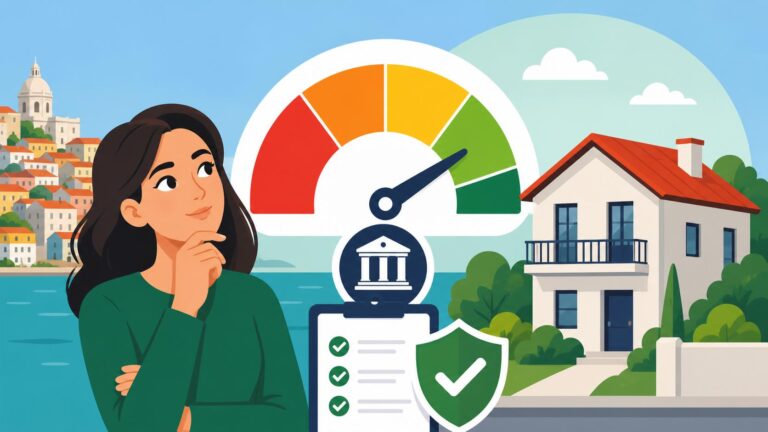
Finding a reliable English-speaking Contabilista for your complex IRS return
Disclosure: This article contains affiliate links. If you buy through them, we may earn a commission at no extra cost to you. Read our full disclosure.
Filing taxes in a foreign country is the ultimate administrative nightmare, often leaving you staring at a screen full of technical Portuguese while your heart rate climbs. I remember my first IRS season in Lisbon; I was paralyzed by the fear of ticking the wrong box and accidentally alerting the Tax Authority to a bank account I’d forgotten to declare. This guide solves the stress of finding a reliable, English-speaking Contabilista to handle your complex Portuguese tax returns.
Why a Standard Portuguese Accountant Might Not Be Enough
In Portugal, most locals use a "Contabilista" for their small business accounting or simply let the automated "IRS Automático" handle their yearly filing. However, as an expat, your financial life is rarely that simple. You likely have layers of complexity that a neighborhood accountant, who primarily handles local cafes and hair salons, has never encountered. If you are navigating the NHR 2.0 (IFICI) Tax Regime: Eligibility, Flat 20% Tax, and Rules in 2026, you are dealing with a specific set of exemptions and requirements that require specialized knowledge.
A generic accountant might be excellent at local payroll, but they may stumble when it comes to the nuances of tax treaties between Portugal and your home country. Many expats receive massive, unexpected tax bills simply because their accountant didn't understand how to properly report foreign rental income or pension distributions. You need someone who understands the Portuguese Taxes for Expats: IRS, Tax Residency, and Filing Deadlines inside and out, specifically for those who maintain cross-border financial interests.
Furthermore, the "I've-been-there" reality is that communication is the biggest hurdle. Even if an accountant’s website says "English spoken," there is a massive difference between "I can order a coffee in English" and "I can explain the difference between a capital gain and a qualified dividend in English." You need a professional who can translate the dense legalese of the Código do IRS into actionable advice you actually understand.
The Difference Between a Bookkeeper and a Tax Consultant
One of the first things I learned the hard way is that in Portugal, the term "Contabilista Certificado" (Certified Accountant) covers a wide range of professionals. Some are essentially bookkeepers who specialize in Freelancing in Portugal (Recibos Verdes): Taxes, Social Security, and Setup. These individuals are great for monthly social security filings, but they might not be the right fit for high-level tax planning.
For a complex IRS return, you are often looking for a tax consultant (consultor fiscal) or a lawyer specializing in tax law (advogado tributário). If you have assets spread across platforms like Trade Republic for your stocks or Binance for your digital assets, you need someone who understands the specific reporting requirements for Annex J of the IRS Modelo 3.
The complexity of your return usually dictates which professional you need. If you only have a local salary and one foreign bank account, a standard certified accountant is fine. But if you are managing a global portfolio, receiving a foreign pension, or working remotely for a US-based company, you need a specialist who understands US Expats in Portugal: FATCA, FBAR, and Avoiding Double Taxation. Don't settle for someone who "thinks they can figure it out." In the eyes of the Autoridade Tributária (AT), an error is an error, regardless of whether your accountant made it.
Where to Look for Reliable English-Speaking Professionals
Finding a good accountant in Portugal often feels like being let into a secret club. While you can search the official directory of the Ordem dos Contabilistas Certificados (OCC), it doesn't always specify language proficiency or experience with expat-specific regimes.
It is wise to start with specialized expat networks, but with a major caveat: avoid the "recommendation threads" on Facebook groups where people just tag their friends. Instead, look for professionals who regularly contribute to webinars or write detailed articles about Money and Finance in Portugal: The Ultimate 2026 Guide for Expats. This demonstrates they stay up-to-date with the ever-changing Portuguese tax code.
Another reliable path is to look for firms that specifically market to the international community in Lisbon, Porto, or the Algarve. These firms are used to the NHR 2.0 (IFICI) Tax Regime: Eligibility, Flat 20% Tax, and Rules in 2026 and know exactly which documents you will need from your foreign banks. When you find a candidate, check if they have experience with Finding an English-Speaking Certified Accountant (Contabilista Certificado) specifically for your nationality, as the tax treaty between Portugal and the UK is vastly different from the one with Germany or the US.
Critical Questions to Ask During Your Initial Consultation
Never hire an accountant without an initial "get to know you" call. This is where you test their English proficiency and their specific expertise. I usually start by throwing a slightly complex scenario at them to see how they react. For instance, if you use Wise to receive your salary in USD and then convert it to EUR, ask them how they handle the currency exchange reporting for the IRS.
Here is a checklist of questions you should ask:
- How many clients do you currently have who are on the NHR or IFICI regime?
- Are you familiar with the reporting requirements for foreign stock platforms like Trade Republic?
- Do you handle the filing of Annex J (foreign income) and Annex G (capital gains) personally?
- How do you prefer to receive my documents? Do you use a secure portal or just email?
- What is your policy for responding to urgent emails during the "peak" tax season of April to June?
A reliable professional will be upfront about what they can and cannot do. If they tell you that "crypto isn't taxed in Portugal" without asking how long you've held your assets on Binance, they aren't keeping up with the 2026 regulations. You want someone who explains the Cryptocurrency Tax Laws in Portugal 2026: 28% Rule vs 1-Year Exemption with precision, not vague generalities.
Understanding the Costs of Professional Tax Services in 2026
Pricing for accounting services in Portugal varies wildly. You might find a local accountant who offers to do your return for €100, while a high-end firm in Lisbon might quote you €1,500. The key is understanding what you are paying for. A "cheap" return is often just a data-entry job, whereas a more expensive service should include year-round tax planning and representation if the AT decides to audit you.
| Service Type | Estimated Cost (Annual/One-off) | Best For |
|---|---|---|
| Simple Individual IRS Return | €150 – €300 | Local employees with no foreign assets |
| Expat IRS Return (NHR/Foreign Income) | €400 – €800 | Expats with foreign pensions or rental income |
| Complex High-Net-Worth Return | €1,000 – €2,500+ | Multiple business interests, crypto, and stocks |
| Monthly Freelance Bookkeeping | €50 – €150 (per month) | People issuing Recibos Verdes regularly |
Keep in mind that Filing the Annual IRS Tax Return (Modelo 3): Deadlines and Process is only one part of the puzzle. If you are a business owner, you will also need to factor in the costs of Starting a Business in Portugal: Lda Setup, Corporate Tax, and Accounting. Always ask for a written quote that outlines exactly which "Anexos" are included in the price. Finding out in June that your accountant wants an extra €200 to report your stock dividends is a frustration you don't need.
Managing Complex Assets: Stocks, Crypto, and Foreign Banks
One of the biggest pitfalls for expats is the failure to disclose foreign bank accounts. In Portugal, if you have a bank account outside the country—even a digital one like Wise—you must report the IBAN and BIC on your tax return. Many local accountants forget this because it doesn't apply to their Portuguese clients.
If you are an active investor, the workload for your accountant increases significantly. Reporting sales of shares on Trade Republic requires a meticulous breakdown of purchase dates, sale dates, and costs in Euros. I’ve spent hours in the past trying to reconstruct these spreadsheets because I didn't keep good records. A good English-speaking accountant will give you a template to fill out at the start of the year so that come April, the process is seamless.
Crypto is another area where expertise is mandatory. As of 2026, the rules around digital assets have tightened. If you are trading frequently on Binance, your accountant needs to distinguish between Category B income (professional trading) and Category G income (capital gains). They should also be able to advise you on Wealth Building and Investing in Portugal: Capital Gains and Crypto Taxes to ensure you aren't paying more than you legally owe.
Red Flags to Watch Out For
Expats often report plenty of "accountant horror stories." The most common complaint is the "disappearing act." Everything goes great in January, but by May, when you have a pressing question about your Deducting Expenses on IRS: e-Fatura, Supermarkets, Rent, and Healthcare, the accountant stops answering emails.
Another red flag is an accountant who suggests "creative" ways to avoid taxes that sound too good to be true. The Portuguese Tax Authority has become incredibly sophisticated with their digital tracking. If an accountant suggests you don't need to declare your foreign rental income because "the AT will never find out," run the other way. You want a professional who keeps you safe, not one who puts you at risk of a heavy fine.
Finally, be wary of anyone who refuses to provide a formal contract or a pro-forma invoice. Professionalism in the financial sector is non-negotiable. If they are messy with their own billing, they will likely be messy with your Portuguese Taxes for Expats: IRS, Tax Residency, and Filing Deadlines.
How to Prepare Your "Tax Box" for Your Accountant
To get the most out of a high-quality accountant, you need to be a high-quality client. Don't send 50 separate PDFs in 50 separate emails. I recommend creating a shared folder (like Dropbox or Google Drive) and organizing your documents by category. This not only saves your accountant time—potentially lowering your fee—but also ensures nothing gets missed.
You should have folders for:
- Income: Local salary slips, foreign pension statements, and invoices for Issuing Green Receipts (Recibos Verdes): VAT (IVA) and Withholding Tax.
- Banking: A list of all foreign IBANs and the maximum balance held in each during the year (for some reporting requirements).
- Investments: Annual tax statements from Trade Republic, Binance, and any other brokerage accounts.
- Expenses: If you are a freelancer, a summary of your business-related costs. For everyone else, ensure your e-Fatura guide: Why cashiers ask for your NIF at the supermarket is up to date and your expenses are validated.
By being organized, you allow your accountant to focus on the "complex" part of your complex return—the strategy and the optimization—rather than hunting for a missing dividend statement. This is how you transition from just "surviving" the tax season to actually mastering your finances in Portugal.
Disclaimer
This guide is for informational purposes only and does not constitute professional tax, legal, or financial advice. Tax laws in Portugal, particularly those regarding the NHR, IFICI, and cryptocurrency, are subject to frequent changes. Always consult with a Contabilista Certificado or a qualified tax attorney to discuss your specific financial situation before filing any documents with the Portuguese Tax Authority.