Navigating the public health system if you only speak English (Translation tips)
Standing in a crowded public health center with a pressing medical issue and a complete inability to communicate is a nightmare many foreigners live through. I remember the sheer panic I felt trying to explain a persistent, sharp pain to a receptionist in Lisbon who only spoke rapid-fire Portuguese while a line of twenty people sighed behind me. This guide provides the tactical strategies, translation tools, and cultural nuances you need to navigate Portugal's public health system effectively without losing your sanity or your health.
The Reality of the Language Barrier in the SNS
The Portuguese National Health Service, or Serviço Nacional de Saúde (SNS), is a point of pride for the country, offering universal coverage that is remarkably high in quality. However, it is fundamentally a Portuguese-speaking institution. While many younger doctors speak excellent English, the administrative staff at the front desk—the gatekeepers of the system—often do not. You must walk into these buildings expecting a language gap and prepared to bridge it yourself.
In larger cities like Lisbon, Porto, and parts of the Algarve, your chances of finding English-speaking staff are higher, but it is never guaranteed. If you are living in central Portugal or more rural areas, the language barrier becomes a formidable wall. This is where most expats feel the "administrative burnout." Understanding Portugal's National Health Service (SNS): How the Public System Works is the first step in managing your expectations. You are entering a system that is often underfunded and overstretched; adding a language barrier on top of that requires you to be your own strongest advocate.
One of the biggest mistakes newcomers make is assuming that because they are in a "modern" European country, the public services will naturally cater to international languages. In reality, the SNS is designed for the local population. When you show up at a Centro de Saúde, you are dealing with a civil service structure. This means documentation is key. If you haven't yet secured your paperwork, you should prioritize Registering with the Centro de Saúde: Getting Your SNS Número de Utente as soon as possible, as having your ID number already in the system reduces the amount of verbal explanation needed at the front desk.
Preparation Before You Arrive at the Health Center
Never walk into a public health facility empty-handed. Since you cannot rely on verbal fluency, you must rely on a "paper trail" or digital equivalent. Before leaving your house, write down a concise summary of your symptoms, medical history, and any current medications. Use a tool like DeepL rather than Google Translate for medical terms, as it tends to handle European Portuguese nuances with much greater accuracy. Print this out or have it clearly visible on your phone.
I have found that presenting a printed paper to the receptionist (the "administrativo") changes the dynamic immediately. It signals that you are prepared and respect their time. If you are struggling to even get into the system, you might be asking, Why does my Centro de Saúde say they have no Médico de Família available? This is a common frustration, and having your symptoms translated can sometimes help the staff triage you into an "on-call" (consulta de recurso) slot even if you don't have a permanent doctor assigned.
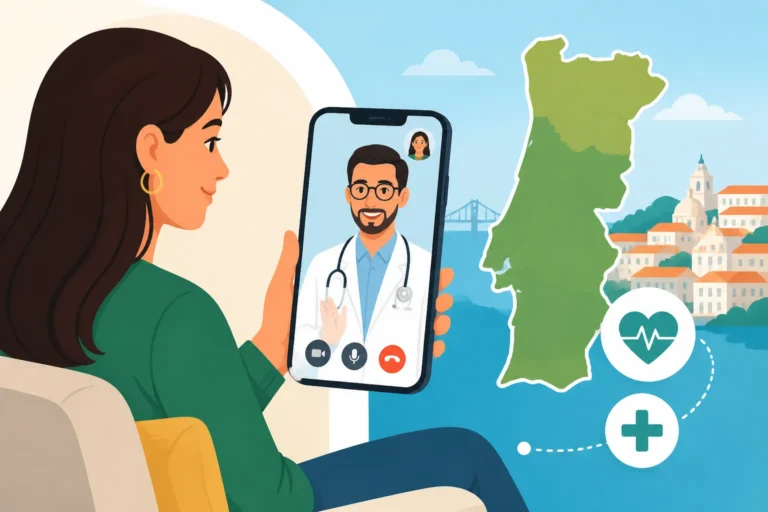
Another vital tool is the SNS 24 portal and app. Before you ever physically go to a clinic, you should be using the SNS 24 Helpline (808 24 24 24): Triage, Advice, and Sick Notes. When you call this number, you can specifically request an English-speaking operator. They can provide a "triagem" (triage) and send a referral directly to your local health center. When you arrive with an SNS 24 referral, the administrative staff has a digital record of why you are there, which bypasses much of the initial linguistic confusion at the desk.
Essential Digital Tools and Real-Time Translation Strategies
We live in an era where technology can act as a literal lifesaver. However, using these tools in a high-stress medical environment requires a specific approach. When you are in the consultation room with a doctor, don't just point at your phone. Use the "conversation mode" in translation apps, but keep your sentences short and devoid of idioms. Instead of saying, "I've been feeling under the weather for a fortnight," say, "I have had a fever and cough for fourteen days."
For those who find the public system's language hurdles too high, many expats choose to supplement their care. Using a provider like Cigna Global can offer peace of mind because their network often includes private clinics where English is the standard. If you find yourself needing specific supplements or over-the-counter items that are difficult to explain in a local farmácia, I have often turned to iHerb to source familiar products with English labeling, which avoids the stress of translating complex ingredient lists at the counter.
If you are dealing with a complex diagnosis, you might want to look into Finding Doctors and Specialists in Portugal: English-Speaking Medical Care within the private sector. While the public system is excellent for emergencies, the private system is where you will find the most linguistic comfort. However, if you are committed to using the SNS, consider bringing a "language buddy." This doesn't have to be a professional translator; even a Portuguese-speaking friend can help navigate the nuances of the "Secretaria" where the most rigid bureaucracy lives.
Navigating the Triage and Consultation
When you enter an emergency room or a health center for an urgent matter, you will encounter the Manchester Triage System. This is a color-coded system that determines the urgency of your case. Understanding Emergency Rooms (Urgências) in Portugal: Triage Colors and Wait Times is crucial because your color—not your arrival time—dictates when you will be seen. If you cannot explain your level of pain, you might be unfairly categorized as a lower urgency.
Here is a breakdown of essential medical terms you should have ready to show or say:
| Portuguese Term | English Translation | Phonetic Pronunciation |
|---|---|---|
| Dor de cabeça | Headache | Dor de ka-be-sa |
| Febre | Fever | Fe-bre |
| Tonturas | Dizziness | Ton-tu-ras |
| Tensão alta | High blood pressure | Ten-sa-o al-ta |
| Receita | Prescription | Re-say-ta |
| Análises | Blood tests | A-na-li-zes |
| Urgência | Emergency | Ur-zhen-si-a |
| Consulta | Appointment | Kon-sul-ta |
Once you are in front of the doctor, the "Médico de Família," the atmosphere usually shifts. Most Portuguese doctors have read medical literature in English during their training. Even if they are not fluent, they likely understand medical terminology. If you are struggling with the public process for specialized issues, remember that Specialist Referrals: The Process in Public SNS vs Private Clinics can differ wildly. In the public system, you cannot simply book a cardiologist; you must be referred by your family doctor. Being able to clearly state your symptoms in the initial consultation is the only way to get that referral.
Dealing with Pharmacies and Follow-up Care
The linguistic journey doesn't end at the doctor's office. You will likely leave with a "Guia de Tratamento" or a digital prescription. Taking this to the pharmacy is usually straightforward, but understanding Pharmacies and Medication in Portugal: Prescriptions and OTC Drugs will help you understand why some things are behind the counter and why you need to show your NIF (tax number) to get the state subsidy on medications.
If you have a chronic condition and find that the specific brand of medication you used back home is unavailable, don't panic. Pharmacies in Portugal use the generic name of the active ingredient. Again, if you are looking for specific wellness products or vitamins and the language gap at the local "Farmácia de Serviço" is too wide, services like iHerb are a reliable fallback for expats. For more comprehensive medical coverage that includes English-speaking support lines, a policy from Cigna Global can bridge the gap when you need to speak to someone who understands your native tongue immediately.
Lastly, if you ever feel that you were denied care or treated unfairly due to the language barrier, every public entity in Portugal is required to have a "Yellow Book." Understanding the 'Livro Amarelo' (Yellow Book) for Medical Complaints is your right as a resident. It is a formal way to register a complaint that must be addressed by management. Sometimes, simply asking for the "Livro Amarelo" is enough to make a stubborn administrator suddenly find a way to help you or find someone who speaks a bit of English.
Choosing the Right Path for Your Health
Ultimately, navigating the SNS as an English speaker is a test of patience and preparation. If you have the budget, many people find that Public vs Private Healthcare in Portugal: Which One Should Expats Choose? is the most important question to answer early in their residency. The public system is your safety net for major surgeries and long-term chronic care, but the private system is your "convenience layer" where English is prevalent.
For those on a budget or who believe in the mission of public health, the key is integration. Try to learn basic medical Portuguese. Even saying "Peço desculpa, o meu Português é fraco" (I'm sorry, my Portuguese is weak) before launching into your translated notes can win you a lot of grace from the staff. They are more likely to help someone who is trying to adapt than someone who demands English in a Portuguese government building.
Don't let the fear of a language barrier keep you from seeking medical help. Portugal is a safe and caring country, and the medical professionals here are generally very dedicated. With a combination of digital tools, written notes, and perhaps a backup plan like Cigna Global for the more complex administrative days, you can successfully manage your health in this beautiful corner of Europe.
Disclaimer
The information provided in this guide is for informational purposes only and does not constitute professional medical or legal advice. While we strive to keep the information up to date, Portuguese administrative processes and healthcare laws are subject to change. Always consult with a qualified medical professional or a legal expert regarding your specific situation and healthcare needs in Portugal.