EU/EEA Citizens Moving to Portugal: CRUE Registration and Residency Steps
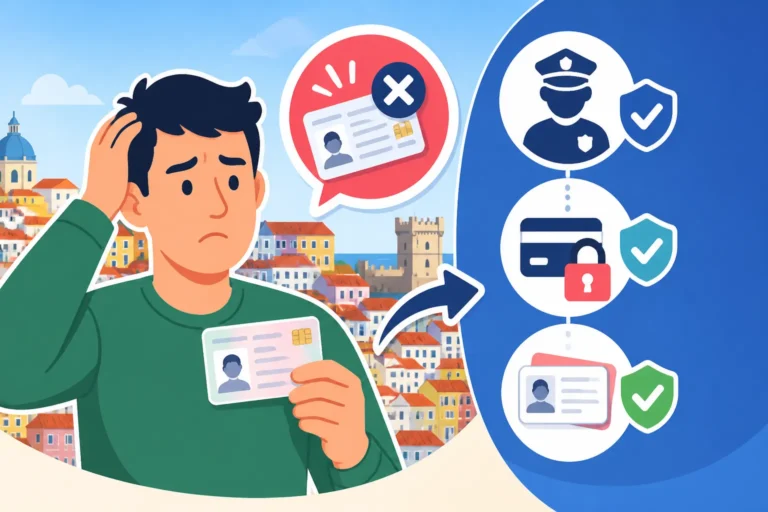
The move to Portugal as an EU citizen often feels like a trick; you’re told it’s "freedom of movement," yet you arrive to find a labyrinth of paper and stamps. I remember sitting in a chilly hallway in Lisbon for four hours just to be told I had the wrong type of proof of address. This guide dismantles that confusion, providing a step-by-step roadmap for EU/EEA citizens to secure their CRUE and residency without the typical "bureaucracy burnout."
Understanding the Right to Reside: EU/EEA Citizens in Portugal
The concept of "freedom of movement" is the bedrock of the European Union, but it is often misinterpreted by newcomers as "freedom from paperwork." While it is true that you do not need a visa to enter, work, or live in Portugal, your right to stay beyond a certain window is conditional on your ability to register with the local authorities. This isn't a permission slip—it’s a registration of your presence. In my first few months, I treated the paperwork as a "nice-to-have" until I realized I couldn't rent a long-term apartment or get a phone contract without it.
The 90-Day Freedom of Movement Rule
As an EU, EEA, or Swiss citizen, you have the absolute right to live in Portugal for up to 90 days with nothing more than a valid passport or national ID card. During this period, you are essentially a high-functioning tourist. You can look for work, scout neighborhoods, and enjoy the custard tarts without reporting to any government agency. However, the clock starts ticking the moment you cross the border. If you intend to stay longer than three months, the law requires you to formalize your status.
Many expats make the mistake of waiting until day 89 to start the process. I strongly advise against this. The bureaucratic gears in Portugal move at their own pace, and having your paperwork sorted early opens doors to essential services. For instance, you’ll find that Cost of Living in Portugal 2026: Detailed Budgets for Singles and Families is much easier to manage once you have the legal standing to access local discounts, resident transport passes, and utility contracts that aren't marked up for short-term users.
Who Qualifies Under EU Rules
The criteria for staying beyond 90 days are relatively straightforward but strictly enforced. You must fall into one of four categories: employed workers, self-employed individuals (freelancers), students, or "non-active" persons with sufficient resources. The last category is what most retirees and digital nomads fall into. You don't need to be a millionaire, but you do need to prove that you won't become a burden on the Portuguese social assistance system.
If you are moving with family, the rules extend to them as well, regardless of their nationality. However, the administrative path for a non-EU spouse is significantly more complex than yours. While you deal with the local town hall, they will likely have to deal with AIMA (the Agency for Integration, Migration, and Asylum). Understanding these distinctions early prevents the heartbreak of one partner being "legal" while the other is stuck in a visa limbo.
Common Misconceptions About EU Visas
One of the most frequent questions I get in my inbox is, "Which visa do I need as a German/Italian/Irish citizen?" The answer is always: None. You are not applying for a visa; you are registering for a Residence Certificate (CRUE). There is no "acceptance" or "rejection" in the traditional sense, provided you meet the basic criteria. You aren't asking for permission to stay; you are exercising a right that already exists under the Treaty on the Functioning of the European Union.
However, do not mistake this lack of a "visa" for a lack of scrutiny. The Portuguese authorities still want to see that you have health insurance and a way to support yourself. If you arrive with zero savings and no job prospect, you might find the registration process frustratingly blocked. Some applicants get caught in a loop where they can't get a job without a CRUE, but the town hall won't give them a CRUE without a job contract. This is why having a financial cushion and knowing the "hacks" is vital.
Getting Your Administrative House in Order: The NIF
Before you even look at a residency form, you need a NIF (Número de Identificação Fiscal). This is your nine-digit tax identification number, and in Portugal, it is more important than your own name. You cannot buy a SIM card, sign a lease, or even join a gym without it. It is the "Master Key" to the country. When I first arrived, I tried to do everything at once, only to realize that the NIF is the prerequisite for literally every other step.
Why the NIF is Your First Priority
The NIF is the first piece of the puzzle because it connects you to the Portuguese tax system. Even if you aren't earning money in Portugal yet, the government needs this number to track your financial footprint. When you go to the supermarket, the cashier will ask, "NIF na fatura?" (NIF on the invoice?). Saying yes helps you at tax time, as detailed in our guide on Deducting Expenses on IRS: e-Fatura, Supermarkets, Rent, and Healthcare.
Beyond taxes, the NIF is required for your CRUE application. The Town Hall (Câmara Municipal) will ask for your NIF to input your data into the national system. If you show up without one, they will send you straight to the Finanças (Tax Office), wasting your day. I learned this the hard way after standing in line in the rain in Cascais, only to be turned away because I didn't have that little piece of paper from the tax office.
How to Get a NIF as an EU Citizen
For EU citizens, getting a NIF is technically easier than for non-EU citizens, but it still requires a visit to a Serviço de Finanças or a Loja do Cidadão. You will need your passport/ID and a proof of address. The "proof of address" part is where the drama usually happens. If you use a foreign address, you may be asked for a fiscal representative—though as an EU resident, you are legally exempt from this requirement. Still, some clerks haven't gotten the memo, and arguing EU law with a tired civil servant at 4:30 PM is a losing battle.
If you are already in Portugal, you can walk into a tax office, take a ticket, and wait. My advice? Go to a smaller office outside the city center. The Finanças in central Lisbon or Porto are notorious for long waits and stressed staff. A 20-minute train ride to a suburban town like Loures or Vila Nova de Gaia can save you three hours of waiting. Make sure you check out our comprehensive breakdown on NIF and NISS: How to Get Your Portuguese Tax and Social Security Numbers for the latest office locations and tips.
Using Services Like Bordr for Remote Setup
If the idea of navigating a Portuguese tax office fills you with dread, or if you want to have your NIF ready before you even pack your bags, you can use a service like Bordr. They act as a bridge, handling the application on your behalf. This is particularly useful for EU citizens who want to secure a rental contract before they arrive, as landlords will rarely sign a lease without a NIF.
Using Bordr removes the "lost in translation" risk. They ensure your documents are formatted correctly and that you aren't hit with the unnecessary "fiscal representative" fee that some offices try to charge foreigners. It’s a small investment to avoid the initial headache of the Finanças queue. Having your NIF in hand when you land means you can head straight to a bank to start Opening a Bank Account in Portugal: Best Banks for Foreigners and Expats, which is the next logical step in your relocation journey.
The CRUE Registration Process: Step-by-Step
Once you have your NIF and have been in the country for a bit, it’s time to get the "Yellow Paper." This is the Certificado de Registo de Cidadão da União Europeia (CRUE). This document is your official proof of residency for your first five years in Portugal. It’s a simple, A4-sized piece of yellow paper, but in the eyes of the Portuguese state, it transforms you from a visitor into a resident.
What Exactly is the CRUE?
The CRUE is a formal declaration that you are exercising your right to live in Portugal. It contains your name, address, NIF, and the date of registration. It is valid for five years. It is not a plastic ID card; it is literally a sheet of paper. I highly recommend laminating a copy and keeping the original in a safe, fireproof folder. You will need it for everything from registering with a doctor to importing a car.
It’s important to note that the CRUE is distinct from the permanent residency permit you get after five years. For your initial period, this is all you need. If you ever find yourself wondering about the next steps after this period, you can read about EU Citizens: What happens after 5 years with a CRUE certificate? to see how the transition to permanent status works.
When and Where to Register
The law states you should register between your 91st day and 120th day in the country. In reality, as long as you have a proof of address, you can often do it sooner. You register at the Câmara Municipal (Town Hall) of the area where you live. Some larger cities require you to book an appointment online, while smaller towns allow for walk-ins.
In Lisbon, for example, you usually head to the Câmara in Baixa or the Loja do Cidadão in Laranjeiras. I personally prefer the smaller municipality offices. When I moved to a small village in the Alentejo, the registration took ten minutes, and the clerk even gave me a map of the local hiking trails. In contrast, my experience in Porto involved a two-week wait for an appointment. Always check the website of your local Conselho before showing up.
Document Checklist for the Câmara Municipal
The documentation required for the CRUE is surprisingly minimal, but if you miss one item, they will not process it. You will generally need:
- A valid Passport or National ID card.
- Your Portuguese NIF paper.
- Proof of address (a rental contract, a utility bill, or a document from the Junta de Freguesia).
- A declaration (often a form they provide) stating that you have sufficient financial resources or that you are employed/self-employed.
The proof of address can be the trickiest part. If you are staying with a friend or in an Airbnb, you might need an Atestado de Morada. This is a document from the local parish council. For more on that specific hurdle, see Atestado de Morada: How many witnesses do you need at the Junta? to understand why you might need neighbors to vouch for you. The cost for the CRUE is currently €15 per person (€7.50 for children), payable on the spot, usually via Multibanco card.
Financial Requirements and Proof of Means
One of the "gray areas" of EU residency in Portugal is the definition of "sufficient resources." Unlike the strict income thresholds for non-EU visas like the D7, the CRUE requirements for EU citizens are much more flexible. However, you still need to prove you aren't going to be relying on Portuguese social security from day one.
Proving You Won't Be a Burden
The law is deliberately vague: you must have resources "equivalent to or greater than the level of income below which Portuguese nationals may be entitled to social assistance." In 2026, this generally aligns with the Portuguese minimum wage. However, for EU citizens, a simple signed declaration is often enough. The clerk might ask to see a bank statement or a work contract, but they often just take your word for it on the official form.
Some Câmaras are stricter than others. In high-demand areas like Cascais, they might ask for a Portuguese bank statement showing a few thousand euros. In more rural areas, they might not ask for anything at all. To be safe, it is wise to have a digital copy of a recent bank statement (from any EU bank) ready on your phone just in case.
Working for a Portuguese Employer vs. Remote Work
If you have a job with a Portuguese company, the process is incredibly smooth. Your employment contract is your "golden ticket." The town hall will see that you are paying into the Social Security system (Segurança Social) and will issue the CRUE immediately. If you are a freelancer, you’ll need to show that you have opened your "Activity" with the tax office—a process known as Recibos Verdes.
For remote workers employed by a company outside of Portugal, the situation is slightly different. You are technically a "self-sufficient" person. You aren't paying Portuguese social security yet, so you need to show you have the funds to live. If you’re planning to stay long-term while working for a foreign firm, you’ll eventually need to look into how to pay your taxes locally, but for the CRUE, your foreign payslips or bank balance are usually sufficient.
Financial Thresholds for Families
If you are moving as a couple or with children, the "sufficient resources" requirement scales up, but not exponentially. The Portuguese system assumes that a family of four can live on less than four times the individual minimum. Usually, showing that the primary earner has a stable income or that the household has a combined savings pot of €10,000 to €15,000 is more than enough to satisfy any curious clerk.
| Category | Typical Requirement | Document Needed |
|---|---|---|
| Employed | Proof of Contract | Employment Contract / Recent Payslip |
| Self-Employed | Registration of Activity | Declaração de Início de Atividade |
| Student | Enrollment Proof | University Registration Letter |
| Self-Sufficient | Sufficient Funds | Bank Statement / Signed Declaration |
| Pensioner | Proof of Pension | Pension Statement / Bank Transfer |
Healthcare and Insurance for EU Newcomers
Healthcare is where many EU citizens feel the most vulnerable during their first few months. The transition from your home country’s system to the Portuguese Serviço Nacional de Saúde (SNS) isn't automatic. You don't just walk into a hospital and show your passport.
Using the EHIC in the First 90 Days
For your first three months, you are covered by your European Health Insurance Card (EHIC). This card entitles you to medically necessary, state-provided healthcare under the same conditions and at the same cost as people insured in Portugal. It is great for emergencies, but it is not a long-term solution. You cannot use the EHIC for routine check-ups or elective surgeries once you have become a resident.
It is wise to check the expiry date on your EHIC before you leave home. Once you register for your CRUE, you are technically no longer a "visitor," and your EHIC from your home country may legally cease to be valid for use in Portugal (as you should now be in the Portuguese system). This is a nuance many expats miss, leading to unexpected bills.
Private Health Insurance Options with Cigna Global
Because the public system can have long wait times—something I’ve experienced firsthand while waiting six months for a simple dermatological scan—many EU expats opt for private insurance. During your initial move, having a policy from a provider like Cigna Global offers a massive safety net. It allows you to access private hospitals like CUF or Hospital da Luz, where English-speaking staff are more common and wait times are shorter.
Cigna Global is particularly useful because their policies are portable. If you decide Portugal isn't for you after six months and move to Spain or back home, your coverage can often follow you. It bridges the gap between your arrival and the moment you finally get your Número de Utente (SNS user number). For a deeper dive into these options, check out Private Health Insurance in Portugal: Costs, Coverage, and Best Providers.
Registering for the SNS (National Health Service)
Once you have your CRUE, your next stop should be the Centro de Saúde (Health Center) in your neighborhood. This is where you get your Número de Utente. This number allows you to access the public system at the same subsidized rates as locals. However, be warned: many health centers are over capacity. You might be told there are no "Family Doctors" available.
Don't let this discourage you. Even without a family doctor, you can still access consultations and prescriptions; you just won't have a dedicated physician. For a step-by-step tutorial on how to handle the sometimes-grumpy receptionists at the health center, read Registering with the Centro de Saúde: Getting Your SNS Número de Utente. It’s a rite of passage for every new resident.
Bringing Your Non-EU Family Members
This is the part where the "freedom of movement" dream can get complicated. If you are an EU citizen but your spouse, partner, or children are from outside the EU (e.g., USA, UK, Brazil), they do not get a CRUE. They follow a different, much more labor-intensive path.
The Residence Card for Non-EU Family (Artigo 15)
Your non-EU family members have the right to join you, but they must apply for a Cartão de Residência de Familiar de Cidadão da União. This is often referred to as an "Article 15" card. Unlike your 10-minute town hall visit, this process involves AIMA. They will need to provide extensive proof of their relationship to you, proof of your residency (your CRUE), and proof that you can support them.
The biggest hurdle right now is the appointment backlog at AIMA. It is not uncommon for family members to wait months for an interview. During this time, they are legally allowed to stay in Portugal provided they have the "receipt" of their appointment request, but traveling outside of Portugal can be risky. We talk more about navigating these delays in our guide on AIMA Portugal: Navigating the New Immigration Agency and Residence Permits.
Required Documentation and Translations with RushTranslate
All foreign documents—marriage certificates, birth certificates, FBI checks—must be officially translated into Portuguese and often need an Apostille. This is not the time for Google Translate. The Portuguese authorities are extremely particular about "Certified Translations."
I always recommend RushTranslate for this step. They are fast, reliable, and their translations are accepted by Portuguese consulates and AIMA. Applications can be rejected because a marriage certificate was translated by a "friend who speaks Portuguese." Don’t risk it. Use a professional service like RushTranslate to ensure your family's paperwork moves through the system without a hitch.
The AIMA Appointment Hurdle
The actual interview at AIMA is generally straightforward but can be intimidating. They will take biometrics (fingerprints and photos) and review the original documents. My advice is to bring a "mountain of proof." If you are in a União de Facto (de facto partnership) rather than a marriage, you will need to show shared bank accounts, joint leases, or utility bills spanning at least two years.
It’s also helpful to have an English-speaking lawyer if your situation is complex, but for most standard marriages, it’s just a matter of patience. Make sure you have your health insurance sorted for them as well; Cigna Global is a great option here because AIMA will often ask for proof of coverage that specifically includes "repatriation of remains," which many basic plans omit.
Long-term Residency and the Path to Citizenship
Once you’ve settled in and your yellow paper is tucked away, life in Portugal begins in earnest. But the CRUE is only the beginning. If you decide to make the "Land of the Sun" your permanent home, you need to look at the five-year mark.
Moving from Temporary to Permanent Residency (5 Years)
After five years of continuous legal residence, you can apply for Permanent Residency. This is a much stronger status and doesn't need to be renewed as frequently. As an EU citizen, this is also handled through AIMA rather than the town hall. The main benefit is that your right to stay becomes nearly unconditional, even if you lose your job or stop working.
Continuous residence generally means you haven't been out of the country for more than six months in any single year. There are exceptions for military service or major life events (like pregnancy or serious illness), but generally, you want to be "boots on the ground" for the majority of those five years.
Applying for Portuguese Nationality
Many EU citizens eventually decide to apply for Portuguese citizenship. This gives you a Portuguese passport and the right to vote in national elections. Since Portugal allows dual citizenship for most nationalities, you likely won't have to give up your original passport.
For EU citizens the timeline is longer: seven years of legal residency (applications filed on or before 18 May 2026 follow the old five-year rule). However, the process is handled by the Conservatória (Registry Office). You’ll need to provide a clean criminal record from every country you’ve lived in and prove your ties to the Portuguese community. If you have Portuguese ancestors, you might even be able to fast-track this via Citizenship by Descent: Claiming Portuguese Nationality Through Grandparents.
The Language and Knowledge Requirement
The biggest "gatekeeper" to citizenship is the language test. Under the 2026 law you must prove, by a test or certificate, your Portuguese and your knowledge of Portuguese culture, history and national symbols, as well as citizens’ rights and duties and how the state is organised; the test is set by regulation. You also make a solemn declaration of adherence to the democratic rule of law and show means of subsistence. It does require effort.
I highly recommend starting your language journey the day you arrive. Don't be the expat who has lived in Lagos for ten years and can only say "Obrigado." Taking a course not only prepares you for the Portuguese Language Test (CIPLE A2) for Permanent Residency and Citizenship but also helps you integrate into the local community. Portuguese people are incredibly warm, but the "real" Portugal only opens up when you speak the language.
Comparison of Residency and Registration Milestones
| Milestone | When to do it? | Where? | Key Benefit |
|---|---|---|---|
| NIF | Day 1 (or before) | Finanças / Bordr | Essential for all contracts |
| CRUE | Day 91 – 120 | Câmara Municipal | Legal right to stay 5 years |
| SNS Number | After CRUE | Centro de Saúde | Access to public healthcare |
| Artigo 15 Card | After CRUE | AIMA | Legal stay for non-EU family |
| Permanent Residency | After 5 Years | AIMA | Permanent right to reside |
| Citizenship | After 7 Years | Conservatória | EU Passport & Voting Rights |
Disclaimer
This guide is intended for informational purposes and reflects the personal experiences and research of the author regarding the residency process for EU/EEA citizens in Portugal as of 2026. Immigration laws and administrative procedures in Portugal are subject to frequent changes and may vary significantly between different municipalities (Câmaras Municipais). This content does not constitute legal, financial, or professional tax advice. For specific legal issues or complex family reunification cases, we strongly recommend consulting with a qualified Portuguese immigration lawyer or a certified accountant. Always verify requirements with official government sources such as AIMA or the Portal das Comunidades before making travel or relocation arrangements.