How to Order Coffee in Portugal Like a Local
You've just moved to Portugal, or perhaps you're here on holiday, excited to soak in the vibrant culture. Everything feels new and exciting until you step into a bustling pastelaria or café, ready for your morning caffeine fix, and realize that ordering "a coffee" isn't as straightforward as you thought. The sheer variety of terms thrown around by locals can be utterly baffling, leaving you feeling a bit lost in translation. Trust me, we’ve all been there! This guide is here to unravel the delightful, sometimes bewildering, world of Portuguese coffee, so you can confidently order like a seasoned local.
The Portuguese Coffee Culture: More Than Just a Drink
Before we dive into the specific terminology, it’s crucial to understand that coffee in Portugal isn't just a beverage; it's a cornerstone of daily life, a social ritual, and an integral part of the country's rhythm. You’ll find cafes on every corner, from the grand historic establishments in Lisbon and Porto to the tiniest, unassuming hole-in-the-wall spots in rural villages. This omnipresence alone speaks volumes about its importance.
A Daily Ritual and Social Glue
For many Portuguese, coffee is a sacred daily ritual, often enjoyed several times a day. It starts with a quick morning shot, perhaps accompanied by a torrada (toast) or a pastel de nata. Then, there’s the mid-morning break, the after-lunch pick-me-up, and even a late afternoon boost. These coffee breaks are rarely solitary affairs. People gather at the counter, chatting animatedly with friends, colleagues, or the barista. It's a moment of connection, a pause in the day to simply exist and engage.
The consumption is often swift and efficient. You’ll see locals standing at the counter, downing their bica in a couple of sips, exchanging a few words, and then heading off to their next task. It's a quick, energizing, and social pit stop. This fast-paced, standing-room-only tradition is part of the charm, and it’s something you’ll quickly grow to appreciate once you master the art of ordering. It's a truly authentic way to experience Daily Life in Portugal: Supermarkets, Language, and Cultural Etiquette.
The Local Café or Pastelaria: Your Second Home
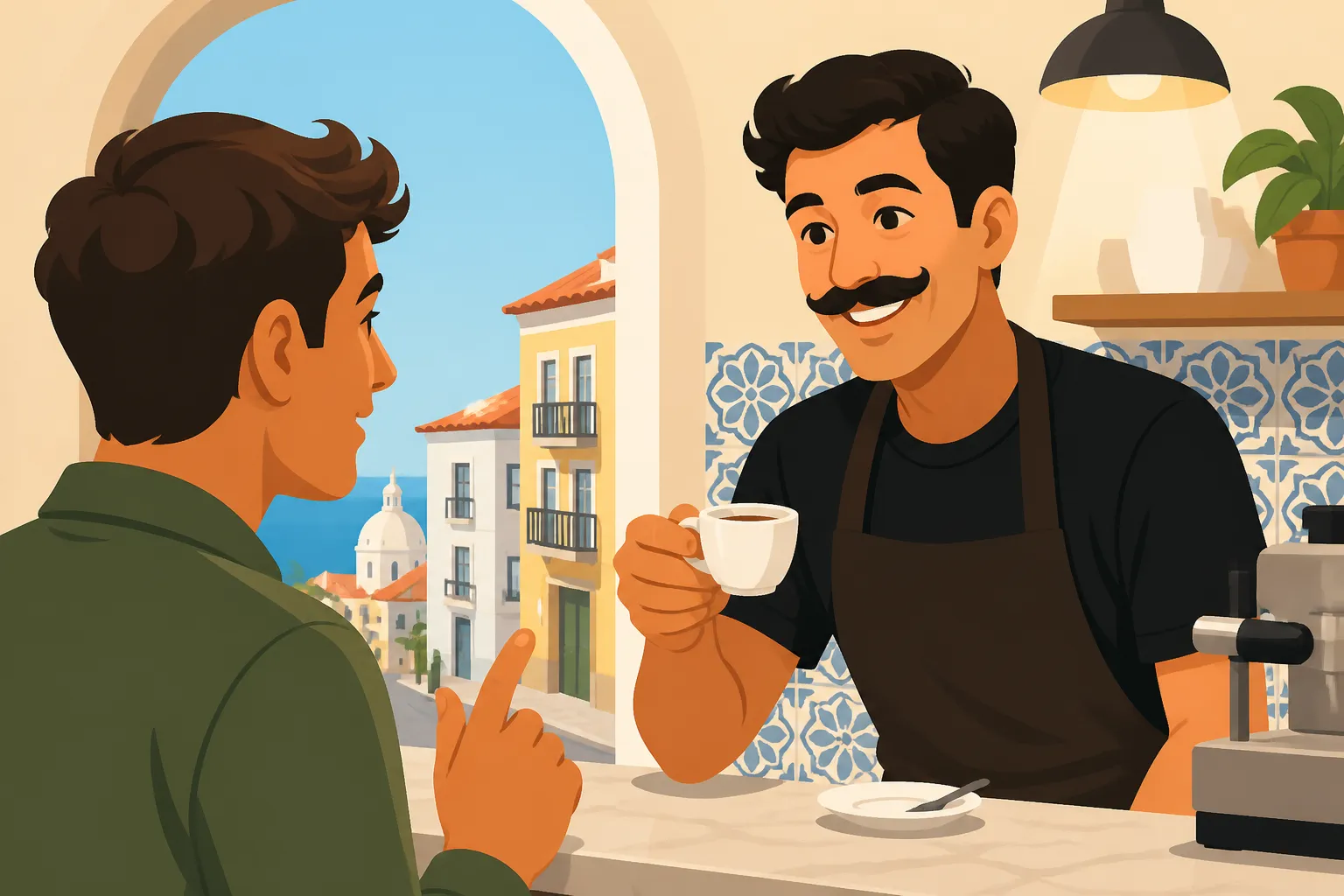
A café or pastelaria is more than just a place to get coffee; it's often a neighborhood hub, a focal point where community life unfolds. The aroma of freshly brewed coffee, warm bread, and sweet pastries fills the air. Don't be intimidated by the bustling atmosphere. These places are incredibly welcoming, even if the service might seem a bit gruff or efficient at first glance. The baristas are masters of their craft, moving with incredible speed and precision.
When you walk in, you'll likely notice a long counter, often with people standing and sipping their coffees. Behind the counter, there's usually an impressive display of pastries (pastelaria) and sometimes savory snacks. This is where the magic happens. Don’t feel pressured to sit down at a table, especially if you’re just having a quick coffee. Standing at the counter is the authentic, and often cheaper, way to enjoy your coffee.
Why Your "Espresso" Order Might Get You a Look
One of the biggest pitfalls for newcomers is asking for an "espresso." While the coffee is indeed an espresso, it’s not what locals call it. In Lisbon and the south, you'll ask for a bica. Venture north to Porto, and it becomes a cimbalino. Saying "espresso" won't confuse them entirely – they'll understand – but it immediately marks you as a turista. There's no shame in that, of course, but if you want to blend in and feel truly local, mastering these terms is your first step. It's a tiny linguistic nuance, but it makes a world of difference in how effortlessly you navigate your coffee breaks.
Decoding the Menu: Essential Coffee Orders
Now for the fun part: learning the lingo! Portuguese coffee culture boasts a surprisingly extensive vocabulary for what might seem like minor variations. Each term describes not just the amount of coffee or milk, but often the cup size and even the intensity.
The Basics: When You Just Want a Quick Shot
These are the foundational orders, the quick, strong pick-me-ups that fuel the nation.
- Bica / Cimbalino: This is the absolute standard. If you just want a shot of espresso, this is what you ask for. In Lisbon and the southern regions, it’s a bica. The word is thought to come from "Beba Isto Com Açúcar" (Drink This With Sugar), or from the spout (bica) of the machine. In Porto and the north, it’s a cimbalino, named after the Cimbali brand of espresso machines that were once prevalent there. Either way, you're getting a small, strong, dark espresso in a tiny cup. It's usually served piping hot, to be consumed quickly, often in just two or three sips. Don’t expect a large American-style coffee cup; this is concentrated goodness.
- Curto: This means "short." It’s an even shorter, more concentrated shot than a standard bica or cimbalino. Think of it as a Ristretto. It’s for those who really appreciate the intense, pure flavor of the coffee bean and want maximum punch in minimum liquid.
- Cheio: Meaning "full" or "filled." If you find a bica a bit too strong or short, asking for a cheio will get you a slightly longer pour, resulting in a less intense, more diluted espresso, but still in the small cup. It's similar to a lungo. This is a great option if you're easing into the stronger European style of coffee.
- Duplo: Simply, a double espresso. If one bica isn't enough to kickstart your day, a duplo will give you two shots in a slightly larger cup. It’s perfect for those mornings when you need an extra boost to tackle the day.
Milk & Coffee: Navigating the Creamy Options
When you want something smoother, perhaps with a bit of milk, Portugal offers a delightful array of choices, each with its own character and serving style.
- Galão: This is probably the closest thing you'll get to a latte, but it has its own distinct Portuguese identity. A galão is typically served in a tall glass, comprising one-quarter coffee and three-quarters hot milk, often with a generous foam layer on top. It’s a comforting, milky coffee, perfect for breakfast or a relaxed afternoon. The glass presentation makes it visually appealing and easy to hold. It’s a popular choice for those who prefer a milder coffee experience.
- Meia de Leite: Literally "half milk." This is a classic, equal parts coffee and hot milk, served in a medium-sized cup, usually with a handle. It's less milky than a galão and more coffee-forward, offering a lovely balance between the strength of the coffee and the creaminess of the milk. Many locals have a meia de leite with their breakfast. It’s typically served warm, not scorching hot, making it pleasant to sip.
- Garoto: This translates to "boy" or "kid" and is essentially a small espresso with a dash of milk foam on top. It’s served in the same small cup as a bica but with a spoonful of hot milk or foam. It’s a delightful choice if you want just a hint of milk to cut the intensity of the espresso without committing to a full milky coffee. It’s often enjoyed in the afternoon or evening.
- Pingo / Pingado: "Drop" or "dripped." This is very similar to a garoto, but often with just a literal drop of cold milk. It's an espresso with the barest whisper of milk. Some places will serve a pingo as an espresso with a tiny amount of cold milk, distinguishing it from the garoto's usually hot, foamy addition. It's a minimalist approach to adding milk.
- Abatanado: This can be a bit tricky because it varies. Generally, an abatanado is a longer black coffee, more diluted than a bica but still stronger than an Americano. It's an espresso shot with added hot water, but typically less water than you'd find in an Americano. It's usually served in a larger cup. If you find a bica too intense but don't want any milk, this is a solid choice. It aims for a larger volume of coffee without losing too much flavor.
- Carioca: For those who really can't handle strong coffee, a carioca is a very weak coffee. It's made by running hot water through the used coffee grounds from a previous bica. It's a way to extract the last bits of flavor, resulting in a very light, almost tea-like coffee. It's certainly an acquired taste, but an option for those seeking minimal caffeine and intensity.
- Café com Cheirinho: Literally "coffee with a little smell." This is a delightful tradition! It's a bica with a splash of spirits, usually aguardente (a clear grape brandy) or a local brandy. It's a warming, comforting drink, often enjoyed after a meal, especially in colder weather. The "cheirinho" adds a fragrant, alcoholic kick that transforms a simple coffee into something more special. This is particularly popular in more traditional or rural settings.
Sweeteners and Extras
Portuguese coffee is usually served black, and you add your own sugar. You'll typically find individual sachets of white sugar (açúcar) or brown sugar (açúcar amarelo or mascavado) on the counter or at your table. If you prefer artificial sweetener, ask for adoçante. Sometimes, especially with a galão, you might be offered canela (cinnamon) to sprinkle on top, which is a lovely addition.
| Portuguese Coffee Term | Description | Nearest Equivalent (Approx.) | Serving Vessel |
|---|---|---|---|
| Bica (Lisbon) | Standard small, strong black coffee | Espresso | Small espresso cup |
| Cimbalino (Porto) | Standard small, strong black coffee | Espresso | Small espresso cup |
| Curto | Even shorter, more concentrated espresso | Ristretto | Small espresso cup |
| Cheio | Longer, slightly more diluted espresso | Lungo | Small espresso cup |
| Duplo | Double shot of espresso | Double Espresso | Slightly larger cup |
| Galão | One-quarter coffee, three-quarters hot milk with foam | Latte (in a tall glass) | Tall glass |
| Meia de Leite | Half coffee, half hot milk | Flat White / Cappuccino | Medium-sized cup |
| Garoto | Small espresso with a dash of milk foam | Macchiato (smaller) | Small espresso cup |
| Pingo / Pingado | Espresso with a drop of cold milk | Macchiato (minimal milk) | Small espresso cup |
| Abatanado | Longer black coffee, espresso with added hot water | Americano (less water) | Larger cup |
| Carioca | Very weak coffee, made from used grounds | Very weak black coffee | Small espresso cup |
| Café com Cheirinho | Espresso with a splash of brandy or aguardente | Spirit Coffee (e.g., Irish) | Small espresso cup |
Practical Tips for Ordering Like a Pro
Now that you know the lingo, let’s talk about the unspoken rules and practicalities that will make you feel right at home.
Pronunciation Matters (Even a Little Bit)
Don’t be shy! Portuguese people genuinely appreciate it when you make an effort to speak their language, even if your accent isn't perfect. Trying to pronounce bica, galão, or meia de leite will get you a warm smile and better service. Start with "Um/Uma…" (One…) followed by your coffee choice. For example, "Um bica, por favor" (One espresso, please).
If you’re keen on improving your language skills for daily interactions, even beyond coffee, there are some great resources for Learning European Portuguese: Top Apps, Tutors, and Free Government Classes. The more you practice, the more confident you'll feel!
Stand at the Counter: The Local Way
As mentioned, standing at the counter (ao balcão) is the quintessential Portuguese coffee experience. It’s faster, often cheaper than sitting at a table (à mesa), and it’s where you’ll observe the real local hustle and bustle. Find an empty spot, make eye contact with the barista, and confidently place your order. Don't expect elaborate pleasantries; efficiency is key. They're busy, but always friendly in their own way. This is a subtle yet significant cultural adjustment, one of many Expat life hacks: Never rush a coffee, and other daily cultural adjustments you'll pick up.
Pay After, Not Before
Unlike in some countries where you pay upfront, in most traditional Portuguese pastelarias and cafés, you pay after you've consumed your coffee and any accompanying snacks. When you're ready to leave, simply say "A conta, por favor" (The bill, please) to the barista or a server. They'll tally up your order, and you can pay with cash or card. Many places accept contactless payments or MB Way. Speaking of paying, understanding Portugal's unique payment systems like the Multibanco network and MB Way can be super helpful for daily transactions, and there's a great guide on Using the MB Way app: Why it’s better than carrying cash in Portugal.
Beyond the Cup: The Café Experience
The coffee itself is just one part of the equation. The entire experience of a Portuguese café contributes to its charm.
Pairing Your Coffee with a Sweet Treat
You can't go to a Portuguese pastelaria and not indulge in a pastry! The options are endless and delicious. The most famous, of course, is the pastel de nata – a creamy custard tart with a caramelized top, best enjoyed warm. But don't stop there. Try a bolo de arroz (a fluffy rice flour muffin), a bola de berlim (a Portuguese donut, often filled with custard), or a tosta mista (a grilled ham and cheese sandwich) for something savory. The counter displays are usually irresistible, so don't hesitate to point to what looks good.
The Bill (A Conta, Por Favor)
When you're finished, a simple "A conta, por favor" will summon your bill. If you were standing at the counter, the barista will often just tell you the amount. If you were seated at a table, a server will bring a small slip of paper. Take your time, enjoy the atmosphere, and don't feel rushed.
Tipping Etiquette
Tipping in Portugal, especially for a quick coffee at the counter, isn't mandatory or expected in the same way it might be in North America. For a single bica, rounding up to the nearest euro is a nice gesture, or leaving a few loose coins (e.g., €0.10 – €0.20). If you’ve had a more elaborate meal or spent a longer time at a table, a small tip of 5-10% is appreciated for good service, but again, not strictly required. For a deeper dive into this, you might find Tipping culture in Portugal: Do you leave 10% or just round up the bill? useful.
Armed with this knowledge, you're now ready to confidently step into any Portuguese café or pastelaria and order your coffee like a true local. Enjoy the rich flavors, the buzzing atmosphere, and the unique cultural experience that comes with every cup. Bom café!
Disclaimer
The information provided in this guide is for general informational purposes only and is subject to change. While we strive to keep the content accurate and up-to-date, coffee terminology, prices, and local customs can vary slightly across regions and establishments in Portugal. We recommend verifying specific details directly with local businesses or resources.