What Is the Difference Between Ruby, Tawny, and Vintage Port?
Disclosure: This article contains affiliate links. If you buy through them, we may earn a commission at no extra cost to you. Read our full disclosure.
Ah, the wonderful, sometimes bewildering, world of Port wine! If you're new to Portugal, or even if you've been here a while but haven't delved deep into the local libations, you've probably stood in front of a shelf full of Port bottles, completely stumped. Ruby? Tawny? Vintage? It's like trying to decipher an ancient scroll in a language you only vaguely understand. But don't you worry, my friend. This guide is here to untangle the delicious mysteries of Port wine, specifically breaking down the key differences between Ruby, Tawny, and Vintage styles, so you can confidently pick your next bottle or impress your friends at a tasting.
Understanding the Essence of Port Wine: From Douro Vines to Your Glass
Before we dive into the specifics, let's get a general feel for what Port wine is. It's not just any wine from Portugal; it's a fortified wine, unique to the Douro Valley region, and steeped in centuries of history and tradition. The Douro, a UNESCO World Heritage site, is one of the oldest demarcated wine regions in the world, its terraced vineyards clinging precariously to steep hillsides, creating a breathtaking landscape that produces grapes unlike anywhere else.
The Land and the Craft: Douro Valley's Legacy
The story of Port begins in the rugged, sun-drenched slopes of the Douro Valley, inland from Porto. Here, indigenous grape varietals like Touriga Nacional, Touriga Franca, and Tinta Roriz (Tempranillo) thrive in schistous soils, enduring extreme temperatures. What makes Port truly distinctive, however, isn't just the grapes or the terroir, but the way it's made. During fermentation, the wine is "fortified" by adding a clear grape spirit called aguardente. This halts fermentation prematurely, preserving a significant amount of the grapes' natural sugars and boosting the alcohol content to between 19% and 22%. It's this fortification that gives Port its characteristic sweetness, richness, and strength. The process was initially developed centuries ago to help the wine survive long sea voyages to England, where it found a ready and enthusiastic market.
The journey from grape to glass is a meticulous one, often involving traditional methods like foot-treading the grapes in shallow granite troughs called lagares, though modern wineries increasingly use robotic lagares or other mechanical processes. After fortification, the wine is transported downriver from the Douro estates (known as quintas) to the cellars, or caves, in Vila Nova de Gaia, directly across the Douro River from Porto. This cooler, more humid coastal climate is considered ideal for the slow aging process that defines many Port styles. If you're planning a trip to the region, remember to check out options for getting around, perhaps even using services like Omio to navigate your way from Lisbon or other parts of Portugal to Porto.
The Fundamental Divide: Cask vs. Bottle Aging
The primary distinction between the major Port styles boils down to how they are aged. Some Ports spend their entire aging life in large wooden vats or smaller oak barrels, allowing them to oxidize and evolve over time in contact with a small amount of air. These are generally known as "cask-aged" Ports, and Tawny Port is the prime example. Others, like Vintage Port, spend a very short time in wood before being bottled young, destined to age gracefully for decades in the bottle, largely without oxygen. This "bottle-aged" category results in wines that develop complexity, softer tannins, and a unique sediment over time. Understanding this fundamental difference is your first step to becoming a true Port aficionado.
Decoding the Core Styles: Ruby, Tawny, and Vintage Port Explained
Now, let's break down the three main players you'll encounter most often. Each has its own personality, aging process, and ideal serving conditions.
Ruby Port: Fresh, Fruity, and Accessible
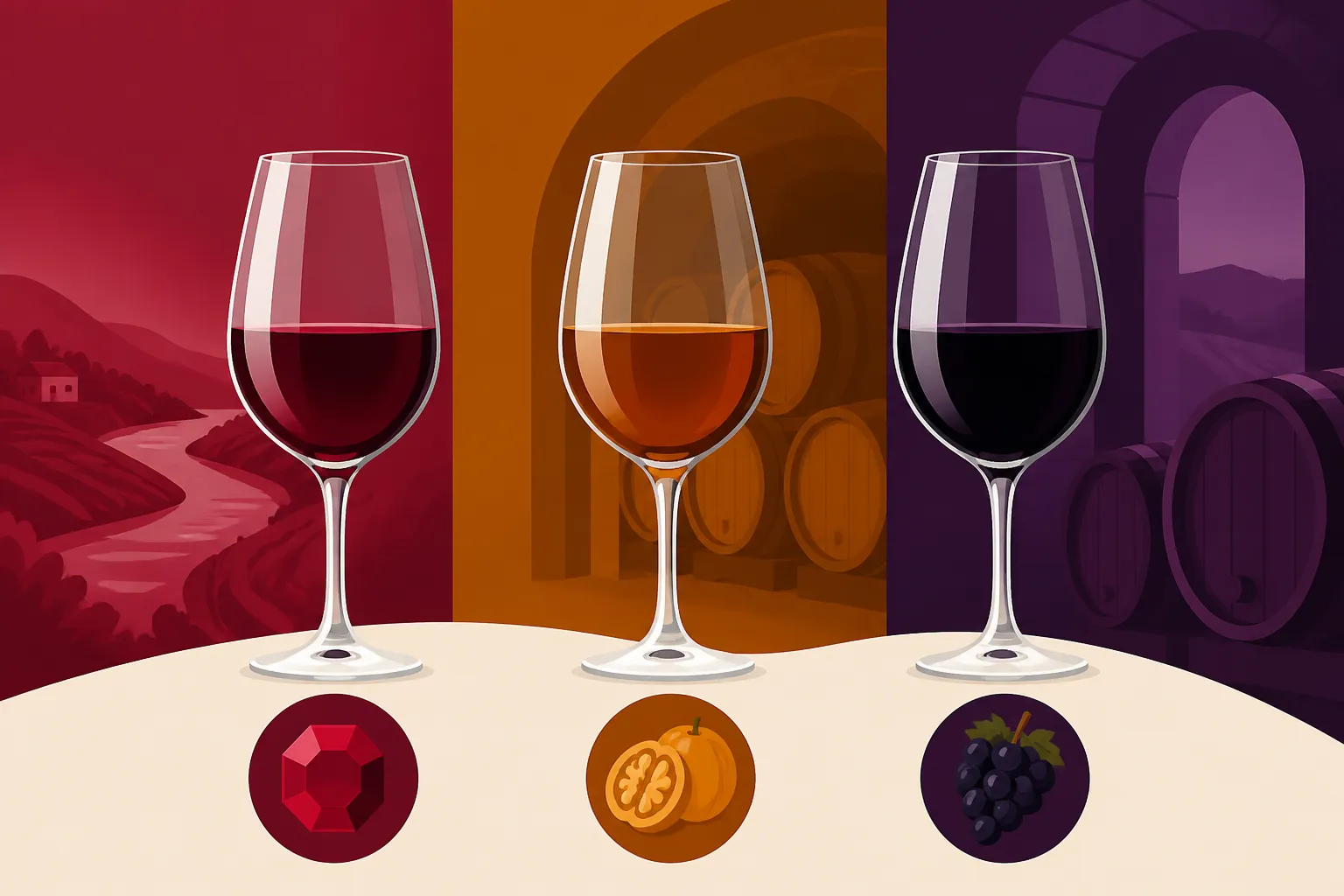
Ruby Port is, as its name suggests, youthful and vibrant, known for its bright, deep ruby-red color. It's the most widely produced and least expensive type of Port, often seen as an entry point into the world of fortified wines.
Characteristics and Production: Ruby Port is typically a blend of young, non-vintage wines from different harvests, aged for a relatively short period (usually two to three years) in large oak vats or stainless steel tanks. This aging environment minimizes exposure to oxygen, allowing the wine to retain its intense fruit characteristics, lively color, and fresh palate. You'll find it bursting with flavors of red berries like raspberry, cherry, and blackberry, often with a hint of plum. It's generally full-bodied with a straightforward sweetness and a clean finish, making it very approachable.
Serving and Pairing Suggestions: Because of its fresh, fruity profile, Ruby Port doesn't require decanting. It's best served slightly chilled, between 12-16°C (54-61°F). It's a fantastic pairing with rich, creamy cheeses, chocolate desserts (especially dark chocolate or berry-based tarts), and even some fruit desserts. Personally, I love a good Ruby with a slice of Serra da Estrela cheese – a true Portuguese delight.
Common Types of Ruby Port:
- Standard Ruby: This is your everyday, non-vintage Ruby Port. It's straightforward and excellent for casual sipping.
- Ruby Reserve: Also known as "Vintage Character," this is a step up. It's a blend of higher-quality, often slightly older Ruby Ports that are aged a bit longer than standard Ruby, resulting in a more complex and intense flavor profile, though still retaining that vibrant fruitiness.
- Crusted Port: This is a non-vintage blend, similar to Ruby Reserve, but crucially, it's bottled unfiltered. This means it develops a "crust" or sediment in the bottle, much like a Vintage Port, and requires decanting. It offers some of the complexity of a Vintage Port at a more accessible price point and is ready to drink upon release, though it can benefit from a few years in the bottle.
Tawny Port: Mellow, Nutty, and Oxidative
Tawny Port is the sophisticated cousin, renowned for its delicate, nutty, and oxidative character, and its distinctive brownish-orange, or "tawny," hue. It's a world away from the youthful exuberance of Ruby.
Characteristics and Production: Unlike Ruby, Tawny Port is aged for a longer period in smaller oak barrels. This extensive wood aging, combined with gradual exposure to oxygen, causes the wine to slowly lose its vibrant red color, mellow its fruit flavors, and develop complex notes of dried fruit, caramel, butterscotch, toasted nuts (almonds, walnuts), and sometimes even hints of coffee or spices. The longer it ages, the lighter its color becomes and the more pronounced these nutty, oxidative notes are. These are wines that truly embody patience.
Serving and Pairing Suggestions: Tawny Port is typically served slightly chilled, around 10-14°C (50-57°F). It doesn't require decanting as it leaves no sediment. It's a classic with desserts featuring nuts, caramel, or coffee, like crème brûlée, apple pie, or nutty cakes. It also pairs wonderfully with foie gras, cured meats, and hard, aged cheeses like Parmesan. For many expats, a glass of 10 or 20-year-old Tawny Port after dinner becomes a cherished ritual.
Common Types of Tawny Port:
- Standard Tawny: This is a basic, non-vintage blend that has spent some time in wood, usually a couple of years. It offers a hint of the characteristic tawny flavor but is much lighter and fruitier than aged tawnies.
- Tawny with an Age Indication (10, 20, 30, 40+ Years): These are the superstars of the Tawny category. The number on the label (e.g., 10 Anos, 20 Anos) refers to the average age of the wines in the blend, not the age of the youngest component. These wines are carefully blended to maintain a consistent style and character over time. A 20-year-old Tawny, for instance, offers more complexity, depth, and a lighter color than a 10-year-old. The 30 and 40+ year old Tawnies are truly exceptional, offering incredible layers of flavor.
- Colheita: This is a single-vintage Tawny Port, meaning all the grapes come from a single harvest declared by the Port Wine Institute, and it spends a minimum of seven years in wood. Unlike Vintage Port, which ages in bottle, Colheita ages in cask and is ready to drink upon release. It will state both the vintage year and "Colheita" on the label, offering a fascinating glimpse into a specific year's character with the oxidative notes of a Tawny.
Vintage Port: Intense, Complex, and Age-Worthy
Vintage Port is the undisputed king of Port wines, representing the pinnacle of the producer's craft and the best harvest years. It's a wine for special occasions, demanding patience and respect.
Characteristics and Production: Vintage Port is made from the finest grapes of a single, exceptional harvest. Unlike other Ports, it's only "declared" in outstanding years by the Port Wine Institute, typically three to four times a decade. After a very short period (usually two years or less) in large wooden vats, Vintage Port is bottled young and unfiltered. This is where the magic happens: it's designed to age in the bottle for decades, developing immense complexity, character, and softness. When young, Vintage Port is incredibly intense, full-bodied, and dark, with powerful notes of dark berries, plum, chocolate, and firm tannins. As it matures in the bottle, these fruit flavors evolve into more subtle notes of spice, tobacco, coffee, and dried fruits, and its tannins soften beautifully. It will form a thick sediment or "crust" in the bottle over time.
Serving and Pairing Suggestions: Vintage Port absolutely requires decanting before serving to separate the wine from its heavy sediment. It should be served at room temperature, around 16-18°C (61-64°F). It's traditionally paired with strong, ripe cheeses like Stilton or Roquefort, or rich chocolate desserts. However, many connoisseurs prefer to drink it simply on its own, savoring its evolving complexity. This is the Port you open to celebrate milestones, a true investment in liquid history.
Single Quinta Vintage Port: A "Single Quinta" Vintage Port is similar to a traditional Vintage Port but comes from a single estate (quinta), even in years when a full "classic" vintage isn't declared by the Port House. These can offer excellent value and often mature a bit faster than a classic Vintage Port, usually ready to drink after 10-15 years. They also require decanting.
Making Your Choice: A Comparison and Practical Advice for Expats
So, how do you choose? It really depends on your palate, your budget, and the occasion. Are you looking for something fresh and fruity, something mellow and nutty, or a powerhouse that tells a story across decades?
A Quick Reference: Port Wine Style Comparison
To help you visualize the differences, here's a handy comparison table:
| Feature | Ruby Port | Tawny Port | Vintage Port |
|---|---|---|---|
| Aging | 2-3 years in large vats/tanks | A couple of years (10, 20, 30+ avg for aged Tawnies) in small barrels | 2 years max in vat, then decades in bottle |
| Aging Type | Minimal oxidative (fresh) | Oxidative (exposed to air) | Reductive (minimal air in bottle) |
| Color | Deep ruby red | Reddish-brown to light tawny | Deep purple-black (young), fades to garnet (old) |
| Aroma/Flavor | Fresh red berries, plum, lively fruit | Dried fruits, nuts, caramel, coffee, butterscotch | Intense dark berries, chocolate, spice (young); tobacco, earth, subtle fruit (old) |
| Sweetness | Medium to sweet | Medium to sweet | Dry to very sweet (depends on producer) |
| Complexity | Simple, straightforward | Complex, evolving, nuanced | Extremely complex, deep, powerful |
| Sediment | Minimal (except Crusted) | None | Heavy "crust" develops |
| Decanting | No (Crusted requires) | No | Yes, always |
| Serving Temp. | Slightly chilled (12-16°C) | Chilled (10-14°C) | Room temperature (16-18°C) |
| Drink Upon | Ready to drink | Ready to drink (age indicated is better) | Needs significant bottle aging |
| Price | Low to medium | Medium to high | High to very high |
Experiencing Port in Portugal: Tastings and Purchases
One of the best ways to truly appreciate the differences between these styles is to visit the Port wine lodges (cellars) in Vila Nova de Gaia. Most offer tours and tastings where you can sample various Ruby, Tawny, and even some Vintage Ports side-by-side. Historic names like Taylor's, Graham's, Sandeman, and Cálem all have impressive lodges. You can often find great deals on tours that include tastings and sometimes even fado shows, many of which can be conveniently booked via platforms like GetYourGuide.
When you're ready to buy, remember that you don't need to break the bank for a good Port. A Ruby Reserve or a 10-year-old Tawny offers fantastic value and a delightful experience. If you're feeling adventurous and have the patience (or a very special anniversary coming up!), a well-chosen Vintage Port can be an incredible investment. Many supermarkets carry a decent selection, but for the best range and expert advice, head to a dedicated wine shop or directly to the cellars in Gaia. While you're in the area exploring, don't forget that you can find excellent places to stay in Porto or Vila Nova de Gaia through Booking.com. It makes for an easy base to hop across the river and immerse yourself in the world of Port.
Exploring the nuances of Port wine is truly one of the joys of living in, or visiting, Portugal. Each sip tells a story of the sun, the soil, and the centuries of human dedication in the Douro Valley. Saúde!
Disclaimer
The information provided in this guide is for general informational purposes only and does not constitute professional advice. While we strive to keep the information up-to-date and correct, we make no representations or warranties of any kind, express or implied, about the completeness, accuracy, reliability, suitability, or availability with respect to the website or the information, products, services, or related graphics contained on the website for any purpose. Any reliance you place on such information is therefore strictly at your own risk. Always verify details with official sources or local experts.