How to Claim Portuguese Citizenship by Descent
Oh, the quest for ancestral roots! It's a journey many of us expats embark on, and let me tell you, there’s something incredibly fulfilling about connecting with the land your family once called home. But the path to claiming Portuguese citizenship by descent, while rewarding, can feel like navigating a labyrinth designed by Kafka himself. This guide is here to untangle the complexities, validate your inevitable frustrations, and provide a clear, step-by-step roadmap to help you bring your Portuguese heritage full circle.
Understanding Portuguese Citizenship by Descent
The idea of claiming citizenship through your family line is a beautiful one, a tangible link to your past. Portugal, like many nations, recognizes this connection, but the rules and nuances can be surprisingly intricate. It's not always as simple as pointing to a great-grandparent and saying, "They were Portuguese!"
Who Qualifies: The Generational Rules
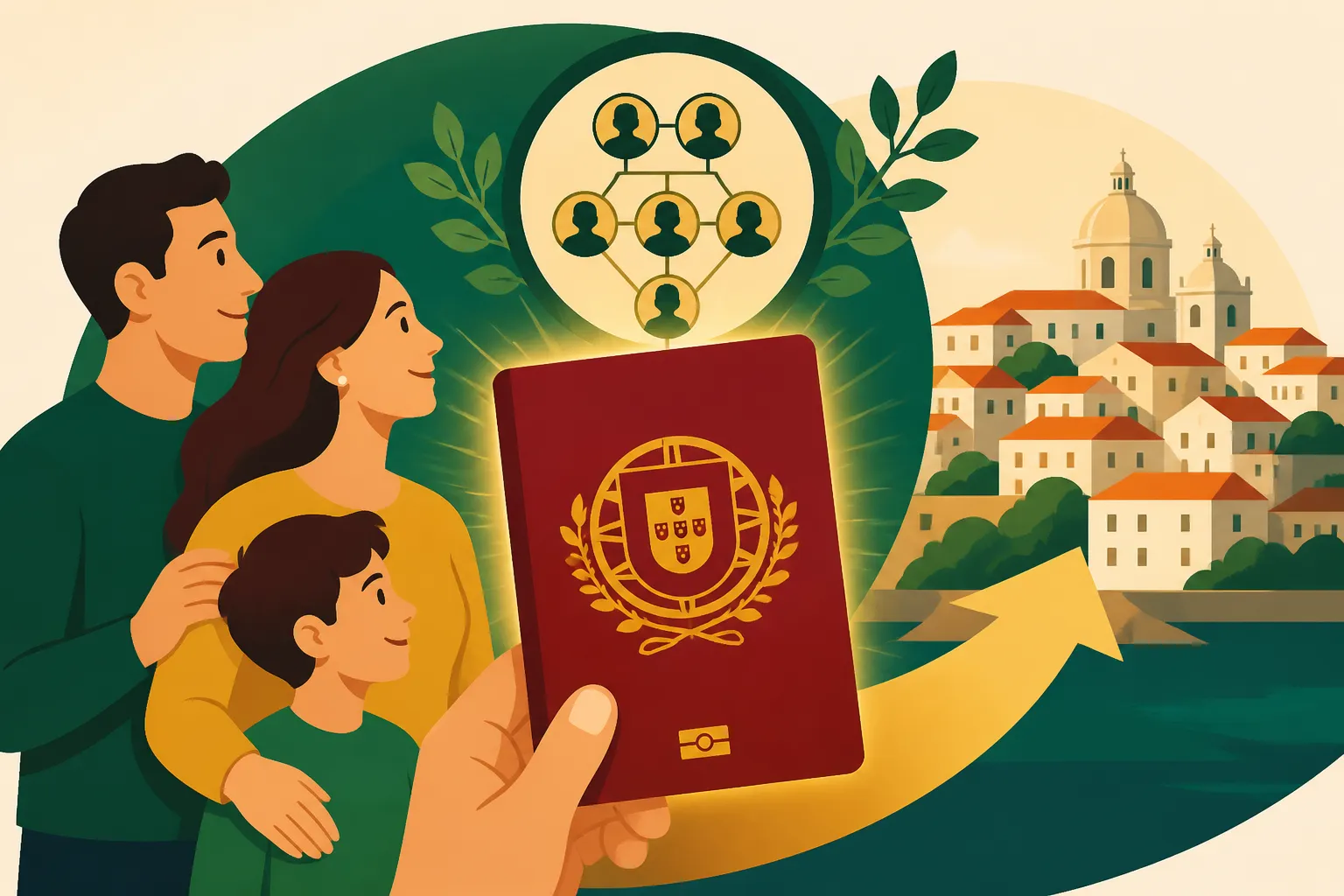
Portuguese citizenship by descent is generally for those with a direct bloodline to a Portuguese citizen. This primarily boils down to your parents or grandparents. The legal framework has shifted over the years, which means the specifics often depend on when your ancestors were born, when they might have acquired or lost Portuguese nationality, and when you yourself were born.
For instance, if one of your parents was a Portuguese citizen, you're usually eligible to acquire citizenship directly. This is often the most straightforward path. It doesn't typically matter if you were born outside Portugal, as long as that parent maintained their Portuguese nationality at the time of your birth. The civil registry simply needs to register your birth in Portugal, acknowledging your inherent right.
However, if you're looking to claim through a grandparent, things historically got a bit more complex, especially before a significant law change in 2017. Before this, claiming through a grandparent often required proving an "effective connection" to the Portuguese community, which was a subjective and often difficult hurdle. Since the 2017 amendment, the process for grandchildren has become much more accessible, primarily requiring that your Portuguese grandparent maintained their Portuguese nationality at the time of your parent's birth. If your parent is no longer alive, you can still proceed, but the focus remains on ensuring your grandparent was indeed a Portuguese citizen.
Key Requirements Beyond Lineage
Beyond merely demonstrating your bloodline, there are a few other critical components that the Portuguese authorities will look for. One universal requirement across almost all citizenship applications is a clean criminal record. Portugal wants to ensure that those becoming citizens are of good standing. This means providing criminal record certificates from your country of birth, any country you’ve lived in for a significant period (usually over a year, post-age 16), and sometimes even from Portugal itself if you've resided here. These documents will almost always need to be apostilled and officially translated, a task that can often benefit from services like RushTranslate.
Another crucial element is the proper documentation of every link in the chain. This means providing original or certified copies of birth certificates and, where applicable, marriage certificates for yourself, your parents, and your Portuguese grandparent. Any discrepancies, missing documents, or unofficial translations can cause significant delays, so meticulous preparation is key.
The Step-by-Step Application Process
Embarking on this journey requires patience and precision. It’s not a sprint; it’s definitely a marathon, filled with administrative hurdles that can test even the most resilient expat.
Gathering Your Documentation
This is arguably the most time-consuming and critical phase. You’ll need to compile a dossier of documents that meticulously traces your lineage back to your Portuguese ancestor.
Here’s a general checklist:
- Your Birth Certificate: An original, apostilled, and translated copy.
- Your Parent(s)' Birth Certificates: If applicable, linking you to your Portuguese grandparent. These also need to be apostilled and translated if they are foreign.
- Your Parent(s)' Marriage Certificate: If applicable and if your parents were married. Again, apostille and translation if foreign.
- Your Portuguese Grandparent's Birth Certificate: This is the cornerstone. If you don't have it, you'll need to obtain it from the relevant Conservatória do Registo Civil in Portugal. This can sometimes be done online, but old records might require more digging.
- Grandparent(s)' Marriage Certificate: If applicable, to prove the legal union of your Portuguese grandparent.
- Criminal Record Certificates: From your birth country and any country you've lived in for more than a year after turning 16. These absolutely must be apostilled (or legalized by a Portuguese consulate) and officially translated into Portuguese. This is where services that specialize in certified translations, like the aforementioned RushTranslate, become invaluable, ensuring your documents meet Portugal's stringent requirements.
- Proof of Nationality of the Portuguese Ancestor: While the birth certificate is primary, sometimes additional documentation might be requested to confirm the ancestor maintained their Portuguese nationality until the birth of the next generation.
Be prepared for the bureaucracy. Obtaining these documents, especially historical ones, can be a multi-month endeavor, particularly if they are from different countries. Once you have them, remember that any document not originally in Portuguese needs to be translated by a certified translator and then legalized or apostilled, depending on the issuing country's adherence to the Hague Apostille Convention. For comprehensive guidance on this, you might find our article on Translating and Certifying Documents for Portuguese Immigration helpful.
Submitting Your Application
Once your documentation is meticulously prepared, translated, and legalized, it's time for submission. The primary authority for citizenship applications in Portugal is the Conservatória dos Registos Centrais in Lisbon. However, you can also submit your application through a Portuguese consulate in your country of residence.
Many expats choose to work with a Portuguese immigration lawyer for this stage. While it's certainly possible to navigate the process yourself, a lawyer can be immensely helpful in reviewing your documents for accuracy, submitting them correctly, and following up with the authorities. They can also provide nuanced advice on specific challenges, which can be invaluable, especially if your family history presents unique complexities. Our guide on Hiring an Immigration Lawyer in Portugal: When Is It Actually Necessary? could shed more light on this decision.
After submission, the waiting game begins. Processing times can vary significantly, often ranging from a few months to over a year, depending on the complexity of your case and the current workload of the Conservatória. You might receive requests for additional documents or clarifications, so it's essential to stay responsive.
Proving an "Effective Connection" to Portugal
Now, this is where things can sometimes get a little fuzzy, and it's a point of confusion for many. The requirement to prove an "effective connection to the Portuguese community" used to be a major hurdle, especially for grandparent claims. The good news is that the law has evolved, making it generally easier.
When it's Needed and What it Means
Under current law, if you are applying through a grandparent, you generally no longer need to explicitly prove an "effective connection" to the Portuguese community in the same rigorous way as before. The critical point is that your Portuguese grandparent's nationality must be established and acknowledged in Portuguese civil records before you can claim. The effective connection clause was primarily relevant for applications based on grandparents who had acquired or reacquired Portuguese nationality under specific prior laws, or where there was a gap in the direct lineage's Portuguese nationality.
However, while not strictly required for most modern grandparent applications, demonstrating some connection can certainly help grease the wheels and show genuine intent. It can be seen as a sign of your commitment to your heritage and Portugal.
Strategies for Demonstrating Connection
Even if not legally mandated for your specific case, showcasing a link can only be a positive. Think of it as painting a fuller picture of your connection to Portugal.
Here are some ways people demonstrate connection:
- Learning the Language: Enrolling in Portuguese language courses, even online, shows a clear effort. PortuguesePod101 is a common resource for many expats, and having a certificate of completion (even A1 or A2 level) can be a nice touch.
- Visiting Portugal: Evidence of regular visits, like flight tickets and accommodation receipts, can indicate a sustained interest in the country.
- Cultural Engagement: Joining Portuguese cultural associations, attending events, or even having Portuguese friends can be indicative.
- Property or Economic Ties: While not a prerequisite, if you happen to own property in Portugal or have a Portuguese bank account, it naturally demonstrates a connection. To facilitate this, many expats start by getting a NIF (Número de Identificação Fiscal) – your Portuguese tax identification number. Services like Bordr can help you obtain a NIF remotely, which is a fantastic first step into the Portuguese administrative system. For more on this, check out our article on NIF and NISS: How to Get Your Portuguese Tax and Social Security Numbers. Opening a local bank account, as detailed in Opening a Bank Account in Portugal: Best Banks for Foreigners and Expats, also adds to this.
It’s important to understand that the goal here is to show that Portugal isn't just a flag of convenience, but a place you genuinely feel a part of, or wish to connect with more deeply.
Common Challenges and Pitfalls for Applicants
Like any bureaucratic process, claiming Portuguese citizenship by descent has its share of potential headaches. Being forewarned is being forearmed.
Missing or Incomplete Documentation
This is perhaps the biggest pitfall. Finding birth and marriage certificates for ancestors who lived decades ago, possibly in different countries, can be incredibly difficult. Records can be lost, destroyed, or simply not digitized. You might face situations where:
- Vital Records are Scarce: For very old documents, especially from rural areas, records might be handwritten, hard to read, or even non-existent in the standard civil registries if events were only recorded by the church.
- Discrepancies: Names, dates, or places might be recorded slightly differently across various documents. Even a minor difference can trigger a request for clarification, delaying your application.
- Apostille or Legalization Issues: The rules for apostilles and legalization can be confusing, especially if you have documents from non-Hague Convention countries. Getting this wrong means the document will be rejected.
My advice? Start early. Very early. Dig into family archives, talk to older relatives, and be prepared to contact multiple government agencies or archives in various locations. If a document truly cannot be found, you might need legal advice on how to proceed, possibly through a court order to establish facts, which is a complex and lengthy process in itself.
Navigating Bureaucracy and Delays
Portuguese bureaucracy, while generally improving, can still be a slow-moving beast. You might submit a perfect application, only to wait for many months with little to no updates. The transition from SEF to the new AIMA agency has also created significant backlogs in many immigration processes. While citizenship applications are handled by the civil registry (Conservatória) and not directly AIMA, the general atmosphere of administrative slowdown can still be felt.
Here’s what to expect and how to mitigate the frustration:
- Patience is a Virtue: Expect delays. Your application won't be processed overnight. It's a system that prioritizes thoroughness over speed.
- Be Organized and Keep Copies: Keep meticulous copies of everything you submit, including proof of postage or submission receipts. If you're asked for something again, you'll have it readily available.
- Follow-Up Appropriately: While constant badgering won't speed things up, a polite follow-up every few months (if you're not using a lawyer who handles this) is reasonable. Remember that emails might not always be answered quickly, and phone calls can be tricky if you don't speak Portuguese.
- Consider Professional Help: As mentioned, a Portuguese immigration lawyer can be incredibly beneficial here. They have direct channels of communication, understand the nuances of the system, and can advocate on your behalf, potentially saving you a lot of stress. For a broader view of the system, our Portugal Visa and Immigration Guide for Expats: The Complete 2027 Overview provides additional context.
It's a process that requires a resilient spirit, but the reward of reconnecting with your heritage and becoming a Portuguese citizen is, for many, well worth the effort.
Summary of Document Requirements by Lineage Type
To help clarify the core document requirements, here’s a simplified table. Remember, this is a general overview, and specific situations may require additional documentation.
| Applicant's Relation to Portuguese Citizen | Primary Required Documents (Apostilled & Translated if Foreign) | Notes |
|---|---|---|
| Child of a Portuguese Citizen | – Your Birth Certificate | – Portuguese parent must have been a Portuguese citizen at your birth. |
| – Portuguese Parent's Birth Certificate | – If parent's birth is registered in Portugal, this is straightforward. | |
| – Parent's Marriage Certificate (if applicable) | – | |
| – Criminal Record Certificate(s) for Applicant | – | |
| Grandchild of a Portuguese Citizen | – Your Birth Certificate | – Portuguese grandparent must have been a Portuguese citizen at your parent's birth. |
| – Your Parent's Birth Certificate | – Your parent does not need to acquire Portuguese citizenship first for you to apply, but their birth will need to be registered in Portugal for the purpose of establishing the lineage. | |
| – Your Parent's Marriage Certificate (if applicable) | – | |
| – Portuguese Grandparent's Birth Certificate | – This is crucial. | |
| – Grandparent's Marriage Certificate (if applicable) | – | |
| – Criminal Record Certificate(s) for Applicant | – For certain historical cases, evidence of "effective connection" might still be requested, but this is less common under current law. |
After successfully navigating this complex process, you'll eventually receive your Portuguese citizenship. This opens up a world of possibilities, from living and working freely across the EU to fully integrating into Portuguese society. For those planning a full move, remember to consider all aspects of Healthcare in Portugal for Expats: The Complete 2026 Medical Guide, as full access to the public SNS system comes with citizenship and residency. Even then, many prefer a complementary private health insurance plan, and providers like Cigna Global are popular choices among expats. Understanding your new rights and responsibilities, including Portuguese Citizenship and Naturalization: The 10-Year Path Explained, will be your next step on this exciting journey.
Disclaimer
Please remember that immigration laws and procedures are subject to change. The information provided in this guide is for informational purposes only and does not constitute legal advice. It is highly recommended to consult with a qualified Portuguese immigration lawyer or the relevant Portuguese authorities for advice tailored to your specific situation.