Who Is Exempt From SNS User Fees in Portugal?
Disclosure: This article contains affiliate links. If you buy through them, we may earn a commission at no extra cost to you. Read our full disclosure.
Navigating the Portuguese public healthcare system can feel like deciphering a secret code when you first arrive. I remember standing in line at my local health center in Lisbon, clutching a handful of documents and sweating over whether I’d be hit with a massive bill just for a routine check-up. This guide breaks down exactly who is exempt from SNS user fees in Portugal so you can access care without financial surprises.
Understanding Taxas Moderadoras in the Portuguese Public Health System
In Portugal, the fees associated with the public health system, known as the Serviço Nacional de Saúde (SNS), are called taxas moderadoras. Historically, these were small co-payments required for almost every interaction with a doctor, nurse, or diagnostic lab. However, the landscape of Portuguese healthcare underwent a massive transformation recently, which drastically reduced the number of people who actually have to pull out their wallets.
What Are SNS User Fees?
Taxas moderadoras were originally designed to "moderate" the use of the system, preventing people from flooding emergency rooms with minor issues. They weren't meant to cover the full cost of care but rather to serve as a symbolic contribution. For years, expats and locals alike would pay a few euros for a GP consultation or a bit more for an X-ray.
Even though the rules have changed, it is still vital to understand that your eligibility for exemptions depends heavily on your administrative status. You cannot simply walk into a hospital and claim an exemption; your status must be linked to your Registering with the Centro de Saúde: Getting Your SNS Número de Utente profile. Without that magic number, you are often treated as a private patient, which carries significantly higher costs.
The 2022 and 2026 Policy Shift: Why Most Fees Were Abolished
The most important thing for any expat to know today is that since mid-2022, the vast majority of taxas moderadoras have been abolished for everyone who is a legal resident. This means that if you are referred by your family doctor or the SNS 24 helpline, you generally won't pay for consultations or exams within the public system.
However, "abolished" does not mean "non-existent." Fees still apply in specific scenarios, primarily when you bypass the correct channels—like going straight to the emergency room for a non-urgent issue without a referral. This is why many expats still choose to maintain Private Health Insurance in Portugal: Costs, Coverage, and Best Providers to avoid the wait times of the public system, even if the public system is now largely free at the point of use.
List of Exempt Groups: Who Never Pays at the SNS?
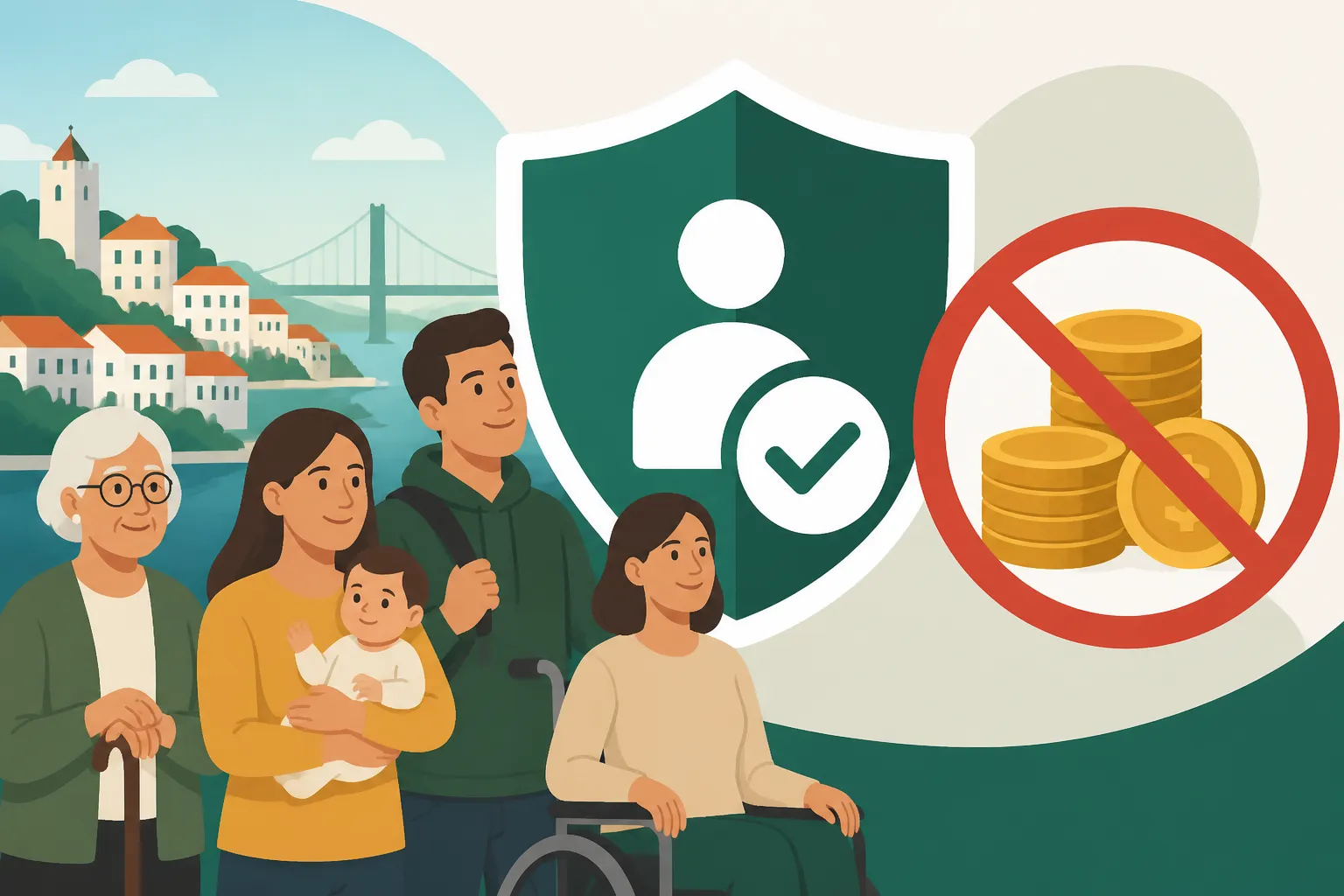
While most primary care is now free for residents, there is a specific list of vulnerable or priority groups who are legally exempt from all user fees, including those rare remaining charges for emergency services. Knowing if you fall into one of these categories is crucial for your peace of mind.
Age-Based Exemptions: Children and Seniors
The Portuguese government prioritizes the health of the youngest and oldest members of society. Children and adolescents up to the age of 18 are completely exempt from all user fees. This is a huge relief for families moving here, as it covers everything from routine vaccinations to emergency visits.
If you are moving with little ones, you’ll want to ensure they are correctly registered to receive their Pediatric Care in Portugal: Vaccinations and Child Health Checks. On the other end of the spectrum, seniors often qualify for exemptions based on their pension levels, though it is not a blanket exemption for everyone over 65. Instead, it is usually tied to "economic insufficiency," which we will detail below.
Medical Necessity and Specific Conditions
If you suffer from a chronic illness or a specific medical condition, the state ensures that the cost of care does not become a barrier to treatment. This includes people with a proven degree of disability equal to or greater than 60%. It also covers specific groups such as:
- Pregnant women and those who have recently given birth (for all care related to the pregnancy and up to 60 days post-partum).
- Patients with chronic diseases like diabetes, cancer, or HIV/AIDS.
- People undergoing fertility treatments.
- Blood donors and voluntary firemen.
For those managing these conditions, Women’s Health and Maternity Care in Portugal: Pregnancy and Birth or chronic disease management is handled with specific care, and you should ensure your GP (Médico de Família) has updated your clinical file to reflect your exemption status.
Financial Vulnerability and Economic Need
The most common way for adults to gain a full exemption is through "insufficiência económica" (economic insufficiency). In 2026, the threshold for this is linked to the IAS (Indexante dos Apoios Sociais). Generally, if your household’s average monthly income is below a certain percentage of the IAS, you can apply for a total exemption from any remaining fees.
This is particularly relevant for retirees or digital nomads who might be between jobs. However, keep in mind that the SNS is often under heavy pressure. Even if you are exempt from fees, the wait times can be grueling. This is why many foreigners look into options like Cigna Global to ensure they can jump the queue and see specialists in the private sector when the public system is backed up.
| Group Category | Exemption Type | Requirement |
|---|---|---|
| Children/Adolescents | Full Exemption | Up to 18 years of age |
| Pregnant Women | Full Exemption | Pregnancy & 60 days postpartum |
| Low Income | Full Exemption | Income below IAS threshold |
| Disabled Persons | Full Exemption | ≥60% certified disability |
| Referred Patients | Partial/Full | Must have SNS 24 or GP referral |
| Blood Donors | Full Exemption | Registered with official registry |
How to Register Your Exemption and Prove Your Status
Many expats get frustrated because they know they should be exempt, but the computer system at the hospital says otherwise. The burden of proof is on you to ensure your digital records are up to date.
The Role of the Número de Utente
Your gateway to everything in the SNS is your Número de Utente (Health User Number). When you first arrive, getting this number is often more important than finding a favorite café. You can read more about Taxas Moderadoras: Co-payments and Costs in the Public Health System to understand the specific costs you might face if your registration isn't perfect.
Once you have your number, your exemption status is usually updated automatically if it's based on age. However, if it’s based on income or a medical condition, you often need to trigger a manual update. This is done through the "Portal das Finanças" (for income) or by providing medical certificates to your local health center.
Registering via the Portal do Utente
The SNS has become surprisingly digital. Through the "Portal do Utente," you can check your own records. If you are a resident and find that you are being charged for things that should be free, you may need to visit your health center to show your residency card or your "Atestado de Morada."
If you are a frequent traveler or a digital nomad, you might find that the public system is too slow for your lifestyle. In these cases, a plan from SafetyWing can be a lifesaver, providing a bridge of coverage while you wait for your Portuguese administrative ducks to get in a row. They understand the "limbo" that expats often live in.
The Role of the Junta de Freguesia and Social Security
To prove economic insufficiency, the SNS computer system communicates with the Social Security and Tax Authority (Finanças) databases. If you are new to the country and haven't filed a tax return yet, you might not show up as "low income" even if you have zero Portuguese earnings.
In these cases, you may need a certificate from your local Finding an English-Speaking General Practitioner (Médico de Família) or the Junta de Freguesia to confirm your household status. It’s a bit of a "paperwork dance," but it’s the only way to avoid those pesky bills.
Practical Scenarios: What Does a Visit Actually Cost?
To give you a real-world perspective, let’s look at what happens when things go wrong. Knowing the difference between the public and private routes can save you hundreds of euros.
Hospital Urgências vs. Primary Care
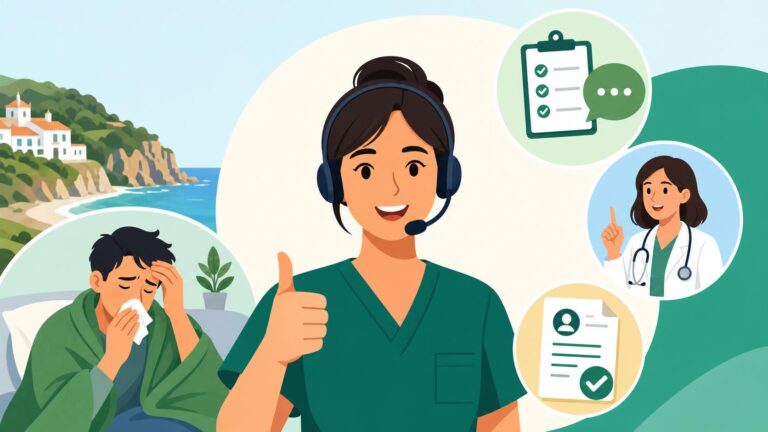
If you wake up with a high fever and head straight to the emergency room (Urgências) of a public hospital without calling anyone first, you will likely be charged a fee, even if you are a resident. This fee usually ranges from €14 to €18. However, if you call the SNS 24 helpline first and they refer you to the hospital, that fee is waived for everyone.
This is a key cultural nuance in Portugal: the system rewards you for following the rules. If you go to your Emergency Medical Care in Portugal: Calling 112 and Going to the Hospital, and you've been referred, you are treated as a priority and the cost is zero. If you walk in off the street for a non-emergency, you pay the fee and sit at the bottom of the waitlist.
When Private Insurance Is a Safer Bet
While the SNS is fantastic for major trauma or chronic care, the day-to-day "I have a weird rash" or "I need a specialist" can take months in the public system. For this reason, many expats view the SNS as a backup and use Cigna Global for their primary needs. Private insurance allows you to access hospitals like CUF or Hospital da Luz, where you can often see a specialist within days rather than months.
SafetyWing is another excellent choice for those who are still in the process of getting their residency. They offer the flexibility that a rigid state system like the SNS lacks. If you are a digital nomad moving between the Algarve and Lisbon, having that private safety net means you don't have to worry about whether a specific local health center has recognized your exemption status yet.
Ultimately, deciding Public vs Private Healthcare in Portugal: Which One Should Expats Choose? comes down to your budget and your patience. The public system is statistically one of the best in Europe for outcomes, but it requires a "zen" attitude toward administration. If you qualify for an exemption, the cost is unbeatable—it's free. But for many, the "cost" of the wait is higher than the price of a private premium.
Disclaimer
The information provided in this guide is for informational purposes only and does not constitute legal or medical advice. Healthcare laws and SNS regulations in Portugal are subject to change. Always consult with the official SNS portal, your local Centro de Saúde, or a qualified legal professional to confirm your specific eligibility for exemptions.