How Much Are Taxas Moderadoras in Portugal?
Disclosure: This article contains affiliate links. If you buy through them, we may earn a commission at no extra cost to you. Read our full disclosure.
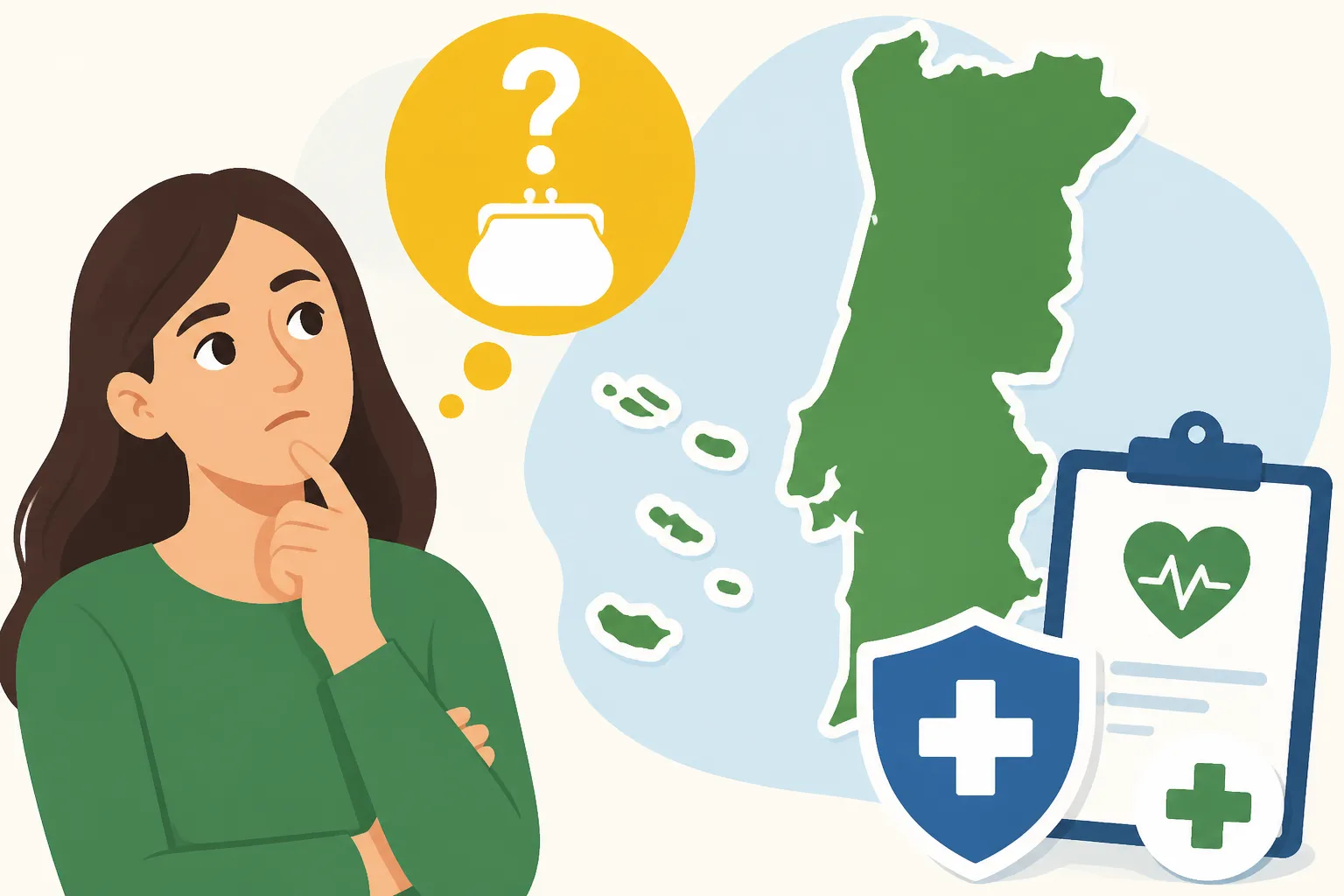
You’re doubled over at 2 AM in Lisbon, wondering whether walking into the nearest urgência will leave you with a bill you can’t read. This guide explains how much the taxas moderadoras actually are, when you pay them, when you don’t, and how to route yourself through the SNS so you avoid paying at all.
What Taxas Moderadoras Are and Why They Exist
The Short Definition
Taxas moderadoras are user fees in Portugal’s National Health Service, the Serviço Nacional de Saúde or SNS. They are not meant to cover the cost of your care. They exist to nudge people toward the right door, so nobody treats a hospital emergency department as a walk-in clinic for a sore throat.
During my first winter here I sat in a hospital waiting room for six hours with a chest infection. A Portuguese neighbour later told me I should have called the helpline first. She was right, and this guide is built around the lesson I learned the slow way.
If you’re still setting up your SNS access, start with Registering with the Centro de Saúde: Getting Your SNS Número de Utente. Almost everything below assumes you have a utente number.
Where the Fee Applies Today
According to the Entidade Reguladora da Saúde, the health regulator, in its supervision alert 6/2025 of 18 December 2025, emergency department visits are now the only SNS care that carries a taxa moderadora. As of October 2026, that means:
- Consultations with your médico de família at the centro de saúde carry no taxa moderadora.
- Nursing appointments and routine follow-ups at the health centre carry no taxa moderadora.
- The fee only applies when you go to a hospital emergency service, the urgência, and only under certain conditions.
This matters because the fee isn’t a general cost of using public healthcare. It’s charged in one situation: you go to the hospital emergency department without being sent there by the SNS, and you aren’t admitted.
How It Feels in Real Life
Picture two expats in Porto with the same sprained ankle on the same Saturday. Maria calls the SNS 24 line, a nurse triages her over the phone and refers her to the hospital, and she pays no taxa moderadora. Tom limps straight into the urgência on his own, gets an X-ray and is sent home with a bandage, and he gets a bill.
They received the same care. The only difference was the route they took.
How Much the Emergency Room Fee Costs
The Three Emergency Service Levels
The base fee depends on the type of emergency service you walk into, not on how sick you are. The ACSS taxas moderadoras FAQ, a document updated in July 2024 and published by ULS Santa Maria, gives these values, read on 19 October 2026. They have been in force since 1 April 2016 under Portaria 64-C/2016.
| Type of Emergency Service | Portuguese Name | Base Fee as of October 2026 |
|---|---|---|
| Polyvalent emergency service | Serviço de Urgência Polivalente | 18.00 euros |
| Medical-surgical emergency service | Serviço de Urgência Médico-Cirúrgica | 16.00 euros |
| Basic emergency service | Serviço de Urgência Básica | 14.00 euros |
| Maximum total for one emergency visit, including exams and procedures | All types | 40 euros |
The polyvalent services are the large, full-capability emergency departments, usually at major central hospitals. Medical-surgical services sit at the middle level, and basic services handle simpler urgent cases closer to home. You don’t need to memorise which hospital is which. The hospital’s own signage and admission desk will tell you, and so will the receipt.
Exams and Procedures Are Added On Top
The base fee is the entry ticket, not the whole bill. The ACSS FAQ explains that fees for exams and procedures done during the visit are added to the base fee. If you have blood drawn, an X-ray, or a wound stitched, each one can add a charge.
There is a ceiling, though, and it’s what lets me sleep at night. As of October 2026, the total for a single emergency visit cannot exceed 40 euros. Even if you get a full round of tests at a polyvalent service, the charges stop at that cap.
For example, an expat in Coimbra with abdominal pain might go to the main hospital urgência alone, get bloods and an ultrasound, and be sent home with a diagnosis. The bill starts at the 18.00 euro base for a polyvalent service, the exams are added, and the total stops at 40 euros. That’s annoying, but you know the worst case.
What the Bill Looks Like
You’ll usually be asked to pay at the admission desk, the balcão, or you’ll receive a payment notice afterwards with a Multibanco reference. The document will show the type of service, the base taxa, and any exam lines. Keep it, because healthcare spending ties into your annual tax return. If you’re budgeting overall medical spending, Health Costs in Portugal: What to Budget as an Expat puts these fees in context.
When You Pay Nothing at the Emergency Room
Being Referred by the SNS First
This is the most useful paragraph in this guide. The ERS alert confirms that no taxa moderadora is charged when the SNS referred you to the emergency department beforehand. Examples include:
- A referral from the SNS 24 helpline after phone triage.
- A referral from your centro de saúde, for example when your family doctor sends you to the hospital.
- Being brought in by INEM, the national emergency medical service, after you call 112.
The SNS 24 line is 808 24 24 24. According to gov.pt, on a page updated 29 April 2026, clinical triage runs 24 hours a day, and calls cost the same as a call to a landline. Nurses on the line often switch to English if you ask politely. A slow, clear “Fala inglês, por favor?” goes a long way.
For a deeper look at how the call works, what the nurse will ask, and how they issue referrals, see SNS 24 Helpline (808 24 24 24): Triage, Advice, and Sick Notes.
Being Admitted to Hospital
The second exemption is simple. If your emergency visit ends with you being admitted to the hospital, no taxa moderadora is charged for that visit. A friend of mine went into the urgência in Faro with what she thought was food poisoning and was kept in overnight with appendicitis. She worried for days about the bill, and it never came.
Personal Exemption Categories
Beyond the referral and admission rules, the SNS also recognises personal exemptions. These cover certain groups, such as people in particular clinical situations or households with low incomes, who don’t pay taxas moderadoras even when they walk in on their own. The categories and their conditions are set by the ministry and reviewed over time. Check them on the SNS portal or at your centro de saúde rather than relying on memory. Who Is Exempt From SNS User Fees in Portugal? walks through how to request recognition of an exemption.
Step-by-Step: How to Avoid the Fee Legitimately
- Before leaving home, unless it’s a life-threatening emergency, call SNS 24 on 808 24 24 24.
- Describe your symptoms clearly and give your utente number if you have it.
- Let the nurse triage you. They may advise self-care, book you into the health centre, or refer you to the hospital.
- If you’re referred to the urgência, note the referral reference and mention it at the admission desk.
- If it’s a true emergency, such as chest pain, stroke signs, or heavy bleeding, call 112 instead. Don’t waste minutes thinking about fees.
- Keep any paperwork you receive. If a fee appears on a notice after you were referred, raise it with the hospital’s patient office.
Practical Scenarios for Expats, Tourists, and Retirees
The Resident Expat With a Utente Number
If you live here and you’re registered with the SNS, the rules above are your rules. Your best habit is to treat SNS 24 as the front door. I keep the number saved under “Call This First”, and it has saved me more than one wasted afternoon.
Once you’re at the hospital, you’ll be colour-coded by priority. Being referred doesn’t jump you ahead of someone sicker, but it does mean you pay no taxa. If the colours confuse you, read Understanding the Manchester Triage System colors in Portuguese emergency rooms before you need it.
Tourists, EU Visitors, and the Newly Arrived
Taxas moderadoras apply to people covered by the SNS. EU visitors with a valid European Health Insurance Card are generally treated on the same terms as residents for necessary care. Using the European Health Insurance Card (EHIC) in Portugal covers what to show and when.
Non-EU tourists, and residents who haven’t finished SNS registration, are in a different position. Public hospitals can bill them the actual cost of care rather than just the user fee, and those amounts are set in official SNS price tables that change over time. Ask the hospital for an estimate when you arrive. How much does an emergency room visit cost without private insurance? digs into this situation.
This is where travel or international health cover earns its keep. Digital nomads in their first months often use a travel medical policy such as SafetyWing to bridge the gap before their SNS registration is done. Longer-term movers, especially those who want access to private hospitals as well as the public system, tend to look at international expat plans like Cigna Global. In both cases, check the policy wording on the provider’s own website. Look at whether emergency visits are covered, whether you pay upfront and claim back, and how claims are filed.
If you’re unsure whether you can even use a health centre as a visitor, Can tourists walk into a Centro de Saúde if they feel sick? answers that directly.
Retirees and Chronic Conditions
Retirees with SNS registration benefit greatly from the fact that health centre consultations carry no taxa moderadora. Regular check-ups with your family doctor don’t trigger the fee, and the fee question only comes up for unplanned hospital trips.
For retirees who manage a chronic condition, the main thing is having a plan with your médico de família about what to do when symptoms flare. That plan can include when to call SNS 24, when to come into the centro de saúde, and when to go straight to the hospital. Some retirees still keep an international policy such as Cigna Global for faster access to specialists. Others rely fully on the SNS. Public vs Private Healthcare in Portugal: Which One Should Expats Choose? lays out the trade-offs honestly.
Quick Comparison of Common Situations
| Situation | Taxa Moderadora Charged? |
|---|---|
| Consultation with your médico de família at the centro de saúde | No |
| Nursing appointment at the centro de saúde | No |
| Walk-in to a hospital urgência, sent home afterwards | Yes, base fee by service type plus exams, capped at 40 euros |
| Referred to the urgência by SNS 24 | No |
| Referred to the urgência by your centro de saúde | No |
| Brought to the urgência by INEM after calling 112 | No |
| Emergency visit that ends in hospital admission | No |
For the bigger picture of what happens once you’re through the urgência doors, from triage to discharge, see Emergency Rooms (Urgências) in Portugal: Triage Colors and Wait Times.
A Final Word From Someone Who Has Paid the Fee
I’ve paid the taxa twice in my years here, and both times it was my own fault for skipping the phone call. The amounts are modest, the cap protects you from surprises, and the system really does reward you for calling first. Save 808 24 24 24 in your phone today, get your utente number sorted, and you’ll rarely, if ever, see one of these bills.
Disclaimer
This article is for general informational purposes only and does not constitute professional advice. Laws, prices and regulations vary by location and change over time. Consult a qualified professional for guidance on your specific situation.