Calling 112: Do Portuguese emergency dispatchers speak fluent English?
Facing a medical crisis in a foreign country is a visceral fear that keeps many expats awake at night. I remember the sheer panic I felt when my neighbor in a small Alentejo village collapsed, and I realized my Portuguese was barely enough to order a coffee, let alone describe a stroke. This guide explains the reality of language barriers when calling 112, provides essential phrases, and outlines how the emergency response system actually functions for non-Portuguese speakers.
What Happens When You Dial 112 in Portugal
The first thing you need to know is that 112 is the universal emergency number for all of Europe, including Portugal. When you dial those three digits, your call is routed to a centralized dispatch center. It is a high-pressure environment where every second counts, and the initial goal of the operator is to determine your location and the nature of the emergency—police, fire, or medical.
The Initial Operator and Language Routing
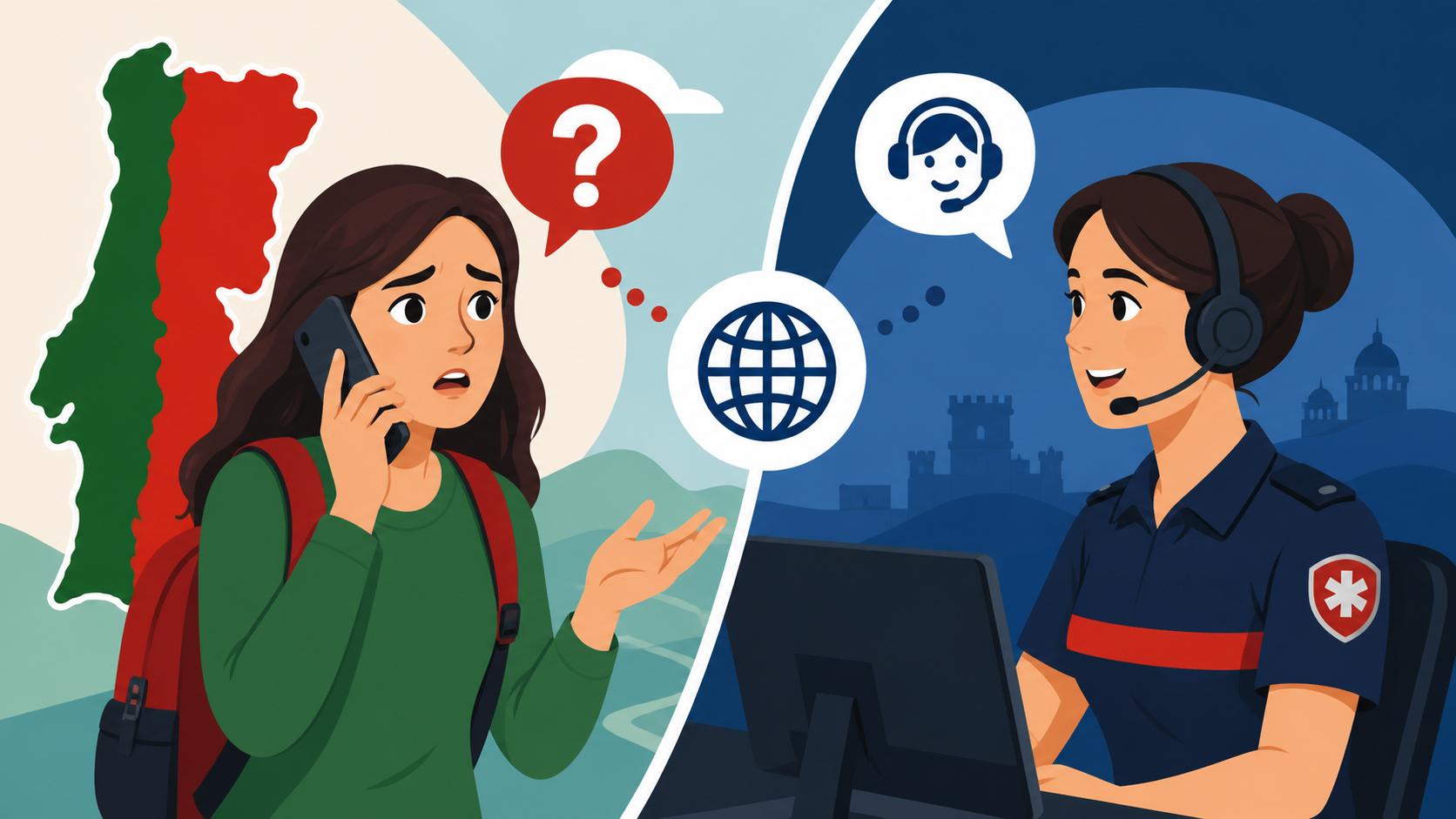
When you first call, the operator will answer in Portuguese, usually saying "112, qual é a sua emergência?" While many of these first-line dispatchers in major hubs like Lisbon, Porto, and the Algarve speak excellent English, it is not a 100% guarantee in more rural districts. If the first person who picks up doesn't speak English, do not hang up. They are trained to recognize English and will quickly transfer you to a colleague or a translator.
I’ve found that even if the dispatcher’s English is "broken," they are highly skilled at extracting the "Who, What, Where" from a panicked caller. In the medical context, the call is often handed over to the CODU (Centro de Orientação de Doentes Urgentes). These are the specialized medical dispatchers who decide if you need an ambulance (Ambulância), a fast-response vehicle (VMER), or if you should simply drive yourself to the nearest hospital.
Essential Information to Provide Immediately
The most common point of friction for expats isn't actually the language; it’s the location. Portuguese addresses can be confusing, often involving floor numbers (e.g., 3º Direito) or landmarks. If you are calling from a mobile phone, the system can generally track your approximate location, but you must be prepared to be specific.
Start by stating clearly: "I speak English. I have a medical emergency." This immediately signals the operator to switch gears. Have your address written down and stuck to your fridge before an emergency happens. Including the Parish (Freguesia) and a nearby landmark—like a specific church or café—can save precious minutes. While you are waiting for help, it is also a good idea to have your Private Health Insurance in Portugal: Costs, Coverage, and Best Providers details handy, though for a true life-or-death emergency, the public system will treat you first and ask about billing much later.
The Role of CODU in Medical Dispatch
Once transferred to the medical team (CODU), you will be asked a series of targeted questions. These dispatchers follow a strict protocol to determine the severity of the situation. They may ask if the person is conscious, breathing, or experiencing chest pain. Do not be offended if they sound blunt or rushed; they are performing a triage over the phone.
If they determine that an ambulance is necessary, they will dispatch the nearest available crew. In Portugal, this could be the INEM (the national emergency medical institute) or the local Bombeiros Voluntários (Volunteer Firefighters). Both are highly trained in emergency medical care, though the level of English among the crew members on the ground can vary significantly compared to the dispatchers.
Navigating the Language Barrier During a Crisis
Even with the best dispatchers, a crisis can make your brain go blank. The linguistic gap is most frustrating when you are trying to describe symptoms that aren't binary. It is one thing to say "he isn't breathing" and another to explain a "dull, radiating ache in the left shoulder."
Key Phrases for Emergency Calls
You don't need to be fluent to save a life, but you do need a few "power words." If the operator is struggling with English, using these basic Portuguese terms can bridge the gap instantly:
- "Emergência médica" (Medical emergency)
- "Não fala Português" (I/He/She doesn't speak Portuguese)
- "Ataque cardíaco" (Heart attack)
- "Acidente" (Accident)
- "Sangramento" (Bleeding)
- "Inconsciente" (Unconscious)
If you are a resident, you likely already have your Registering with the Centro de Saúde: Getting Your SNS Número de Utente sorted out. While the 112 dispatcher doesn't necessarily need your health number to send an ambulance, having it ready for the paramedics when they arrive will make the transition to the hospital much smoother.
Utilizing the SNS 24 Helpline for Non-Emergencies
One mistake many expats make is calling 112 for issues that aren't life-threatening. If you have a high fever, a nasty cut that might need stitches, or a sudden rash, the correct number to call is 808 24 24 24. This is the SNS 24 Helpline (808 24 24 24): Triage, Advice, and Sick Notes.
The SNS 24 line has a dedicated English-language option (usually accessed by pressing '9'). The nurses on this line are incredible. They will walk you through a triage process and, if necessary, send a "referral" to your local hospital so that you are expected when you arrive. They can even issue a "baixa" (sick note) over the phone so you don't have to drag yourself to a clinic just for paperwork.
What to Do If the Dispatcher Doesn't Understand You
In the very rare event that you hit a total language wall, stay on the line. Use the word "Inglês" (English) repeatedly and calmly. If you have a Portuguese neighbor, this is the time to bang on their door. Most Portuguese people are incredibly helpful in emergencies and will take the phone to explain the nuances of your location to the dispatcher.
While waiting, ensure your house is visible. Turn on all the lights and, if possible, have someone stand outside. If you are managing a chronic condition, having your medications clearly labeled is vital. I always keep a stock of basic supplies from iHerb like high-quality electrolytes and first-aid essentials, but in a 112 situation, the paramedics will want to see your prescription bottles to check for drug interactions.
The Manchester Triage System and Emergency Rooms
When the ambulance arrives or you reach the "Urgências" (Emergency Room), the language challenge enters a second phase: Triage. Portugal uses the Manchester Triage System, which is a color-coded method of prioritizing patients based on clinical need rather than the order of arrival.
Understanding the Triage Colors
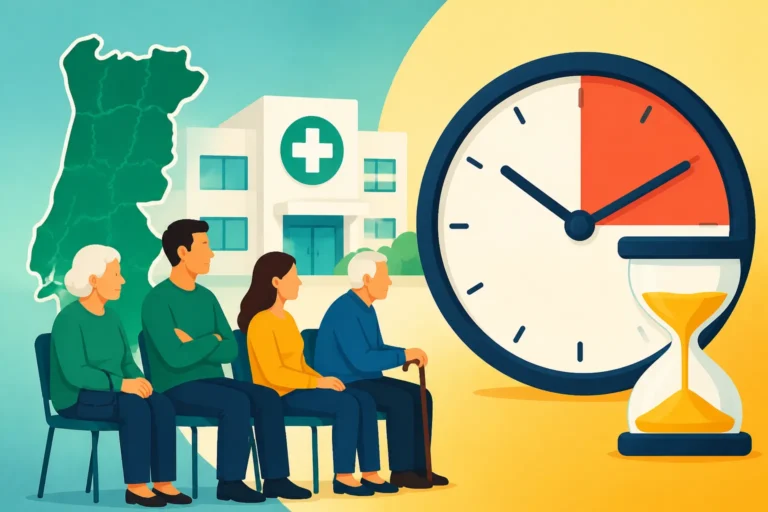
Upon arrival at a public hospital like Santa Maria in Lisbon or São João in Porto, a nurse will evaluate you and assign a color-coded wristband. This determines how long you will wait. It is one of the most common frustrations for expats who arrive with a painful but non-critical injury and find themselves waiting for six hours.
| Color | Priority | Meaning | Typical Wait Time |
|---|---|---|---|
| Red | Emergency | Immediate threat to life | 0 Minutes |
| Orange | Very Urgent | Critical condition | 10 Minutes |
| Yellow | Urgent | Needs medical attention | 60 Minutes |
| Green | Standard | Non-urgent | 2-4 Hours |
| Blue | Non-Urgent | Minor issues | 4+ Hours |
For a deep dive into how this affects your visit, check out our guide on Emergency Rooms (Urgências) in Portugal: Triage Colors and Wait Times. Understanding this system helps manage expectations. If you are "Green," you might be there for a long time, and the staff's English might be limited to clinical questions.
Public vs. Private Emergency Care
If you have a policy with a provider like Cigna Global, you have the option of using private emergency rooms at hospitals like CUF or Hospital da Luz. These facilities often have more English-speaking staff and shorter wait times for non-life-threatening issues. However, for a major trauma or a severe heart attack, the 112 ambulance will almost always take you to a public hospital because they are better equipped for "Level 1" emergencies.
Many expats find that Using Cigna Global or Allianz for international expat healthcare in Portugal gives them a sense of security for specialist visits, but they still rely on the public SNS for the heavy-duty emergency infrastructure. If you do go to a private ER, be prepared to pay upfront or provide proof of your Private Health Insurance in Portugal: Costs, Coverage, and Best Providers immediately upon entry.
Costs of Emergency Services
A common question is: How much does an emergency room visit cost without private insurance? If you are a legal resident with a Número de Utente, a standard emergency visit to a public hospital involves a small co-payment called a "taxa moderadora," which is usually under €20. If you are brought in by an INEM ambulance for a genuine emergency, these fees are often waived. For tourists or those without an SNS number, the bill can be higher, but it is still significantly more affordable than emergency care in the United States.
Practical Tips for Expat Medical Preparedness
Being prepared for an emergency is about more than just knowing the phone number. It is about creating a "safety net" that functions even when you are in shock. Over the years, I've learned that a little bit of organization goes a long way in the Portuguese healthcare system.
Setting Up Your Emergency File
Keep a folder near your entrance that contains:
- A copy of your passport and residency card.
- Your SNS Número de Utente.
- Your private insurance card (e.g., Cigna Global).
- A list of all current medications and allergies (in both English and Portuguese).
- A list of emergency contacts, including one person who speaks fluent Portuguese if possible.
If you have kids, you should also include their Pediatric Care in Portugal: Vaccinations and Child Health Checks records. Paramedics and ER doctors appreciate having this information in print, as it eliminates the risk of miscommunication during a verbal English-to-Portuguese translation.
Stocking Your Home Pharmacy
For minor issues that don't require a 112 call, having a well-stocked medicine cabinet is essential. While local "farmácias" are excellent, I often supplement my supplies with specific vitamins or specialized bandages from iHerb that can be delivered directly to my door in Portugal. Knowing you have the basics on hand reduces the "decision fatigue" when someone gets a minor burn or a recurring stomach bug.
You should also familiarize yourself with Pharmacies and Medication in Portugal: Prescriptions and OTC Drugs. Remember that in Portugal, even basic medications like Ibuprofen are often kept behind the counter, and the pharmacist is a highly trained professional who can provide medical advice for minor ailments, often in English.
Finding an English-Speaking Support Network
Long before an emergency happens, try to identify Finding an English-Speaking General Practitioner (Médico de Família) in your area. Having a doctor who knows your history and speaks your language is invaluable for follow-up care after an ER visit. If you live in an area with a large expat population, like Cascais or the Algarve, there are many private clinics where the entire staff is multilingual.
If you're feeling overwhelmed by the administrative side of things, don't worry. Everyone goes through it. The Portuguese system is surprisingly robust once you learn to navigate its quirks. Whether you are dealing with a simple prescription or a complex 112 call, the key is to stay calm, speak clearly, and remember that the person on the other end of the line genuinely wants to help you.
Disclaimer
This article is for informational purposes only and does not constitute professional medical or legal advice. Always consult with a qualified healthcare provider or emergency services professional regarding your specific situation. In the event of a life-threatening emergency in Portugal, dial 112 immediately.