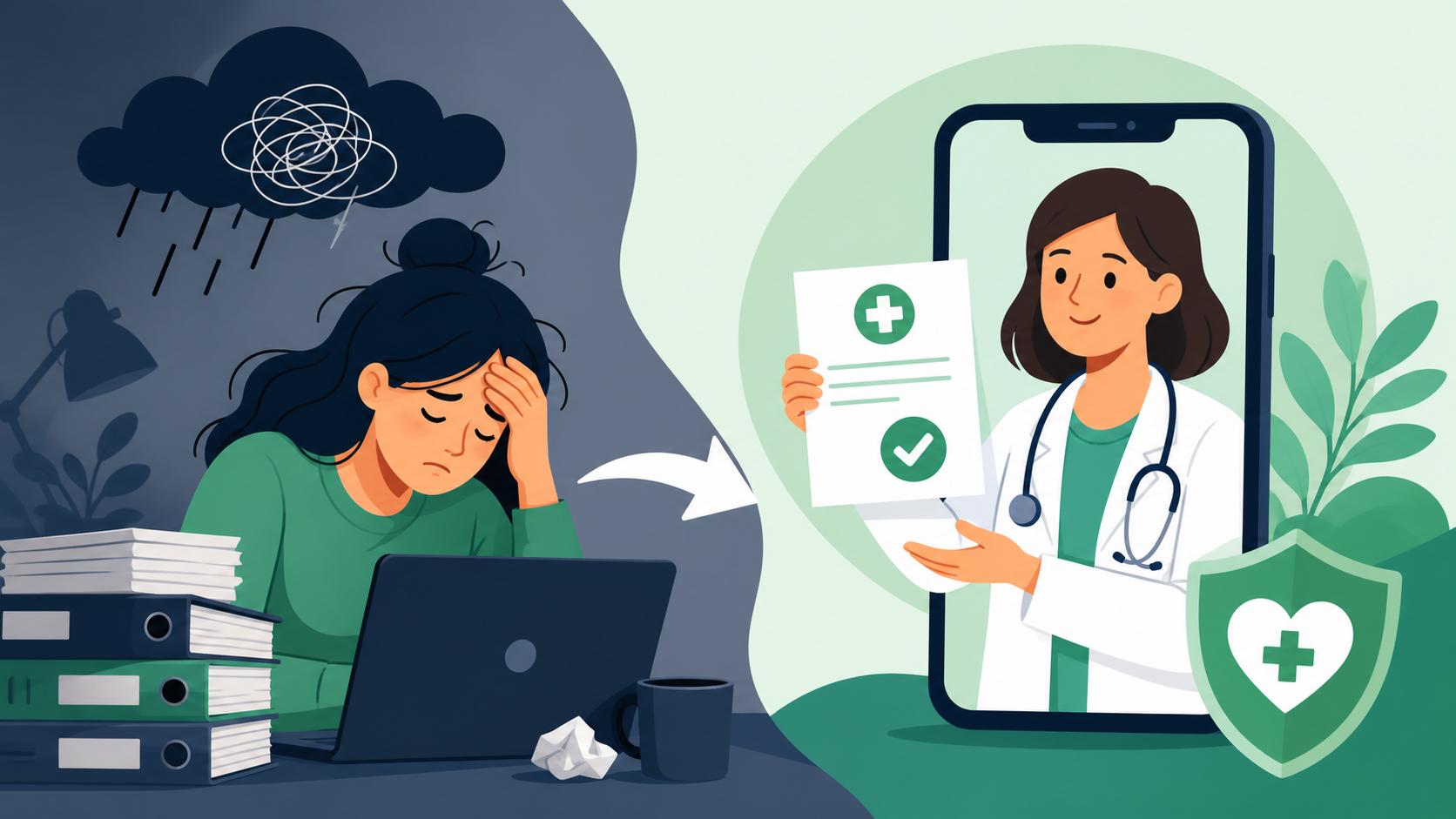
Work burnout in Portugal: Getting a medical leave certificate from SNS 24
Staring at a flickering monitor in a Lisbon office while your heart races for no reason is a terrifying reality many of us face while trying to "make it" in Portugal. I remember sitting in my kitchen three years ago, completely paralyzed by exhaustion, realizing I simply couldn't do it anymore. This guide explains how to navigate the Portuguese healthcare system to secure a medical leave certificate when burnout hits its breaking point.
Understanding Work Burnout in the Portuguese Context
Burnout in Portugal often carries a specific cultural weight that can be hard for expats to decipher. We move here for the "slow life," but the reality of the local corporate world can be surprisingly high-pressure, with long hours and a rigid hierarchy. If you find yourself unable to function, it is important to know that the Portuguese system recognizes "esgotamento" (exhaustion/burnout) as a valid medical reason for leave.
The Culture of the Long Workday
In many Portuguese companies, there is an unspoken expectation that you shouldn't leave before the boss, regardless of your official contract hours. This often leads to a cycle of chronic overwork. Understanding Portuguese Work Culture: Hours, Communication, and Office Etiquette is essential for recognizing when your workplace environment has crossed the line from "demanding" to "toxic." When you are already struggling with the language barrier, these pressures are magnified. Using tools like PortuguesePod101 can help you build the vocabulary needed to set boundaries, but when boundaries aren't enough, the medical system is your next stop.
The Right to Disconnect
Portugal has made headlines for its progressive labor laws, including the Right to Disconnect: Portugal's law against bosses calling after hours. If your employer is constantly messaging you on WhatsApp at 9 PM, they are likely violating the law. This constant digital tether is a primary driver of burnout for foreign workers who feel they must over-deliver to justify their residency status. Recognizing these violations is the first step in validating that your burnout isn't a personal failure—it’s a systemic issue.
Recognizing the Symptoms
Burnout isn't just "being tired." It often manifests as physical symptoms like chronic migraines, digestive issues, or heart palpitations. In the Portuguese medical system, a doctor will look for signs of emotional exhaustion and a loss of professional efficacy. If you are struggling to communicate these complex feelings in a second language, practicing specific medical phrases on PortuguesePod101 can be a lifesaver before you head to your appointment.
The SNS 24 Process: Your First Line of Defense
When you reach the point where you cannot physically or mentally show up for work the next morning, the SNS 24 helpline is your primary resource. This is the gateway to the public health system, and it offers a relatively new feature that is a godsend for those in the middle of a mental health crisis: the self-declared sick note.
Calling the 808 24 24 24 Helpline
The SNS 24 Helpline (808 24 24 24): Triage, Advice, and Sick Notes is available 24/7. When you call, you will go through a triage process. If you are lucky, you will be connected to an English-speaking nurse, though this isn't always guaranteed. You will need your Número de Utente (Health User Number) ready. If you haven't secured this yet, you should prioritize Registering with the Centro de Saúde: Getting Your SNS Número de Utente as soon as possible, as you cannot access the public medical leave system without it.
The Autodeclaração de Doença (Self-Declaration)
Since 2023, workers in Portugal have the right to issue their own short-term medical leave for up to three consecutive days. This is known as an Autodeclaração de Doença. You can request this through the SNS 24 portal or app. This is an incredible tool for burnout because it allows you to step away immediately without the added stress of finding an immediate doctor's appointment. However, be aware that these first three days are generally unpaid by Social Security. It is a "circuit breaker" intended to give you immediate relief.
Transitioning to a Longer Baixa
If your burnout requires more than three days—which it almost always does—you must see a doctor to get a formal baixa médica. The SNS 24 nurse can often schedule an "acute" appointment at your local Centro de Saúde. When you speak to the doctor, you need to be very clear about your symptoms. Don't just say you are stressed; explain that you cannot sleep, cannot concentrate, and are experiencing physical distress. This is where How to get a sick note (Baixa Médica) from a doctor for your employer becomes the blueprint for your next steps.
Securing a Long-Term Medical Leave Certificate
For a burnout recovery that lasts weeks or months, you will need a formal certificate issued by a professional in the public system. While private doctors can provide medical reports, only a doctor in the National Health Service (SNS) or a contracted private clinic can officially "input" the baixa into the Social Security system for payment purposes.
The Role of the Médico de Família
Ideally, you should have an assigned Finding an English-Speaking General Practitioner (Médico de Família). This doctor knows your history and is the one authorized to sign off on your leave. If you don't have one assigned—which is common in big cities like Lisbon or Porto—you will have to go through the consulta aberta (open consultation) at your local health center. This involves showing up very early in the morning and waiting for an unassigned slot. It is exhausting, especially when you are already burned out, but it is the necessary path for legal protection.
How the Baixa Médica Payment Works
Once the doctor issues the baixa, they send it electronically to the Segurança Social. You don't usually need to send a paper copy to your boss anymore, though it is polite to inform them that the digital certificate has been issued. The amount you are paid depends on the length of your leave and your salary history. Generally, for a standard illness like burnout, you receive a percentage of your reference salary after a waiting period.
| Duration of Leave | Percentage of Salary Paid |
|---|---|
| Days 1 to 3 | 0% (Unpaid by Social Security) |
| Days 4 to 30 | 55% |
| Days 31 to 90 | 60% |
| Days 91 to 365 | 70% |
| Over 365 days | 75% |
Supplementing with Private Care
Because the public system is often backlogged, many expats use private insurance to see a therapist or psychiatrist for actual treatment while using the public system only for the paperwork. Burnout often requires professional counseling to navigate. You can find specialized help by Finding Therapists and Psychiatrists for Expats, which can provide the clinical documentation you might need to show your public health doctor to justify extending your leave.
Navigating the Workplace During Recovery
One of the biggest fears for expats is that taking medical leave will result in being fired or losing their visa status. In Portugal, labor laws are quite protective of the employee, provided you follow the rules of the baixa.
Your Rights and Obligations
While on medical leave, you are technically not allowed to be out of your house except for medical appointments or during specific hours authorized by the doctor (usually 11 AM to 3 PM and 6 PM to 9 PM). Social Security inspectors do occasionally conduct home visits. If you are found to be "vacationing" while on a burnout baixa, your payments can be suspended. Understanding the specifics of Employment Rights in Portugal: Contracts, Leave, and Labor Laws will help you stay compliant while you heal.
Communicating with HR
You are not legally required to tell your employer the specific diagnosis (e.g., "burnout" or "depression"). The medical certificate simply states that you are unfit for work due to illness. However, if you are on a specific type of contract, you should double-check your Understanding Your Portuguese Employment Contract (Contrato de Trabalho) to see if there are any clauses regarding extended illness. If you feel pressured or harassed by your employer while on leave, you should contact the ACT (Autoridade para as Condições do Trabalho).
Planning Your Return
A "phased return" is not officially a standard part of the Portuguese baixa system, but it can often be negotiated with an empathetic employer. If you are a freelancer, the rules are slightly different, and you should look into Social Security Contributions for Freelancers: How to Calculate Your Quota to see how your sickness benefits are calculated, as they are based on your reported earnings from previous months.
During your time off, try to disconnect completely. This is the time to focus on your well-being. If you find that the thought of returning to a Portuguese-speaking environment gives you anxiety, taking small, low-pressure steps like listening to a few lessons on PortuguesePod101 can help you regain your confidence without the pressure of a looming deadline. Remember, your health is more important than any job.
Disclaimer
This guide is for informational purposes only and does not constitute legal or medical advice. Labor laws and healthcare regulations in Portugal are subject to change. Always consult with a qualified medical professional and a legal expert or the ACT regarding your specific situation and employment rights.