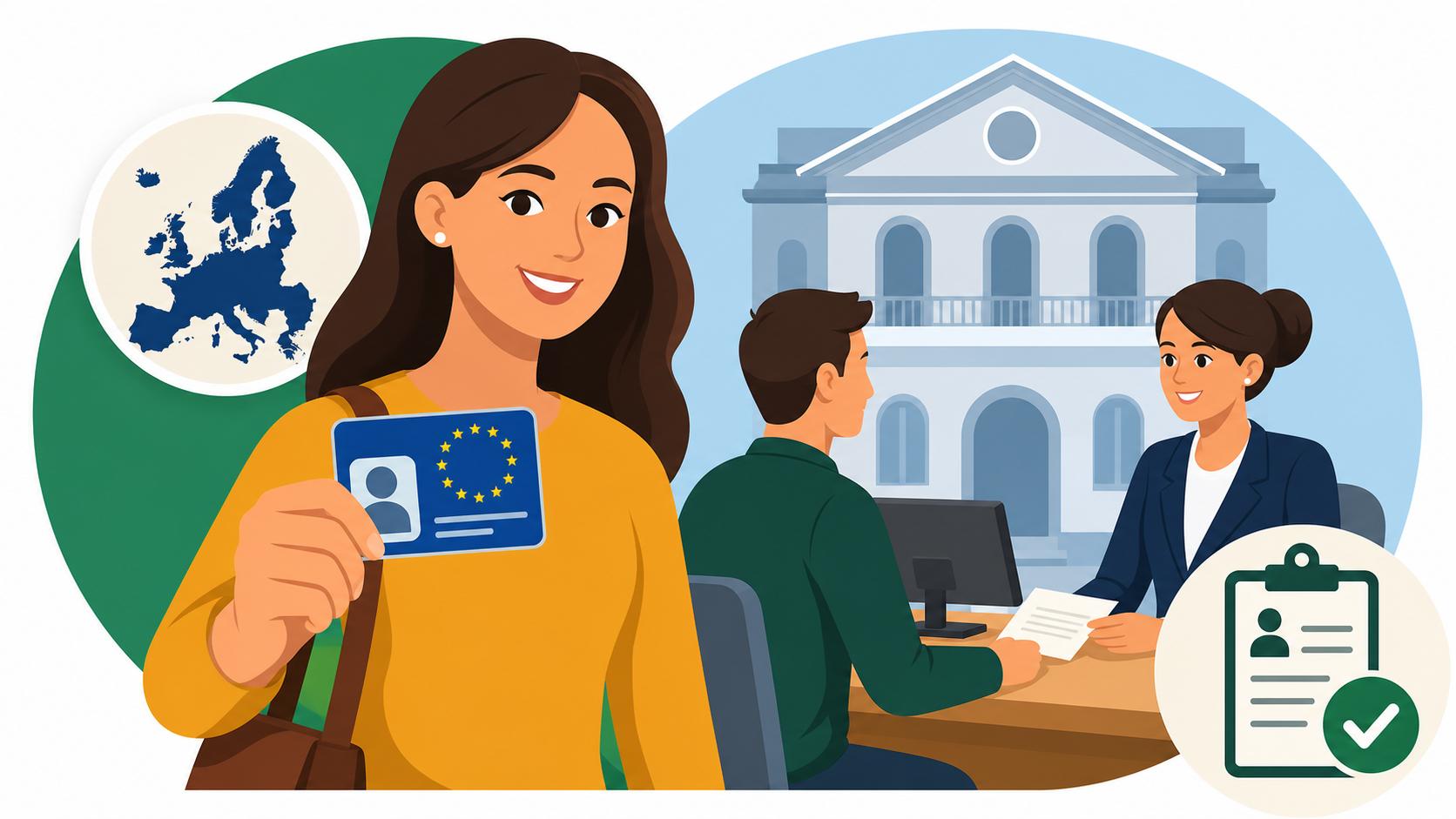
EU Citizens: Registering for Your CRUE at the Local Camara Municipal
Many European Union citizens arrive in Lisbon or Porto thinking that "freedom of movement" means they can simply unpack their bags and start their new life without ever seeing the inside of a government office. I made that exact same mistake when I first moved here, only to realize months later that I was technically living "off the grid" without legal residency. This guide explains exactly how to navigate the CRUE registration process so you can stay legal and stress-free.
What Exactly is the CRUE and Why Do You Need It
When you first land in Portugal as an EU, EEA, or Swiss citizen, the honeymoon phase is incredible. You have three months to simply exist, enjoy the espresso, and scout for the perfect apartment. However, once you cross that 90-day threshold, the rules change. You are legally required to register your presence with the local authorities. This registration results in a document called the Certificado de Registo de Cidadão da União Europeia, or simply the CRUE.
Defining the Residency Certificate for EU Citizens
The CRUE is essentially a formal declaration to the Portuguese state that you have exercised your right to live here. It is a simple, yellow A4 sheet of paper—nothing fancy like the plastic biometric cards non-EU citizens receive—but it is your golden ticket to long-term life in Portugal. Without it, you are effectively a perpetual tourist, which becomes a massive headache when you try to do anything official. I remember trying to sign up for a local gym and a library card, only to be told that my passport wasn't enough; they needed to see my "papel amarelo" (yellow paper).
This document serves as your initial residency permit for the first five years of your stay. It links your identity to a specific Portuguese address and confirms that you are part of the system. More importantly, it is the foundational document you will need if you eventually want to look into Portuguese Citizenship and Naturalization: The 10-Year Path Explained. Even if you don't plan on becoming a citizen, the CRUE is the legal basis for your right to reside, work, and access social services.
Why Freedom of Movement Doesn't Mean Zero Paperwork
There is a common misconception among expats that the Schengen Agreement eliminates the need for residency paperwork. While it's true you don't need a visa to enter, the Portuguese government still needs to know who is living within its borders for tax, healthcare, and urban planning purposes. If you are caught living in Portugal for more than 90 days without a CRUE, you aren't going to be deported, but you could face small fines and, more importantly, a mountain of administrative friction.
Think of the CRUE as your "entry ticket" into the Portuguese social contract. Without it, you cannot easily register for the national health service or apply for a permanent social security number. It is also the document that landlords will eventually ask for if you are looking for long-term lease stability. If you're coming from a country with highly digitized systems, the reliance on this physical yellow paper might feel archaic, but in Portugal, "o papel" (the paper) is king.
The Legal Deadlines You Need to Respect
The law is quite specific: you have 30 days to apply for the CRUE after your initial 90 days in the country have passed. In total, this gives you a 120-day window from the moment you cross the border. Many expats wait until the very last minute, only to find that their local town hall was fully booked for appointments.
Procrastinating on this can lead to issues with your bank or your employer. Many Portuguese banks will allow you to open an account with a foreign address initially, but they will eventually freeze your account or restrict services if you don't provide proof of local residency within a certain timeframe. To avoid the stress I went through—scrambling for an appointment while my debit card was at risk of being blocked—it's best to start gathering your documents by the end of your second month in the country.
The Prerequisites: Before You Visit the Camara Municipal
You cannot simply walk into a town hall with just your passport and expect a CRUE. Portugal loves its prerequisites. Before you even think about booking an appointment at the Câmara Municipal (Town Hall), you need to have your "fiscal life" in order. The Portuguese bureaucracy works in a very specific sequence, and skipping a step will only result in a polite but firm "não" from the clerk.
Getting Your Portuguese NIF
The very first thing you need is a Número de Identificação Fiscal (NIF). This is your tax identification number, and it is the key to everything in Portugal. You need it to rent an apartment, get a phone contract, and certainly to register for residency. If you are still outside the country or haven't found your footing yet, services like Bordr are incredibly helpful for getting this sorted remotely. I used a similar service when I first moved because trying to navigate the Finanças (Tax Office) without speaking the language was overwhelming.
Once you have your NIF, make sure the address associated with it is updated. While you can get a NIF with a foreign address initially, the Camara Municipal will want to see that you are actually established here. For more details on the nuances of this number, you might want to check out NIF and NISS: How to Get Your Portuguese Tax and Social Security Numbers to ensure you have the full picture of your fiscal obligations.
Securing a Local Address and the Atestado de Morada
This is often the hardest part for new arrivals. To get your CRUE, you need to prove you live in the specific municipality where you are applying. Most town halls will accept a long-term rental contract that has been registered with the tax office. However, if you are subletting or staying with a friend, you might need an Atestado de Morada from your local Junta de Freguesia (Parish Council).
The Atestado de Morada is a secondary document that confirms your address. In some neighborhoods, getting this requires two witnesses who are already registered voters in that parish to sign off and say, "Yes, we know this person lives here." It sounds like something out of a 19th-century novel, but it’s a very real part of the process. You can find more about this specific hurdle in the guide on Atestado de Morada: How many witnesses do you need at the Junta? to see if your neighborhood requires this "witness" system.
Proof of Financial Means or Employment
The Portuguese government wants to ensure that EU citizens moving here are self-sufficient. When you apply for your CRUE, you generally need to show one of three things:
- An employment contract with a Portuguese company.
- Proof that you are self-employed (registered as a trabalhador independente).
- Proof that you have sufficient funds to support yourself and your family without relying on the state.
If you are a digital nomad or a retiree, the "sufficient funds" route is usually the way to go. There isn't always a hard-and-fast number written on the wall, but generally, having the equivalent of the annual Portuguese minimum wage in a bank account is the standard. If your documents are in a language other than Portuguese or English, you might need a certified translation. In these cases, RushTranslate is a reliable option to ensure your bank statements or contracts are accepted by the municipal clerks.
The Step-by-Step Registration Process
Once you have your NIF, your proof of address, and your financial documents, it’s time to actually go to the town hall. The experience can vary wildly depending on whether you are in a bustling city like Lisbon or a quiet village in the Alentejo.
Finding Your Local Camara Municipal or Loja do Cidadão
The CRUE is issued by the Câmara Municipal of the area where you live. In larger cities, you can often go to a Loja do Cidadão (Citizen’s Shop), which acts as a one-stop shop for various government services. I personally prefer the Loja do Cidadão because they tend to be more used to dealing with expats and often have staff who speak at least some English.
Before you go, check the website of your specific municipality. Some require you to book an appointment (agendamento) online, while others operate on a first-come, first-served basis using a ticket system. If you’re in Lisbon, be prepared—the "A" tickets for residency services go fast. If you can, book an appointment weeks in advance to save yourself a day of standing in hallways.
| Step | Action | Location |
|---|---|---|
| 1 | Obtain NIF | Finanças or via Bordr |
| 2 | Proof of Address | Rental Contract or Junta de Freguesia |
| 3 | Book Appointment | Camara Municipal Website |
| 4 | Pay Fee (€15) | Town Hall Cashier/Multibanco |
| 5 | Receive CRUE | Issued on the spot (usually) |
The Interview and Immediate Issuance
When your number is finally called, you’ll sit down with a clerk. Don't let the word "interview" scare you; it’s usually just a data-entry session. They will take your passport, your NIF, and your proof of address. They might ask a few simple questions about what you do for a living or how long you plan to stay. This is the moment where having all your ducks in a row pays off. If you've used RushTranslate for your foreign documents, the process should be smooth.
The best part about the CRUE process compared to the non-EU visa process is that, in most cases, you get the document right then and there. After paying a small fee (usually around €15), the clerk will print out your yellow certificate, stamp it, and hand it over. Check every single letter on that paper before you leave the desk. I’ve had friends who left with a typo in their name, which caused a nightmare later when they tried to register for healthcare.
Dealing with Delays or "System Down" Issues
This is a "veteran expat" tip: always have a backup plan for your day. It is not uncommon for the Portuguese government computer systems to go offline or for the office to run out of the specific paper used for the certificates. If this happens, don't lose your cool. Being polite and patient with the staff goes a long way in Portugal.
If they cannot issue the paper immediately, they will usually give you a receipt or a temporary declaration. This is still a legal document, but you'll have to return another day to pick up the final version. If you are an EU citizen and find the process confusingly manual, remember that it is still significantly easier than the process for non-EU nationals, which you can read about in AIMA vs SEF: What Changed for Foreigners in Portugal After the Transition.
Documents Required for a Smooth Application
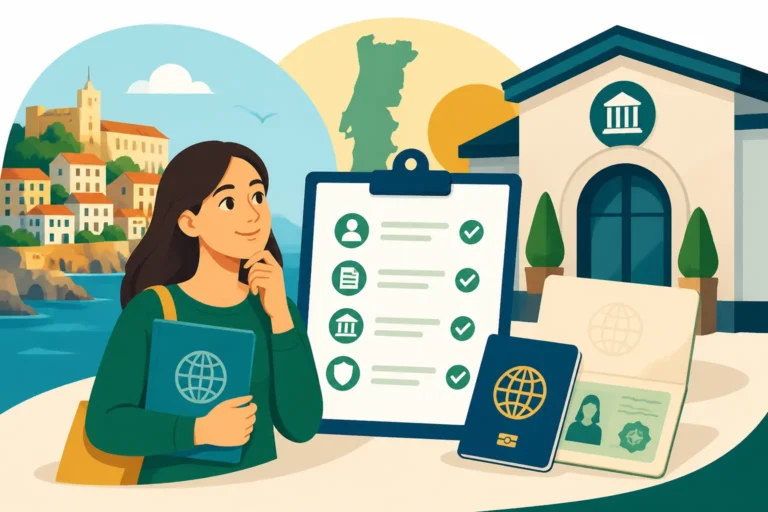
While I’ve mentioned the basics, let’s get into the nitty-gritty of the paperwork. Portuguese bureaucracy thrives on specific document formats. Showing up with a digital copy on your phone usually won't cut it—you need physical printouts.
Identification and Travel Documents
You must have a valid Passport or a national ID card from your EU home country. Ensure it has at least six months of validity remaining. While the law says a national ID is enough, it is advisable to bring your passport if you have one. It is universally recognized and avoids any "is this ID valid?" debates with a clerk who might not be familiar with every EU country’s specific identity cards.
If you are moving with family members who are also EU citizens, they each need their own application and set of documents. For non-EU family members, the process is entirely different and involves Family Reunification Visa in Portugal: Bringing Your Spouse and Children, which is a much more involved procedure through AIMA.
Proof of Health Coverage
One of the requirements for the CRUE is proving you won't be a burden on the Portuguese healthcare system until you are fully integrated. For the first few months, your European Health Insurance Card (EHIC) is usually sufficient. However, the clerk might want to see that you have a more permanent solution if you are staying long-term.
Many expats choose to take out a private policy to bridge the gap while waiting for their social security numbers to be processed. Cigna Global is a popular choice among the community because their policies are designed for people living between borders. Having a private insurance certificate can often speed up the process and give the clerk the "peace of mind" they need to issue your CRUE. For more context on how the local system works once you have your papers, see Portugal's National Health Service (SNS): How the Public System Works.
Proving Your Economic Status
As mentioned, if you are employed, a copy of your contract is enough. If you are a student, you need proof of enrollment in a recognized educational institution and a declaration that you have sufficient resources. For the "self-sufficient" category, a recent bank statement is the standard.
If your bank is outside of Portugal, make sure the statement clearly shows your name, the balance, and the currency. Again, if the statement isn't in Portuguese or English, getting it translated via RushTranslate is a smart move. Portuguese officials can be very picky about documents they can't immediately read.
Managing Your Rights and Responsibilities After Registration
Getting the yellow paper is a huge relief, but it’s actually just the beginning of your administrative life in Portugal. That paper is the "key" that unlocks several other essential services.
Accessing the SNS and Social Security
With your CRUE in hand, your next stop should be the Centro de Saúde (Health Center) to get your Número de Utente. This is your public healthcare ID number. Even if you have private insurance from Cigna Global, having an SNS number is vital for things like emergency care and government-subsidized prescriptions. You can find out more about this next step in Registering with the Centro de Saúde: Getting Your SNS Número de Utente.
Additionally, if you are working, you will need to ensure your CRUE is linked to your Número de Identificação de Segurança Social (NISS). This ensures your social security contributions are correctly recorded, which is essential for future pension rights or if you ever need to claim unemployment benefits.
The 5-Year Transition to Permanent Residency
The CRUE is valid for five years. During this time, you are considered a temporary resident. You have most of the rights of a Portuguese citizen, including the right to vote in local and European elections (though you usually have to register separately at the Recenseamento Eleitoral).
After five years of continuous residence, you can apply for permanent residency. This is a different document issued by AIMA, not the Camara Municipal. It's a more durable status and is the final step before you can apply for a passport. If you’re curious about the long-term roadmap, take a look at Permanent Residency in Portugal: Requirements, Language Tests, and Timelines.
Keeping Your Address Updated
Portugal is very strict about addresses. If you move to a new apartment in a different neighborhood, you are technically supposed to update your residency. This involves going back to the new Camara Municipal and getting a new CRUE. While many people skip this until their old one expires, it can cause issues with your tax filings or receiving official mail.
Always make sure your address on the Portal das Finanças matches your residency certificate. The tax office and the immigration authorities don't always talk to each other as much as you'd think, so you have to be the bridge between them. If you need to update your tax address, you might need to use your NIF password, which you can learn about in NIF password (Senha das Finanças): How to request and activate it by mail.
Common Pitfalls and How to Avoid Them
Even with the best preparation, the "Portuguese Factor" can sometimes throw a wrench in your plans. Here are the things that catch most EU citizens off guard.
The "Inconsistent Requirements" Headache
One of the most frustrating things about moving to Portugal is that the rules can seem to change depending on which desk you sit at. A Camara Municipal in a small town might ask for things that the one in Lisbon doesn't, or vice-versa. I've had friends told they needed a specific bank statement from a Portuguese bank, even though EU law says a statement from any EU bank should suffice.
If you encounter an "unusual" request, stay calm. Sometimes it’s easier to just provide what they ask for rather than arguing EU law with a local clerk. This is why having a local bank account can be helpful. If you need to set one up quickly, How to open a Millennium bcp account before arriving in Portugal is a great resource.
Dealing with Lost or Stolen Certificates
Since the CRUE is just a piece of paper, it is incredibly easy to lose or damage. Unlike a plastic ID card, it doesn't survive a trip through the washing machine very well. If you lose your CRUE, you have to go through the process of requesting a second copy (segunda via) at the town hall where it was issued.
Always keep a high-quality digital scan of your CRUE on your phone and in cloud storage. Most places in Portugal will accept a digital version for day-to-day things, but for anything major—like buying a car or getting a mortgage—they will demand to see the original "yellow paper."
The "Fiscal Representation" Confusion
If you used a fiscal representative to get your NIF through a service like Bordr, remember that once you have your CRUE, you should update your status to a "Resident" at the tax office. This allows you to remove the fiscal representative and take full control of your tax affairs. Failing to do this can result in being taxed as a non-resident, which is usually much more expensive. Check out Changing your NIF address from a foreign country to your Portuguese address to make sure you're not paying more tax than you need to.
Disclaimer
The information provided in this guide is for informational purposes only and does not constitute legal or professional advice. Immigration laws and local municipal requirements in Portugal can change frequently. Always verify the latest requirements with the official portal of your local Câmara Municipal or consult with a qualified immigration professional before making any significant legal decisions. Neither the author nor this website is responsible for any issues arising from the use of this information.