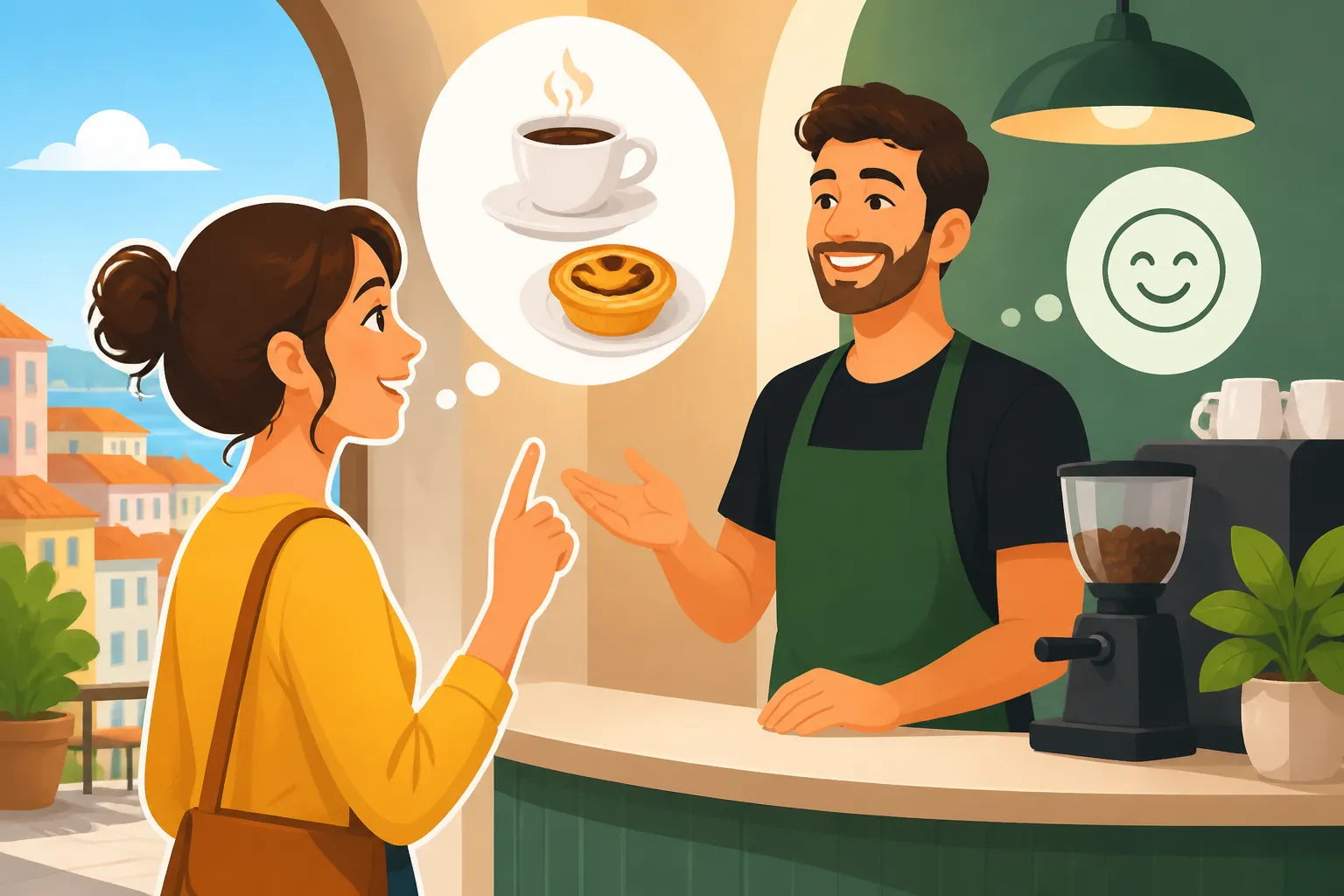
How to Order at a Café in Portuguese Without Stress
Disclosure: This article contains affiliate links. If you buy through them, we may earn a commission at no extra cost to you. Read our full disclosure.
Stepping into a Portuguese café for the first time can feel like walking onto a stage where everyone else knows their lines. The quick-fire exchanges, the specific vocabulary, and the sheer volume of options can be intimidating, especially if your Portuguese is still finding its feet. But don't fret; this guide is here to transform that anxiety into confidence, showing you exactly how to navigate the wonderful world of Portuguese cafés and order like a local, stress-free.
Embracing the Ritual: Understanding Portuguese Café Culture
Before we dive into the nitty-gritty of vocabulary, it's crucial to understand that a Portuguese café is much more than just a place to grab a caffeine fix. It's a cornerstone of daily life, a social institution, and a window into the country's soul. Trying to approach it with the same expectations you might have from a café back home can lead to confusion and unnecessary stress.
More Than Just Coffee: The Social Hub
In Portugal, the local café or pastelaria (which often combines a bakery with a café) is where life unfolds. You'll see everyone from business people having a quick meeting, to elderly folks enjoying their morning paper, to families grabbing a snack. It's a vibrant, often noisy, place where privacy isn't paramount, and quick, efficient service is highly valued. This isn't your quiet, remote-work-friendly co-working space; it’s a dynamic, bustling environment. Embrace the chatter, the clinking of cups, and the general hum of conversation – it's all part of the charm. If you’re living in Portugal, these are the places where you truly feel connected to the local rhythm. You'll quickly discover that these aren't just transactional spaces but vital community hubs, much like the traditional taverns of old.
The Art of the Quick Stop: Don't Linger Too Long
One key difference many expats notice immediately is the pace. While some larger, more modern cafés in tourist areas might cater to those who wish to sit with a laptop for hours, the typical Portuguese café thrives on quick turnover. People pop in, order, consume their items, and move on. Especially at the counter, it’s a whirlwind of orders and short conversations. If you're standing at the counter to enjoy your bica, aim to finish within 5-10 minutes. Taking too long, especially during peak hours, can subtly hold up the flow, though most Portuguese are too polite to say anything directly. However, it's a good practice to be mindful of the rhythm. If you wish to sit down for a leisurely chat, opt for a table, but be aware that prices at tables are often slightly higher due to table service. This is a common practice you'll encounter throughout Portugal, from bustling Lisbon to the tranquil Algarve. For a deeper dive into the overall vibe, check out our guide on Portuguese Coffee Culture and Restaurant Etiquette: Ordering Like a Local.
Ordering at the Counter vs. Table Service
When you walk into a café, one of the first decisions you'll make (often subconsciously) is whether to approach the counter (balcão) or grab a table. This choice impacts everything from the price to the speed of your service.
At the balcão, service is usually immediate, and the prices are almost always cheaper. This is the authentic, quick-stop Portuguese experience. You walk up, make eye contact with a server, place your order, consume your drink and snack, and then pay. It’s perfect for a morning coffee on your way to work or a quick afternoon pick-me-up. The energy at the counter is fast-paced, with locals often engaging in friendly banter with the baristas.
If you choose to sit at a table, a waiter will come to you. This is more akin to a traditional restaurant experience, offering a more relaxed setting for conversation or enjoying a pastry. Be prepared for slightly higher prices, which will be clearly indicated on the menu as "preço de mesa" (table price) versus "preço de balcão" (counter price). The difference isn't usually huge, perhaps 20-50 cents per item, but it adds up if you're there often. If you're trying to save a few euros on your daily routine, standing at the counter is the way to go.
Decoding the Menu: Essential Phrases and Coffee Types
Now for the meat and potatoes – or rather, the coffee and pastries! Knowing a few key phrases and understanding the various coffee types will arm you with everything you need.
Your First Words: Greetings and Politeness
The Portuguese are incredibly polite, and a simple greeting goes a long way. Never just blurt out your order. Always start with a friendly "Olá!" or "Bom dia!" (Good morning), "Boa tarde!" (Good afternoon), or "Boa noite!" (Good evening).
Once you have the server's attention, you can then articulate your request.
- "Queria um/uma…" (Kee-ree-ah oom/oo-mah) – "I would like a…" This is polite and standard. Use "um" for masculine nouns (like café) and "uma" for feminine nouns (like meia de leite).
- "Por favor." (Por fah-vor) – "Please." Always, always, always add this.
- "Obrigado/a." (Oh-bree-gah-doo / Oh-bree-gah-dah) – "Thank you." Use "obrigado" if you are male, and "obrigada" if you are female.
- "Desculpe." (Dish-kool-peh) – "Excuse me/Sorry." Useful if you need to get someone's attention or apologize for bumping into someone.
A typical interaction might go: "Bom dia! Queria um café, por favor." (Good morning! I'd like an espresso, please.) Simple, direct, and polite. Don't worry about perfect pronunciation; effort is always appreciated. For those looking to dive deeper into language learning, our article Learning European Portuguese: Top Apps, Tutors, and Free Government Classes has some excellent resources.
The Coffee Glossary: From Bica to Galão
This is where many expats get tripped up. There isn't just "coffee" in Portugal; there's a whole world of specific terms. Understanding these will ensure you get exactly what you're craving.
Let's break down the most common coffee orders:
| Portuguese Term | Pronunciation | English Equivalent / Description |
|---|---|---|
| Bica | Bee-kah | A strong, short espresso, typically served in a small cup. The most common order in Lisbon. |
| Café | Cah-feh | Generic term for coffee, but usually means a bica (espresso) when ordered alone. |
| Cimbalino | Sim-bah-lee-no | Same as a bica, but commonly used in Porto and the North. |
| Curto | Coor-toh | A very short, extra-strong espresso (ristretto). |
| Cheio | Shay-oh | An espresso with more hot water, filling the cup more than a bica. |
| Duplo | Doo-ploh | A double espresso. |
| Abatanado | Ah-bah-tah-nah-doh | A long espresso, usually served in a larger cup, similar to an Americano. |
| Café com Leite | Cah-feh cong Lay-tuh | Coffee with milk, often equal parts, served in a medium-sized cup. |
| Meia de Leite | May-ah dee Lay-tuh | "Half milk," usually 50/50 coffee and milk, served in a larger cup. Often confused with galão, but served in a wider cup. |
| Galão | Gah-la-ong | Coffee with lots of milk, served in a tall glass, similar to a latte. |
| Garoto | Gah-roh-toh | An espresso with a splash of milk, served in a small espresso cup. For those who want just a touch of milk. |
| Pingo | Pin-goh | Another term for garoto, especially in the North. |
| Carioca | Cah-ree-oh-kah | A very weak coffee, made from the second extraction of an espresso shot. Light and less intense. |
| Descafeinado | Des-cah-fay-nah-doh | Decaffeinated. You can add this after any coffee type, e.g., "Café descafeinado." |
A common mistake is to ask for "um latte." While baristas in highly touristy areas might understand, it's not a standard Portuguese term. If you want a latte, you're looking for a galão (in a tall glass) or a meia de leite (in a large cup). If you have specific preferences, like extra hot milk (leite bem quente) or colder milk (leite frio), don't hesitate to ask!
Beyond Coffee: Pastries, Toasts, and Juices
Portuguese cafés are also famous for their incredible array of pastries and snacks. Don't miss out on these delights!
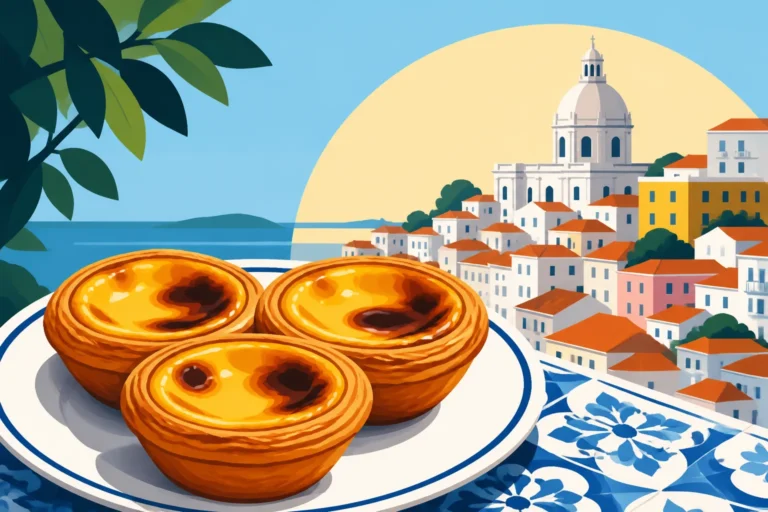
- Pastel de Nata: (Pash-tel dee Nah-tah) The iconic custard tart. A must-try!
- Torrada: (Toh-rrah-dah) A thick slice of toasted bread, usually served with butter. Often massive and perfect for a light breakfast.
- Tosta Mista: (Tosh-tah Mees-tah) A grilled ham and cheese sandwich, often on white bread. A simple, comforting classic.
- Bolo de Arroz: (Boh-loh dee Ah-rrohz) A small, cylindrical rice muffin, often topped with sugar. Surprisingly light.
- Sumo de Laranja Natural: (Soo-moh dee Lah-rahn-jah Nah-too-rahl) Freshly squeezed orange juice. It's usually fantastic and available everywhere.
- Água: (Ah-gwa) Water. You can ask for "água da torneira" (tap water) if you prefer not to pay for bottled, though it's not always offered automatically.
Remember, you can combine your order: "Queria uma bica e um pastel de nata, por favor." (I'd like an espresso and a custard tart, please.) The servers are used to quick, combined orders. This is a common way to enjoy a quick breakfast before heading out to explore, perhaps after you've used a service like Omio to book your train tickets for a day trip to Sintra.
Stress-Free Ordering: Scenarios and Pro Tips
Even with the vocabulary, the actual act of ordering can still feel like a hurdle. Let’s walk through some common scenarios and offer advice to make it genuinely easy.
Step-by-Step: A Typical Order Playbook
Let's imagine you're walking into a busy café and want a meia de leite and a torrada.
- Enter and Observe: Take a quick glance. Is there a line at the counter? Are people sitting at tables? Decide if you want counter service or table service. For a quick meia de leite and torrada, the counter is usually faster and cheaper.
- Approach the Counter (or Wait for a Table): If heading to the counter, don't be shy. Find a gap and make eye contact with a barista or server. They might already be looking your way.
- Initiate with a Greeting: "Bom dia!" (or Boa tarde/noite).
- Place Your Order Clearly: "Queria uma meia de leite e uma torrada, por favor." Speak slowly and clearly. Don't worry if your accent isn't perfect; clarity is key.
- Confirm (if needed): The server might repeat the order or nod. If they ask "É tudo?" (Is that all?), you can say "Sim, é tudo, obrigado/a." (Yes, that's all, thank you.)
- Receive Your Order: They'll place your items on the counter. Sugar packets are almost always readily available, often in a dispenser on the counter.
- Consume Your Items: Enjoy your coffee and toast. This is the moment to savor the local flavors.
- Ask for the Bill: When ready to pay, if at the counter, you'll simply say, "A conta, por favor" (The bill, please) to the person who served you, or even "Pode ser?" (Can it be?), which is a more informal way of asking for the bill. If at a table, catch your waiter's eye and make a gesture, or say "A conta, por favor."
- Pay: Most places accept cash and card. Many also use MB Way, the popular Portuguese payment app. Our guide on Using the MB Way app: Why it’s better than carrying cash in Portugal can help you set that up.
This structured approach can help alleviate the fear of the unknown. Even if you stumble, most Portuguese café staff are patient with foreigners trying to speak their language.
Handling Special Requests and Pronunciation Woes
It’s completely normal to have special requests, and it’s also normal for your pronunciation to not be perfect. Here’s how to handle it:
- "Sem açúcar, por favor." (Seng ah-soo-kar, por fah-vor) – "Without sugar, please." (If you like your coffee black and don't want sugar packets on the side.)
- "Com adoçante." (Cong ah-doh-san-tuh) – "With sweetener."
- "Leite à parte." (Lay-tuh ah par-teh) – "Milk on the side." (If you want to add your own milk.)
- "Para levar." (Pah-rah leh-var) – "To go." (Though most traditional cafés don't really do "to go" cups unless you ask specifically and they have them.) If they don't have takeaway cups, they might just shake their head or say "Não temos" (We don't have).
If you’re struggling with pronunciation, don't be afraid to point to the item on the menu if there is one, or even use your phone to show a picture. Most baristas will appreciate the effort to communicate. A friendly smile and a gesture of "desculpe, o meu português não é muito bom" (sorry, my Portuguese isn't very good) can break the ice. Remember, practice makes perfect, and every interaction is a chance to learn, so don't let the fear of sounding silly stop you! It’s part of the expat journey, and you’ll find that most locals are quite understanding, especially if you’ve chosen to immerse yourself in daily life here.
Paying Up: A Conta, Por Favor
Once you've enjoyed your coffee and snack, it's time to pay.
- "A conta, por favor." is the universal phrase for "The bill, please."
- At the counter, you might simply say "Pode ser?" while pointing to your items, indicating you're ready to pay.
- The server will tell you the total. Many places have small card machines (terminal de pagamento automático) at the counter.
- You can ask "Posso pagar com cartão?" (Can I pay with card?) or "Só dinheiro." (Cash only.) Most places accept card, especially in cities, but having some euros in cash is always a good idea, particularly for smaller, more traditional establishments.
- Tipping isn't strictly mandatory like in some other countries, but rounding up to the nearest euro or leaving a small tip (50 cents to a euro for good service, especially at a table) is always appreciated. For more on this, check out our article on Tipping culture in Portugal: Do you leave 10% or just round up the bill?.
Remember, service is often brisk, but it's not rude. It's simply efficient. The staff are working hard, and a polite, clear interaction makes their day smoother too. So go forth, order your bica or galão, and enjoy one of the most quintessential Portuguese experiences without an ounce of stress!
Disclaimer
The information provided in this guide is intended for general informational purposes only and may not constitute the most up-to-date legal or administrative advice. While we strive to keep our content current and accurate, policies and procedures in Portugal can change rapidly. Always consult official sources or seek professional advice for specific situations.