Student Accommodation: University Dorms vs Renting a Private Room
Finding a place to sleep in Lisbon or Porto during the late-August rush is a rite of passage I wouldn't wish on my worst enemy. I remember standing in the rain outside a metro station, clutching a list of phone numbers that all led to "already rented" rooms. This guide solves that specific anxiety by breaking down every housing option for students in Portugal.
The Reality of the Portuguese Student Housing Market
Navigating the housing market in Portugal as an international student has become significantly more complex over the last few years. While the country remains one of the most welcoming destinations in Europe, the sheer volume of newcomers has outpaced the development of dedicated student housing. If you are currently browsing listings, you have likely noticed that prices in Lisbon and Porto are creeping closer to Berlin or Madrid levels, while the local wages remain modest.
The Current Landscape
The demand for student accommodation is at an all-time high. This is driven not only by international exchange students but also by a growing number of digital nomads and young professionals who are competing for the same small apartments. When I first moved here, you could find a decent room in a shared flat for €300. Today, you should expect to pay significantly more, especially in prime areas like Arroios in Lisbon or Cedofeita in Porto.
The market is split into three main tiers: the subsidized public university dorms, the high-end private student residences, and the traditional "quarto" (room) in a private landlord's apartment. Understanding which tier fits your budget and your sanity is the first step toward a successful move. Before you even land, make sure you have checked the Studying in Portugal: University Admissions and International Student Guide to ensure your paperwork is in order, as many landlords will want to see proof of enrollment.
Why Finding a Place is a Full-Time Job
The frustration many expats face is the "disappearing listing" phenomenon. You see a beautiful room on a Friday, and by Monday morning, it’s gone. This happens because the market moves primarily through WhatsApp and phone calls. If you are sitting in your home country trying to book a room via email, you are at a distinct disadvantage.
Furthermore, the bureaucracy can be startling. Some landlords will ask for a Fiador (a Portuguese guarantor), which most foreigners simply don't have. Others might demand six months of rent upfront to bypass the lack of a Portuguese credit history. This is where your language skills come in; using a few phrases from PortuguesePod101 to communicate directly with a landlord can sometimes build the trust needed to waive these impossible requirements. It shows you are committed to the culture and not just a "fly-by-night" tourist.
University Dorms Pros and Cons
University dorms, known as Residências Universitárias, are the traditional choice, but they are not always what you might expect. Unlike the massive campus dorms you see in American movies, Portuguese university housing is often scattered throughout the city in older, renovated buildings.
Public vs. Private Residências
Public residences are managed by the SAS (Serviços de Ação Social) of your specific university. These are the most affordable options in the country, often costing between €150 and €250 per month. However, there is a catch: priority is almost always given to Portuguese students receiving government grants. As an international student, you are often at the bottom of the waiting list.
On the other end of the spectrum are private residences like those operated by Collegiate, Milestone, or Nido. These are essentially luxury hotels for students. You get a private studio, a gym, a cinema room, and ultra-fast internet. However, you will pay for the privilege—often between €700 and €1,200 per month. If you are concerned about Cost of living in Lisbon 2026: Rent, groceries, and eating out breakdown, these private dorms might eat up your entire budget before you've even bought your first pastel de nata.
Eligibility and the SAS Struggle
If you decide to try for a public residence, prepare for a paperwork marathon. You will need to contact the SAS of your university—for example, Top Portuguese Universities for Expats: ULisboa, UP, and Nova SBE all have their own specific social service departments. You will likely be asked for your NIF, your passport, and your letter of acceptance.
One thing I learned the hard way: don't wait for a confirmation email. In Portugal, if you want something done, you often have to show up in person or call repeatedly. The "August Shutdown" is a real thing here; if you try to sort your housing in mid-August, you might find the offices empty. Use the early summer months to get your Student Visas and Post-Graduation: Transitioning to a Work Permit and housing applications submitted simultaneously.
Renting a Private Room in a Shared Flat
The most common experience for students in Portugal is renting a "quarto" (room) in a shared apartment. This is where you will likely make your best friends—and potentially your most interesting enemies. It is a cultural melting pot where you might share a kitchen with a Brazilian master's student, an Italian Erasmus student, and a Portuguese worker.
The Quarto Culture and What to Expect
In a shared flat, you are usually renting a single room while sharing the kitchen and bathroom. Look out for the terms despesas incluídas (utilities included) and despesas à parte (utilities extra). It is wise to look for a room where the utilities are included in the rent. Portuguese electricity prices are among the highest in Europe, and trying to split a complex bill with four other people who all have different shower habits is a recipe for a headache.
When viewing a room, pay close attention to the windows. Many older buildings in Lisbon and Porto have "single-pane" windows that offer zero insulation. In the winter, these houses can be surprisingly cold. If you find a room with double-glazing, it is worth the extra €50 a month. While you are settling in, you might also be wondering Is it easy to find a part-time job in Lisbon as an international student? to help cover these costs. Having a local room contract is often a requirement for many part-time employers.
Navigating Renting a Private Room: Contracts and Rights
Never, under any circumstances, pay a deposit without a written contract. It is common for landlords to offer a lower price if you agree to pay "under the table" (without a contract), but this leaves you with zero legal protection. If the landlord decides to kick you out or refuses to fix a broken boiler, you have no recourse.
A standard contract should include:
- The duration of the stay.
- The notice period (usually 30 to 60 days).
- The amount of the caução (security deposit).
- Whether a recibo (receipt) will be issued.
Landlords are legally required to register your contract with the tax authorities (Finanças). This is crucial because you will need this registered contract to apply for your Atestado de Morada (proof of address) at the local Junta de Freguesia. Without this, you may struggle with other administrative tasks, such as Getting a student NIF and bank account before university orientation.
Cost Comparison: Budgeting for Your Semester
Budgeting is the part where most students get a reality check. Portugal is no longer the "ultra-cheap" destination it was a decade ago, though it remains affordable compared to London or Paris. To help you visualize the differences, I have put together a comparison of the average monthly costs you can expect in 2026.
| Accommodation Type | Avg. Monthly Rent | Utilities | Amenities | Best For |
|---|---|---|---|---|
| Public University Dorm | €200 – €300 | Included | Basic / Shared | Budget-conscious students |
| Private Room (Shared Flat) | €450 – €650 | €50 – €80 | Shared Kitchen/Bath | Social seekers & Expats |
| Private Residence (Luxury) | €850 – €1,300 | Included | Gym, Pool, Cleaning | Stress-free, high budget |
| Studio Apartment (T0) | €900 – €1,400 | €100+ | Full Privacy | Couples or professionals |
Hidden Costs of Student Living
Beyond the rent, there are several hidden costs that catch newcomers off guard. The first is the "double deposit." Many landlords ask for the first month, the last month, and a security deposit upfront. This means you need a significant "chunk" of cash—often three times the monthly rent—before you even move in.
Another hidden cost is the winter heating. Because many Portuguese apartments lack central heating, students often buy electric space heaters. These devices are incredibly inefficient and can double your electricity bill in January and February. Using PortuguesePod101 to ask your landlord about the certificação energética (energy certificate) of the building can give you a clue about how much you'll spend on staying warm. Also, keep in mind the How the Portuguese university grading system works (0-20 scale explained); you'll want a comfortable, warm place to study if you're aiming for those 18s and 19s!
Neighborhood Selection: Where to Hunt
Where you live will define your experience in Portugal. In Lisbon, the university campuses are spread out. If you are studying at the Cidade Universitária, living in Alvalade or Entrecampos is convenient but can be pricey. If you prefer a more bohemian vibe, Arroios is the place to be, though it has become incredibly popular with expats recently.
In Porto, the "Polo II" area (Asprela) is where many engineering and science faculties are located. It’s a bit far from the city center, but the metro connection is excellent. If you choose to live in the center, near Aliados, you will be in the heart of the nightlife, but expect much smaller rooms and higher noise levels. When weighing up your options, think about the long-term; many students eventually look for Lisbon vs Porto for Tech Workers: Salaries, Startups, and Lifestyle information as they transition from studying to their first job.
Proximity to Campus vs. Lifestyle Hubs
It is wise to prioritize the Metro line over the distance on a map. A room that is 5km away but on the same Metro line as your faculty is better than a room 2km away that requires two bus transfers. The Carris (Lisbon) and STCP (Porto) bus networks are extensive, but traffic can be unpredictable.
Living in "lifestyle hubs" like Santos in Lisbon or Ribeira in Porto sounds dreamy, but these areas are often flooded with tourists. This means local grocery stores are replaced by expensive brunch cafes. For a more authentic (and affordable) experience, look at neighborhoods like Penha de França or Campanhã. These areas still feel like real Portuguese communities, where the local senhor at the cafe will remember your name after a week.
Survival Tips for the International Student
The first 30 days are the hardest. You are fighting through jet lag, trying to understand a new language, and potentially living out of a suitcase in a hostel while you hunt for a permanent home. It is a stressful time, but millions have done it before you.
Avoiding Scams and Using Trusted Platforms
The most important advice I can give is this: Do not send money from abroad to someone you met on Facebook. Rental scams are rampant. Scammers will steal photos from real estate websites, create a fake profile, and ask for a deposit to "hold the room" because so many people are interested.
Use trusted platforms like Uniplaces, HousingAnywhere, or Badi. While these sites charge a booking fee, they held your money in escrow until 24 hours after you move in. This gives you time to verify that the room actually exists and matches the photos. If you want to go the local route, check out Idealista vs Imovirtual: Which platform is better for finding long-term rentals?. These sites are the "gold standard" for local listings, but you will need to be quick with the phone calls.
Setting Up Your Life in the New Space
Once you have the keys, the work isn't over. You will likely need to buy bedding, kitchen supplies, and perhaps a desk. IKEA is the go-to for most students, and there are large stores in both Lisbon (Alfragide and Loures) and Porto (Matosinhos).
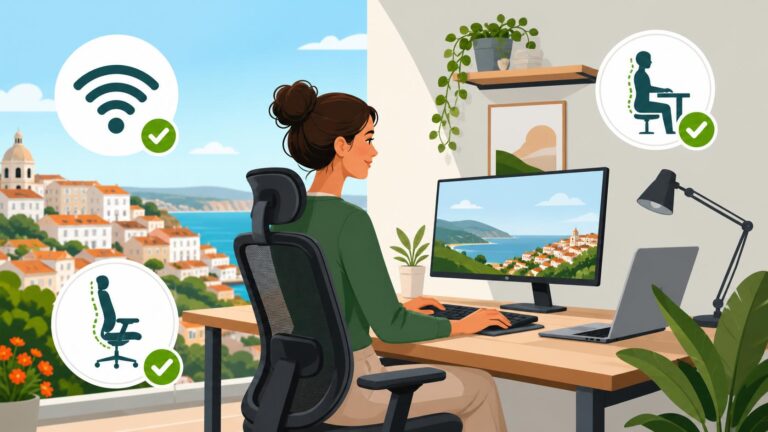
If you are a remote worker as well as a student, pay attention to the Wi-Fi. Many shared apartments have one router in the hallway that doesn't reach the back bedrooms. You might find yourself needing a signal booster or even your own mobile hotspot. For more details on this, see our guide on Setting Up Your Home Office in Portugal: Internet Stability and Ergonomics. Being prepared for these minor hurdles will make your transition into Portuguese student life much smoother.
Finally, don't forget to enjoy the process. Living in Portugal is a beautiful adventure. Once you’ve settled into your room, take a moment to sit on your balcony (or at the nearest miradouro), listen to the sounds of the city, and realize that you’ve successfully navigated one of the hardest parts of moving abroad.
Disclaimer
This guide is for informational purposes only. While I have lived in Portugal for many years and have navigated these systems personally, housing laws and market prices can change rapidly. Always verify the details of your rental contract with a legal professional or your university's student services office before signing. The author is not responsible for any disputes that may arise between tenants and landlords.