Social Security Contributions in Portugal (Segurança Social)
Disclosure: This article contains affiliate links. If you buy through them, we may earn a commission at no extra cost to you. Read our full disclosure.
Navigating the administrative maze of Portugal is enough to make anyone second-guess their dream of living in the sun. I still remember the cold sweat I broke into when I received my first "social security notification" in Portuguese—a cryptic document that looked more like a court summons than a tax bill. This guide breaks down everything you need to know about Segurança Social, from getting your NISS to mastering the quarterly declaration without losing your mind.
Understanding the Portuguese Social Security System (Segurança Social)
Portugal's social security system, known as Segurança Social, is the backbone of the country's welfare state. It is a mandatory contributory system designed to protect residents during life's most vulnerable moments, such as illness, unemployment, maternity, and old age. Unlike some private insurance-based systems in other countries, this is a "pay-as-you-go" model where current workers fund the benefits of current retirees, with the expectation that the next generation will do the same.
What Exactly Is Segurança Social?
For an expat, the system can feel like a bottomless pit where your hard-earned euros disappear. However, it is essential to view it as your gateway to a legitimate life in the country. It is separate from the IRS (Personal Income Tax), though the two systems often talk to each other more than you might realize. Contributing to social security isn't just a legal requirement; it is what builds your "contributory career." In the long run, these contributions determine your pension eligibility and the amount you receive. In the short term, they provide the safety net of sick pay, parental leave, and even unemployment benefits if you find yourself between jobs.
The NISS: Your Golden Ticket to the System
Before you can pay a single cent or see a doctor in the public system, you need a NISS (Número de Identificação de Segurança Social). This 11-digit number is your unique identifier. As of 2025 and moving into 2026, the NISS has become even more critical because AIMA Portugal: Navigating the New Immigration Agency and Residence Permits now requires it for almost every residency application. You can no longer wait until you find a job to get one; you often need it just to finalize your legal status. Fortunately, you can apply for a NISS online as a foreigner, though many expats still choose to use a lawyer or a dedicated service to handle the paperwork and ensure nothing gets lost in the digital void.
How the System Benefits You (Eventually)
The most immediate benefit of your contributions is access to the public health system. Once you have a NISS and are contributing, you can Registering with the Centro de Saúde: Getting Your SNS Número de Utente and gain access to subsidized healthcare. Beyond health, the system covers "parentalities" (maternity and paternity leave), which are quite generous in Portugal compared to the US or UK. If you are an employee and lose your job through no fault of your own, your contributions over the previous 24 months entitle you to unemployment benefits. While the amounts might not be enough for a lavish lifestyle in Cascais, they provide a vital floor during transitions.
Social Security for Employees: Rates and Deductions
If you are working for a Portuguese company, your interaction with social security will be largely passive, but that doesn't mean you shouldn't understand what is happening to your paycheck. Every month, a chunk of your gross salary is sliced off before it ever hits your bank account.
The TSU (Taxa Social Única) Explained
In Portugal, social security is funded by a combined tax called the Taxa Social Única (TSU). For most standard employees, this total rate is 34.75%. However, you don't pay all of that yourself. The burden is split between you and your employer:
- Employee Contribution: 11% of your gross salary.
- Employer Contribution: 23.75% of your gross salary.
This split is why many employers are hesitant to offer massive gross salaries; for every €1,000 they pay you, they are actually spending €1,237.50 once social security is factored in. When you are negotiating a job offer, always clarify if you are talking about "Bruto" (Gross) or "Líquido" (Net). You can get a better sense of how this works by Understanding Portuguese Pay Slips: Gross vs Net Salary and Deductions, which will help you budget for your new life.
Understanding Your Pay Slips: Gross vs Net Salary
Your monthly payslip (Recibo de Vencimento) can be confusing. You will see your gross salary at the top, followed by deductions for both the IRS and Segurança Social. In 2026, the 11% social security deduction is fixed for almost all employees. Unlike the IRS, which has progressive brackets, social security is a flat percentage. There is also no "cap" on contributions in Portugal; if you earn €10,000 a month, you pay 11% on the full amount. This is a common point of frustration for high-earning expats, but it is the price of admission for the Portuguese social contract.
Employer Responsibilities vs Employee Obligations
The beauty (and danger) of being an employee is that your company handles the payments. They are responsible for declaring your salary to the authorities and making the transfer between the 1st and 25th of the following month. However, it is your responsibility to ensure they are actually doing it. There are cases where expats worked for months only to find out their employer never registered them, leaving them with a gap in their residency history. You can log into the "Segurança Social Direta" portal at any time to check your "Extrato de Remunerações" (Earnings Statement) and verify that your contributions are up to date.
| Contributor Type | Employee Rate | Employer Rate | Total Contribution |
|---|---|---|---|
| Standard Employee | 11.00% | 23.75% | 34.75% |
| Board Member (Gerente) | 11.00% | 23.75% | 34.75% |
| Freelancer (Category B) | 21.40% | N/A | 21.40% (on 70% of income) |
| Domestic Workers | Variable | Variable | Approx. 30% total |
Freelancing in Portugal: The Recibos Verdes Rules
If you are a digital nomad or an independent contractor, welcome to the world of "Recibos Verdes" (Green Receipts). This is where things get truly complicated—and where the empathetic "I've-been-there" advice really matters. Managing Freelancing in Portugal (Recibos Verdes): Taxes, Social Security, and Setup is practically a part-time job in itself.
Quarterly Declarations: The Three-Month Cycle
As a freelancer, you don't pay social security every month based on what you earned that specific month. Instead, you operate on a quarterly cycle. Every January, April, July, and October, you must log into the portal and declare what you earned in the previous three months. Social security then calculates a fixed monthly amount you will pay for the next three months.
- Example: In April, you declare what you earned in January, February, and March. Based on that, they tell you what you must pay in May, June, and July.
Missing this deadline is a disaster. If you forget to file your declaration, the system will automatically assign you a contribution based on a presumptive income that might be much higher than what you actually earned.
The First-Year Exemption for New Freelancers
Here is the good news: Portugal offers a "honeymoon period." When you first open your "Atividade" (activity) at the tax office, you are granted a 12-month exemption from social security contributions. This is a lifesaver when you are still finding clients and setting up your life. However, a common trap is thinking you don't need to do anything. You still need to register your NISS with the tax office, and you still need to be aware of when that 13th month arrives. When that exemption ends, the "real" Portuguese life begins, and your first quarterly declaration will feel like a rite of passage.
Calculating Your Monthly Quota: The 70% Rule
The way Portugal calculates freelancer contributions is unique. They don't tax 100% of your gross income. Instead, for most service providers (consultants, IT workers, writers), they assume that 70% of your income is "relevant income." You then pay a 21.4% contribution on that 70%.
- The Math: If you earn €3,000 in a month, your relevant income is €2,100 (70%). Your contribution is 21.4% of €2,100, which equals €449.40.
Effectively, you are paying about 15% of your total gross income into social security. While this is higher than the 11% employees pay, you are essentially acting as both the employer and the employee. If you are feeling overwhelmed by the math, companies like Taxes for Expats can help you navigate these filings to ensure you aren't overpaying.
Self-Employed vs. Lda: Which Social Security Path is Better?
As your income grows, you might wonder if it’s time to stop being a "Trabalhador Independente" and start a formal company (Limitada or Lda). This decision has massive implications for your social security obligations.
Social Security for Company Directors (Gerentes)
When you start an Lda, you are no longer a freelancer; you are an employee of your own company. You will likely appoint yourself as the "Gerente" (Director). As a director, you must pay social security on your salary. In 2026, the standard rates for a "Gerente" who is remunerated are the same as a normal employee: 11% for the individual and 23.75% for the company.
However, there is a floor. You must contribute at least based on the IAS (Indexante dos Apoios Sociais). For 2026, the IAS is €537.13. Even if you decide not to pay yourself a salary one month, the system expects you to contribute as if you earned at least the IAS amount, unless you meet very specific exemption criteria (like already being an employee elsewhere).
Transitioning from Freelancer to Business Owner
The transition is a double-edged sword. On one hand, Starting a Business in Portugal: Lda Setup, Corporate Tax, and Accounting allows you to deduct real business expenses (like your home office or laptop) which you can't easily do under the "Simplified Regime" as a freelancer. On the other hand, the administrative burden of an Lda is significantly higher. You are required to have a "Contabilista Certificado" (Certified Accountant) by law, and your social security reporting becomes a monthly task rather than a quarterly one.
Comparing the "Simplified Regime" to Organized Accounting
Most freelancers stay in the "Simplified Regime" because, well, it’s simpler. You don't need to prove your expenses; the government just assumes 25% of your income goes toward business costs. However, if your actual business costs (software licenses, travel, office rent) are higher than 25% of your income, you are essentially paying tax on money you don't have. In that case, switching to organized accounting—even as a freelancer—or forming an Lda might save you money on Portuguese Taxes for Expats: IRS, Tax Residency, and Filing Deadlines in the long run.
Practical Tips for Managing Your Contributions
After years of dealing with the Portuguese bureaucracy, I’ve learned that the secret to survival isn't knowing every law; it's knowing how to use the tools available to you.
Using the Segurança Social Direta Portal
The "Segurança Social Direta" (SSD) portal is actually surprisingly functional once you get past the initial learning curve. This is where you will:
- Check your contribution history.
- File your quarterly declarations (if you're a freelancer).
- Apply for sick pay or parental benefits.
- Issue a "Declaração de Situação Contributiva" (a certificate proving you don't owe them money), which is often required for Money and Finance in Portugal: The Ultimate 2026 Guide for Expats when applying for mortgages or residency renewals.
Make sure you request your access password (senha) as soon as you get your NISS. It arrives by physical mail to your registered address, so don't wait until the day before a deadline to ask for it.
Transferring Money to Portugal: Saving on Fees
When it comes time to pay your social security bill, you will likely be paying from a Portuguese bank account. If your income is coming from abroad in USD or GBP, you need a reliable way to get those funds into euros without being eaten alive by exchange rates. It is often recommended Transferring Money to Portugal: Saving on Exchange Rates and Fees using a service like Wise. They offer the mid-market rate and significantly lower fees than traditional banks like Millennium or Santander. I personally use Wise to move my freelance earnings from the US into my Portuguese account every month to cover my social security and tax obligations.
Working with Professionals
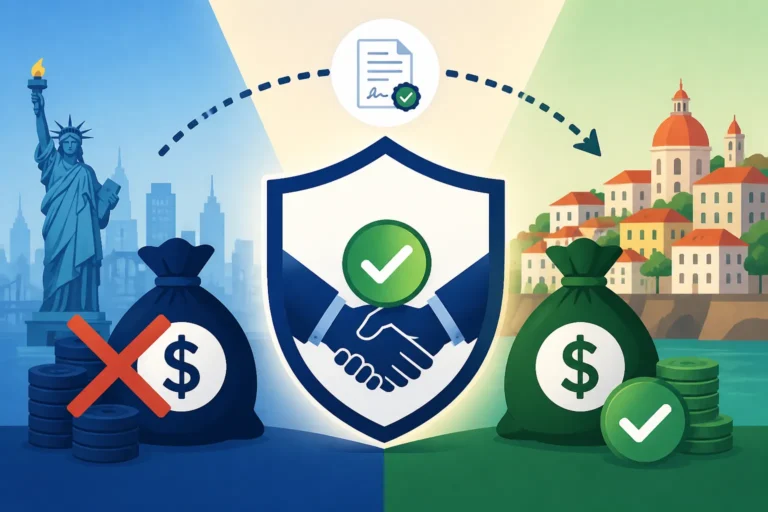
If you have a complex situation—perhaps you are a digital nomad working for a US company while living in Lisbon—don't try to DIY your social security. The rules regarding "bilateral agreements" can be dense. Portugal has agreements with several countries (including the US and Brazil) that may allow you to avoid double contributions. This is where a specialized firm like Taxes for Expats becomes invaluable. They understand the intersection of Portuguese law and international tax treaties, which can save you thousands of euros and hours of administrative headache.
Summary of 2026 Deadlines and Requirements
To keep yourself in the good graces of the Portuguese state, mark your calendar with these 2026 specifics:
- IAS Value 2026: €537.13. This affects the minimum base for company directors and the threshold for several benefits.
- Payment Deadline: Contributions must be paid between the 1st and the 25th of the month following the month they refer to.
- Freelancer Declarations: Due in January, April, July, and October.
- NISS Requirement: Mandatory for AIMA Portugal: Navigating the New Immigration Agency and Residence Permits and for Opening a Bank Account in Portugal: Best Banks for Foreigners and Expats in many cases.
Navigating the social security system is a marathon, not a sprint. There will be days when the portal is down, or you get a letter you don't understand, or you realize you've been paying for a benefit you can't even access yet. But once you're in the system, you're part of the fabric of the country. You're no longer just a tourist; you're a contributor to the society that you've chosen to call home.
Disclaimer
This guide is provided for informational purposes only and does not constitute legal, financial, or tax advice. The Portuguese social security system and tax laws are subject to frequent changes, and individual circumstances can vary significantly. Always consult with a qualified professional, such as a certified accountant (Contabilista Certificado) or a tax lawyer, before making decisions regarding your social security contributions or tax status in Portugal. Under no circumstances shall the author or the website be held liable for any administrative penalties, financial losses, or legal issues arising from the use of this information.