How to Apostille US Documents for Portugal
The administrative hurdles of moving to Portugal can feel like a never-ending labyrinth, and one of the most perplexing steps for many US expats is figuring out how to properly authenticate their vital documents. Trying to navigate the world of apostilles, notarizations, and certifications can leave you feeling frustrated and overwhelmed, especially when your residency hinges on getting it right. This comprehensive guide will walk you through the precise, step-by-step process of apostilling your US documents so they are legally recognized in Portugal, saving you countless headaches and potential delays in your visa or residency application.
What Exactly is an Apostille and Why Do You Need It for Portugal?
When you’re preparing to move to a new country, you quickly learn that your birth certificate, marriage license, or even your police background check from back home might not be accepted at face value by foreign authorities. This isn't because they doubt your honesty, but because they need a way to verify the authenticity of the issuing authority and the signature on that document. That’s where the apostille comes in.
Understanding the Hague Apostille Convention
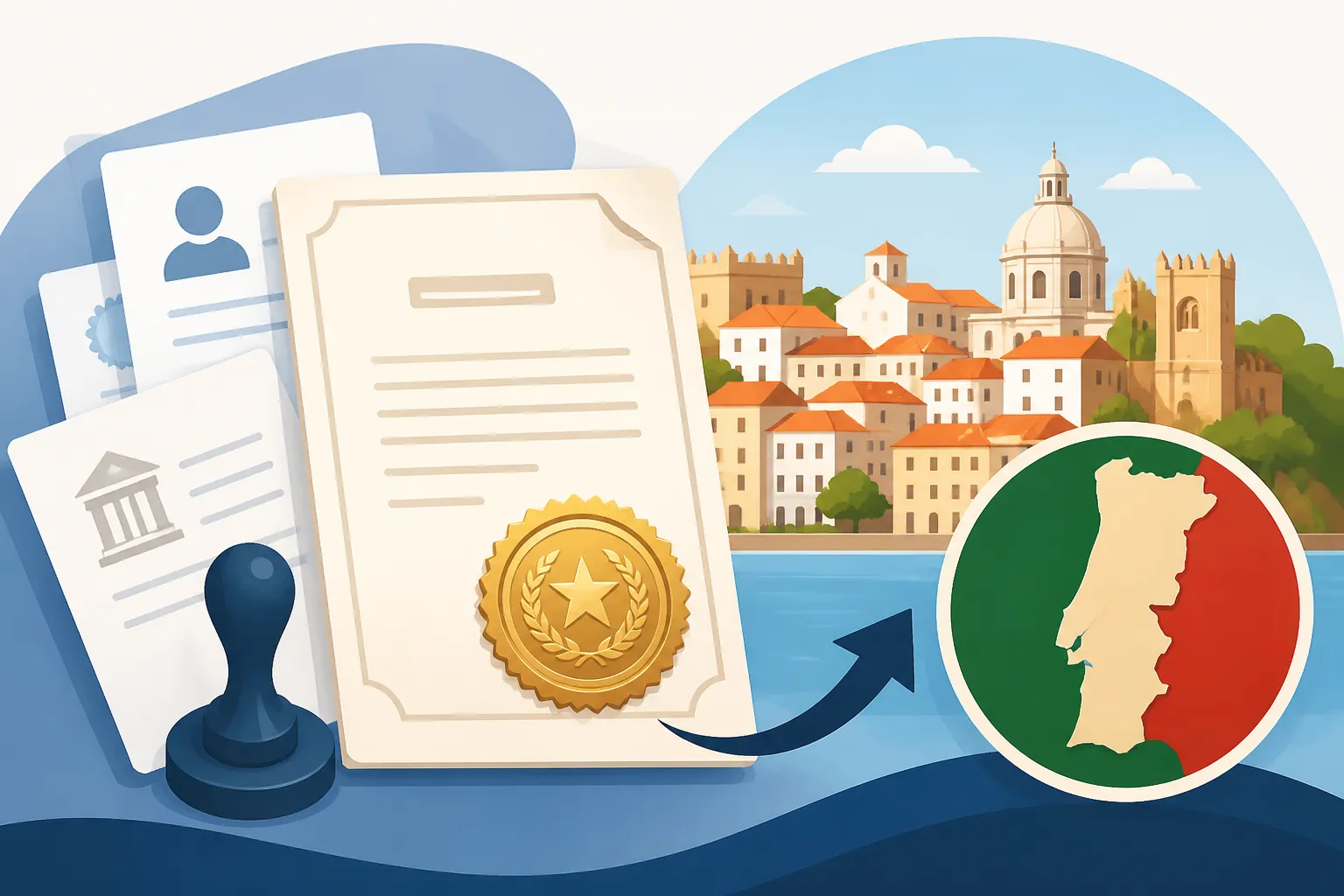
An apostille is essentially a specialized certificate issued by an authority (usually a country's equivalent of a Secretary of State or a specific department) that verifies the authenticity of a signature on a document, the capacity in which the person signing the document acted, and the identity of any stamp or seal affixed to the document. It's an internationally recognized certification method that streamlines the process of legalizing documents for use in foreign countries that are members of the Hague Apostille Convention. Portugal is a signatory to this convention, which means any public document issued in the US and destined for use in Portugal needs an apostille, not a full consular legalization. This simplifies things immensely compared to non-Hague countries. Without an apostille, your US-issued document is merely a piece of paper in Portugal's eyes, legally speaking.
Common Documents Requiring an Apostille for Portugal
Almost any official document you present to Portuguese authorities, especially for visa, residency, or family reunification purposes, will likely require an apostille. This includes, but isn't limited to, your birth certificate, marriage certificate, divorce decrees, and crucially, your criminal background check (like the FBI Identity History Summary). For those applying for a D7 Passive Income Visa Portugal or a Portugal D8 Digital Nomad Visa, documents proving your civil status, educational qualifications, or even financial solvency might sometimes require this extra layer of authentication, depending on the specific consulate and your individual circumstances. Even something as simple as a power of attorney signed in the US but intended for use in Portugal will need to go through this process. If you’re bringing family, documents for Family Reunification Visa in Portugal, such as your children's birth certificates or your spouse's marriage certificate, will definitely need to be apostilled.
The Step-by-Step Process for Apostilling US Documents
The process can seem daunting, but once you break it down, it's quite logical. The key is understanding who issued your document, as this determines where you get the apostille.
Step 1: Notarization (If Required)
Before you even think about an apostille, some documents need an initial notarization. This step is only necessary for documents that are not already public documents issued by a government entity. For example:
- Private documents: If you have a document you created yourself, like an affidavit or a power of attorney, it first needs to be signed in front of a notary public. The notary verifies your identity and witnesses your signature. The notary then affixes their seal and signature to the document.
- Copies of documents: Sometimes, you might need a certified copy of a document (like a passport or driver's license) to be apostilled. In this case, a notary will typically create a "notarized copy" where they attest that the copy is a true and accurate reproduction of the original.
Documents like official birth certificates, marriage certificates, or FBI background checks usually don't need notarization because they are already considered public documents issued by a government authority, and their authenticity is verified by the apostille itself. However, always double-check the specific requirements of the Portuguese consulate or AIMA (the new immigration agency in Portugal) as rules can sometimes vary or be interpreted differently.
Step 2: Certification at the State Level
This is where the actual apostille process typically begins for most of your personal documents. If your document was issued by a state or a county within a state (e.g., a birth certificate from California, a marriage license from New York, a driver's license record from Texas), you need to get the apostille from the Secretary of State's office in the state where the document was issued.
Here’s a general idea of how this works:
- Locate the Correct Office: Find the Apostille or Certification Unit within your state's Secretary of State's office. Their websites usually have detailed instructions.
- Submission: You'll typically mail the original document (or the notarized document, if applicable) along with a request form, payment, and a self-addressed, stamped envelope for its return. Some states offer in-person submission, which can expedite the process if you're local.
- Processing: The state office will verify the signature and seal of the official who issued your document (e.g., the county clerk on your marriage certificate, or the notary public on your power of attorney). Once verified, they will affix the apostille certificate to your document.
- Cost and Time: Fees vary by state, usually ranging from $5 to $25 per document. Processing times can range from a few days to several weeks, especially during peak application seasons, so plan accordingly.
Step 3: US Department of State Apostille
Some critical documents are issued at the federal level, not the state level. The most common example for expats moving to Portugal is the FBI Identity History Summary, often referred to as an "FBI background check." This federal document cannot be apostilled by a state Secretary of State. Instead, it must be apostilled by the US Department of State in Washington D.C.
The process for federal documents usually involves:
- Obtaining the FBI Background Check: Request your official FBI Identity History Summary. Ensure it has a raised seal or an official digital signature that can be verified.
- Submission to US DOS: You'll send the original FBI document, a request form (DS-4194), the fee, and a self-addressed, stamped envelope to the U.S. Department of State – Office of Authentications.
- Processing: The Department of State verifies the signature of the FBI official who issued the document and then attaches the apostille.
- Cost and Time: The fee is usually $20 per document. This step is historically known for being the slowest, with processing times that can stretch from a few weeks to several months, especially if there are backlogs. You can track your application status online, but patience is definitely a virtue here. This is why it's recommended to start gathering and apostilling documents, especially the FBI background check, as early as possible. For more details, refer to our guide on Preparing the FBI Criminal Record Check and Apostille for Portugal Visas.
Step 4: Translation to Portuguese (Post-Apostille)
This is a critical point that many expats misunderstand: the translation must happen after the apostille has been affixed to the document. Why? Because the apostille itself is part of the legal document chain that needs to be presented to Portuguese authorities. If you translate before the apostille, the translation won't include the apostille certificate, making it incomplete.
Once you have your apostilled document, you'll need to get it translated into Portuguese by a certified translator (tradutor certificado) recognized by the Portuguese consulate or by a notary in Portugal. Services like RushTranslate can provide certified translations that are often accepted, but always confirm with your specific consulate or AIMA. The translation will then often need to be authenticated by a Portuguese notary public once you arrive in Portugal, or, in some cases, by the Portuguese consulate in your home country.
Navigating the Apostille Process: Challenges and Solutions
While the steps seem straightforward, real-world experience often throws curveballs. Being prepared for these challenges can save you time and stress.
State vs. Federal Documents: Know the Difference
As we covered, this is arguably the biggest point of confusion. A birth certificate is a state document, an FBI report is a federal document. They go to entirely different authorities for the apostille.
- State-issued documents: Birth certificates, marriage certificates, divorce decrees, educational diplomas (if issued by a state-recognized institution), vehicle titles, articles of incorporation for state-registered businesses, and documents notarized by a state-commissioned notary public all go to the Secretary of State in the state of issuance.
- Federally-issued documents: FBI background checks, IRS documents, patents, FDA documents, and documents issued by federal agencies (like the Department of Homeland Security) go to the US Department of State in D.C.
Mistaking these two paths will result in your document being rejected and returned, costing you precious time. Always verify the issuing authority of your document before sending it off.
Timing is Everything: Planning for Delays
The apostille process is notoriously slow, especially for the US Department of State. Trying to rush it will only add to your stress.
- Factor in buffer time: If your visa appointment is in six months, start the apostille process now. For federal documents, allow at least 2-3 months from submission to receipt. State apostilles are generally quicker, but still allow 3-4 weeks.
- Peak seasons: Summer months and around holidays can see significant backlogs at both state and federal offices. Plan to avoid these periods if possible.
- Mailing vs. In-Person: While most federal apostilles require mail-in, some state offices allow in-person submission or expedited services for an extra fee. Check your state's options.
A common scenario: You have your D7 visa interview scheduled for three months out. You realize you still need an FBI apostille. If the US Department of State is running on an 8-10 week processing time, plus mail transit, you're cutting it extremely close. This is why proactive planning is your best friend when dealing with Portuguese immigration.
Using a Service for Speed and Simplicity
For many expats, especially those juggling jobs, family, and the myriad other tasks of an international move, outsourcing the apostille process can be a godsend. There are reputable third-party services that specialize in obtaining apostilles.
- Benefits: These services often have direct relationships with state and federal offices, know the exact requirements, can hand-deliver documents (where allowed) for faster processing, and generally take the guesswork out of the entire procedure. They act as an intermediary, ensuring your forms are correct and your documents are routed to the right place.
- Considerations: While convenient, these services come at an additional cost, which can vary significantly depending on the number of documents and desired turnaround time. For example, some services that help with getting your NIF remotely using services like Bordr, Anchorless, or e-residence might also offer assistance with document procurement and apostilles, or can at least point you to reliable partners. When choosing a service, look for clear pricing, estimated turnaround times, and positive reviews from other expats. While a full immigration lawyer might be overkill just for apostilles, specialized document services can be extremely valuable.
It's crucial to get this part of your documentation correct. Trying to submit un-apostilled or incorrectly apostilled documents will only lead to rejection and further delays in your application for a Portuguese residence permit through AIMA.
Essential Documents for Your Portugal Visa Application
To help clarify which documents generally need what, here's a table outlining common requirements. Please remember to always verify the latest requirements with the Portuguese consulate you're applying through or with the AIMA website, as rules can change.
| Document Type | Notarization Required? (Before Apostille) | Apostille Authority | Purpose in Portugal | Notes |
|---|---|---|---|---|
| Birth Certificate | No (original government-issued) | State Secretary of State (where issued) | D7/D8 Visa, Family Reunification, NISS application for children | Essential for proving identity and family ties. |
| Marriage Certificate | No (original government-issued) | State Secretary of State (where issued) | D7/D8 Visa (for spouses), Family Reunification | Required to prove marital status for dependent visas. |
| FBI Identity History Summary (Background Check) | No (original FBI report) | US Department of State, Washington D.C. | D7/D8 Visa, all long-term residency visas | Crucial for proving good conduct. Must be recent (usually within 90 days of visa appointment). |
| Educational Diplomas/Transcripts | Yes (often a "true copy" notarization) | State Secretary of State (where institution is located) | D2 Entrepreneur Visa, highly skilled worker visas, school enrollment | Only needed if specifically requested for a visa type or for formal academic recognition in Portugal. |
| Power of Attorney | Yes (signed in front of a notary) | State Secretary of State (where notary is commissioned) | Property purchase, legal representation | Needed if someone is acting on your behalf in Portugal before you arrive. |
| Single Status Affidavit | Yes (signed in front of a notary) | State Secretary of State (where notary is commissioned) | Marriage in Portugal | Needed if you plan to get married in Portugal and require proof you are legally single. |
| Proof of Funds (Bank Statement, Pension Letters) | No (original bank/institution statements) | N/A (usually not apostilled) | D7/D8 Visa financial requirements | Generally, financial documents don't need apostilles, but some consulates might ask for a notarized copy or translation. Confirm this. While a provider like Cigna Global might be your health insurance, the policy document itself typically doesn't need an apostille, just to be presented as proof of coverage for Health Insurance Requirements for the D7 and D8 Visa Application. |
Once you have your documents correctly apostilled, the next step is often the translation, and then you'll be ready for your VFS Global and Portuguese Consulates: How to Book Your Visa Appointment. Don't forget that even after you arrive, you'll still have further steps, like getting your NIF and NISS: How to Get Your Portuguese Tax and Social Security Numbers and eventually navigating the AIMA Portugal: Navigating the New Immigration Agency and Residence Permits process for your actual residence card. The apostille is just one piece of the puzzle, but a very important one.
Disclaimer
The information provided in this guide is for general informational purposes only and does not constitute legal or immigration advice. While we strive to keep the information up-to-date and accurate, requirements for apostilles, visas, and immigration to Portugal can change frequently. It is highly recommended to consult directly with the official Portuguese consulate in your jurisdiction or an immigration lawyer specializing in Portuguese law for the most current and personalized advice regarding your specific situation and documents.